

A warning by former Russian President Dmitry Medvedev has crystallized fears among Gulf states that reopening the Strait of Hormuz may be the most U.S.-Iran talks can achieve, falling short of the broader de-escalation they view as vital for regional security, including Israel.
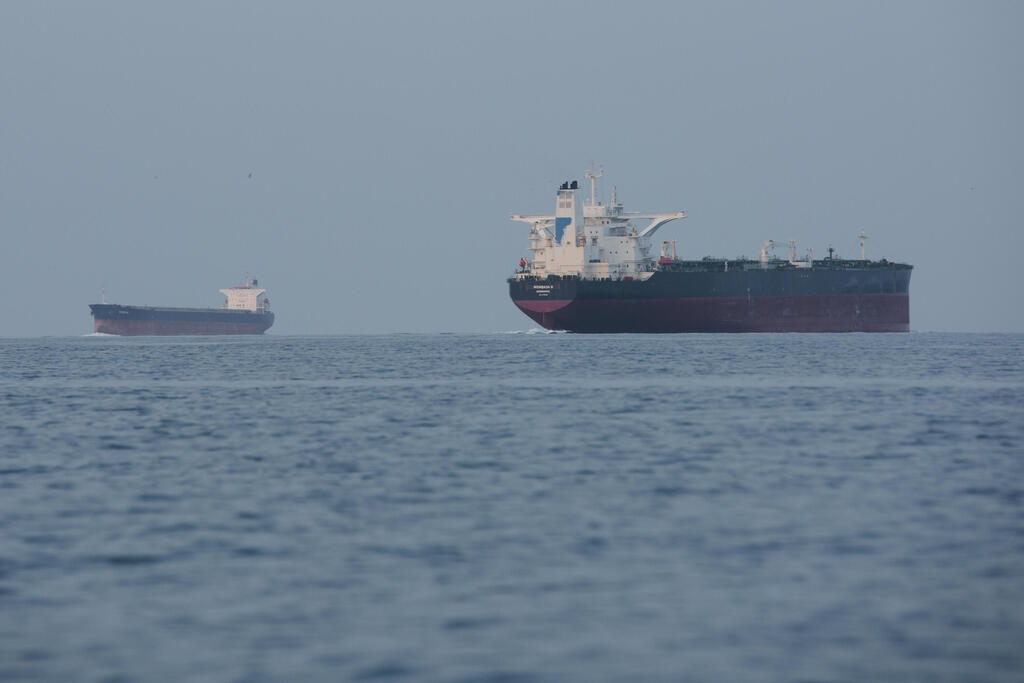
Officials and analysts expect the next round of negotiations, due in Islamabad, will focus increasingly not on Iran's missiles or regional proxies but on uranium enrichment limits and how to handle Iran’s leverage over the Strait, the world’s most critical oil shipping route.
Gulf officials warn the approach risks entrenching Iran's grip on Middle East energy supplies by managing rather than dismantling its leverage, prioritizing global economic stability while leaving countries most exposed to the security and energy consequences — including Israel and Gulf states — outside formal decision-making.
Gulf sources say U.S.-Iran diplomacy is now centered less on rolling back Iran’s missile program and more on enrichment levels and tacitly accepting Tehran’s leverage over Hormuz, which carries about a fifth of global oil supplies.
Although negotiations remain stalled over enrichment, with Iran rejecting both zero enrichment and demands to ship its stockpiles abroad, Gulf officials say the shift in priorities itself is troubling.
“At the end of the day, Hormuz will be the red line,” one Gulf source close to government circles said. “It wasn’t an issue before. It is now. The goalposts have moved.”
There was no immediate response from Gulf Arab governments to requests for comment.
Iran's threats to Gulf shipping during the war have broken long-standing taboos around the Strait, making its disruption a realistic lever in negotiations for the first time.
Hormuz’s central role was bluntly articulated by Medvedev, deputy chairman of Russia's Security Council, in a post on X on April 8.
“It’s not clear how the truce between Washington and Tehran will play out,” Medvedev said. “But one thing is certain — Iran has tested its nuclear weapons. It is called the Strait of Hormuz. Its potential is inexhaustible.”
The remark cast Hormuz as leverage enabling Iran to raise costs and shape rules without crossing the nuclear threshold.
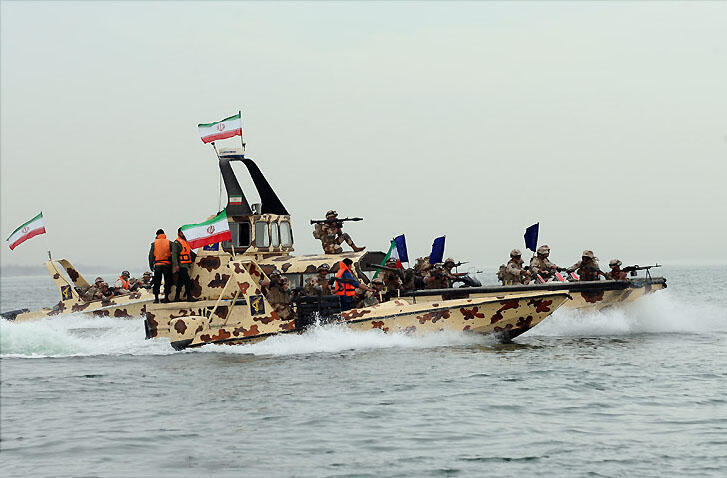
Iranian security officials privately echo that view, describing the Strait not as a contingency but as a long-prepared instrument of deterrence.
“Iran prepared for years for a scenario involving the closure of the Strait of Hormuz, planning every step,” said a senior Iranian security source. “Today it is one of Iran’s most effective tools — a form of geographic leverage that serves as a powerful deterrent.”
The source described the Strait as a “golden, invaluable asset rooted in Iran’s geography — one the world cannot take away precisely because it flows from Iran’s location.”
A second Iranian source, close to the Revolutionary Guard, said a long-standing taboo around using Hormuz has now been broken.
The source described Hormuz as a sword “drawn from its sheath” that the U.S. and regional states cannot ignore, providing Iran with leverage against external powers.
(Photo: AP Photo/Asghar Besharati)
What alarms Gulf states most, analysts say, is that while Iranian missiles, drones and proxy forces have repeatedly targeted the region — including Israel — negotiations are increasingly framed almost exclusively around Hormuz because of its global economic impact, sidelining regional security concerns.
At its core, the Hormuz dispute is less about who controls the Strait than about who sets the rules of passage, Gulf sources say, reflecting a broader shift away from fixed international norms toward power-based arrangements.
That, said Ebtesam Al-Ketbi, president of the Emirates Policy Center, exposes an imbalance between those who define the rules and those who bear the consequences when they are broken.
“What is taking shape today is not a historic settlement,” Al-Ketbi told Reuters, “but a deliberate engineering of sustainable conflict.”
“Who’s suffering from missiles and proxies?” she added. “Israel, and specifically the Gulf states. What would be a good deal for us is addressing missiles, proxies — and Hormuz. And it seems they don’t care about the missiles or the proxies.”
Analysts warn such an approach would not resolve tensions but stabilize them at manageable levels — an outcome that may suit Washington and Tehran but risks entrenching instability for Israel and Gulf states living under the threat of missiles.
The U.S.-backed war with Iran, which began on Feb. 28, has already left Gulf economies absorbing the fallout, from attacks on energy infrastructure to rising export and insurance costs. Alternative trade routes raise costs and remain exposed to the same Iranian missile threats.
Diplomats say Gulf officials have urged Washington against full sanctions relief, advocating a phased approach to test Iran's behavior. They say core threats remain unaddressed, notably missiles capable of striking Israel and Gulf capitals and Iran's armed proxies.
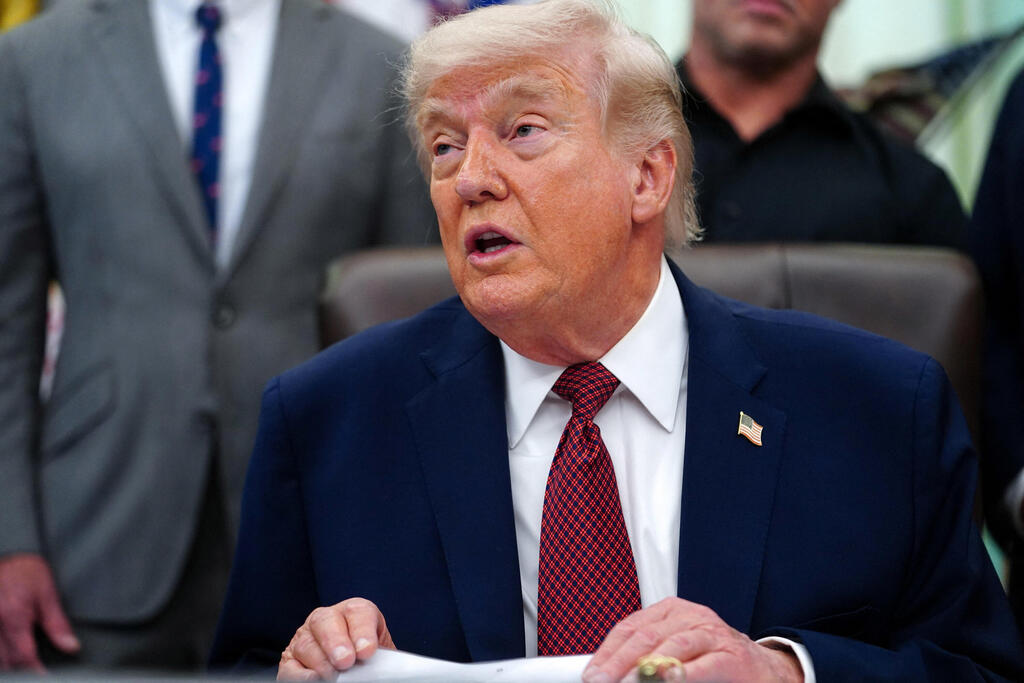
Across the Gulf, sentiment toward Washington now ranges from quiet resentment to growing frustration and confusion over unilateral U.S. decision-making.
(Photo: REUTERS/Nathan Howard)
“The U.S. is part and parcel of regional security,” said Abdulaziz Sager, chairman of the Saudi-based Gulf Research Center. “But that does not mean acting unilaterally — going full-fledged without involving the region.”
While Gulf leaders express concern, they also acknowledge that U.S. military capabilities continue to shape outcomes through their unmatched superiority.
UAE academic Abdulkhaleq Abdulla said Gulf states survived the war in large part due to their own defenses and advanced U.S.-supplied systems such as THAAD and Patriot missile defenses.
Yet while the United States remains indispensable, it is not infallible, Abdulla said, citing what he described as an underestimation of the likelihood of escalation over Hormuz.
The U.S. has repeatedly committed to defending its allies through air and missile defense cooperation, naval security and protection of critical infrastructure.
One lesson of the war, Gulf officials say, is the limit of reliance on a single external protector, said Mohammed Baharoon, director of a Dubai-based research center.
Gulf leaders say they long warned Washington against conflict with Iran, yet have remained publicly restrained since the war began, reflecting both diplomatic caution and uncertainty over a conflict they do not control but bear the consequences of.
As Washington and Tehran continue negotiations, Gulf officials argue their exclusion is no longer just a regional issue but a global one, given Hormuz’s critical importance to international energy markets.