


U.S. President Donald Trump announced a 10-day ceasefire between Israel and Lebanon late on April 16, 2026, after separate calls with Prime Minister Benjamin Netanyahu and Lebanese President Joseph Aoun.
The temporary halt in hostilities is meant to open the door for direct Israeli-Lebanese negotiations and fit into broader American diplomacy involving Iran.
IDF strikes in southern Lebanon
(Video: IDF)


From Israel’s perspective, however, the deal looks less like a breakthrough and more like a risky gamble that hands Hezbollah time to recover while demanding nothing concrete from Beirut.
Hezbollah was not even invited to the talks. Yet hours after the announcement, a senior Hezbollah official, Bilal Lakkiss, told NBC News that the group considered the truce “essential” and “urgently needed.” He immediately added a major caveat: Hezbollah would only “consider” abiding by it if Israeli attacks stopped completely.
That condition reveals the agreement’s fatal weakness. Israel has kept its right under the deal to strike back at any planned, imminent or ongoing threat. This clause is essential because Hezbollah has launched thousands of rockets at northern Israel since the fighting escalated and still maintains fighters and infrastructure south of the Litani River. But the deeper problem is political, not military.
The ceasefire effectively requires the Lebanese government to promise it will disarm an armed organization that sits inside its own cabinet and controls a major bloc in parliament. In recent months, Beirut has taken limited steps: the army has deployed some forces south of the Litani and the cabinet issued a formal ban on Hezbollah’s military activities in March. These gestures change nothing. Hezbollah and its Amal partners still hold real power through the Loyalty to the Resistance bloc and key ministerial posts.
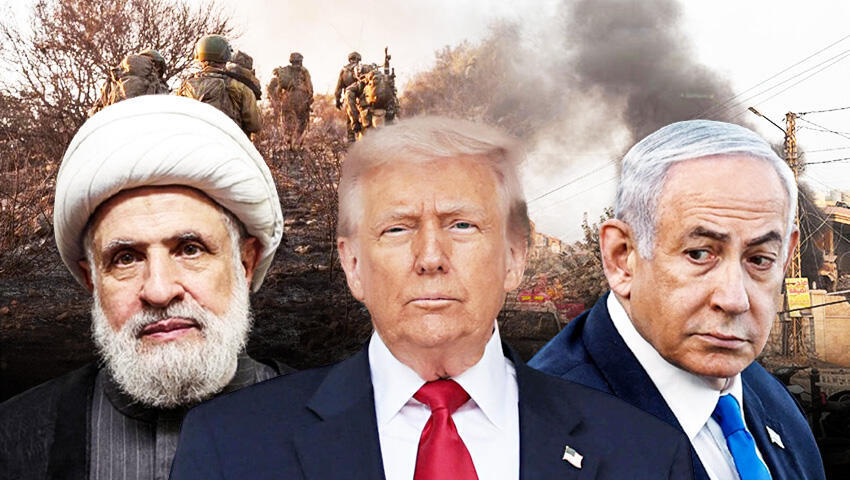
(Photo: IDF, REUTERS/Amir Cohen, REUTERS/Jessica Koscielniak)
Israel has seen this movie before. United Nations Security Council Resolution 1701, passed after the 2006 war, demanded exactly the same thing: full disarmament of all non-state armed groups and Lebanese Army control over the entire south.
Eighteen years later the resolution remains ignored. Hezbollah never gave up its weapons. On the contrary, it used Iranian money and Syrian supply lines to build a vast arsenal and turn southern Lebanon into a forward base.
Even after the severe blows the IDF delivered in 2024 and 2025, including the targeted elimination of top commanders and the destruction of large parts of its rocket stores, Hezbollah retains enough political muscle to block any genuine reform in Beirut. Expecting the same weak Lebanese state to carry out a new disarmament commitment is not optimism. It is repeating a proven mistake.
The practical result of this 10-day pause is clear: it gives Hezbollah breathing room to regroup. The organization has taken heavy losses. Its rocket inventory is depleted, its command structure is damaged, and many Shiite families in the south are exhausted by the war.
 Amine Ayoub
A short ceasefire lets it replenish supplies, repair tunnels and prepare for the next round. Senior Hezbollah figures are already spinning the truce as proof that their “resistance” forced Israel to negotiate. Bilal Lakkiss explicitly credited the militia’s military pressure for bringing Israel to the table. Such statements are not empty talk. They tell Hezbollah supporters that the fight will resume once the ten days end.
For Israeli communities along the northern border, the announcement brings mixed feelings. Families displaced for more than a year want to go home. Farmers and small-business owners have lost income. Yet many remember that previous ceasefires only postponed the next barrage. Hezbollah’s charter still calls for Israel’s elimination and remains tied to Tehran’s regional agenda. A pause that leaves the group’s military capability intact does not solve the threat. It merely resets the conflict on Hezbollah’s schedule.
The Lebanese people themselves are the real victims of this arrangement. Decades of Hezbollah’s dominance have ruined the country’s economy, deepened sectarian divisions and turned villages into launch pads for a foreign proxy war. Ordinary Shiites, Sunnis, Christians and Druze pay the daily price in poverty and fear while the militia’s leaders take orders from Iran.
Recent moves by the Lebanese government against Hezbollah’s armed wing reflect growing anger across all communities. But without firm international pressure and real enforcement tools, those efforts are likely to evaporate the moment international attention shifts elsewhere.
- Amine Ayoub, a fellow at the Middle East Forum, is a policy analyst and writer based in Morocco.