


When diplomats walked out as Benjamin Netanyahu began speaking at the United Nations, most people saw political theater. I saw an economic signal. The real question is not who left the room, but which countries may eventually turn political distance from Israel into restrictions on trade, investment, procurement, research, and finance.
In my research on China, my coauthors and I have examined how political affinity helps explain economic relations between states. Countries reveal preferences through UN voting, alliances, and diplomatic behavior, and those preferences can shape business. Israel now offers the reverse test: what happens when political affinity deteriorates?
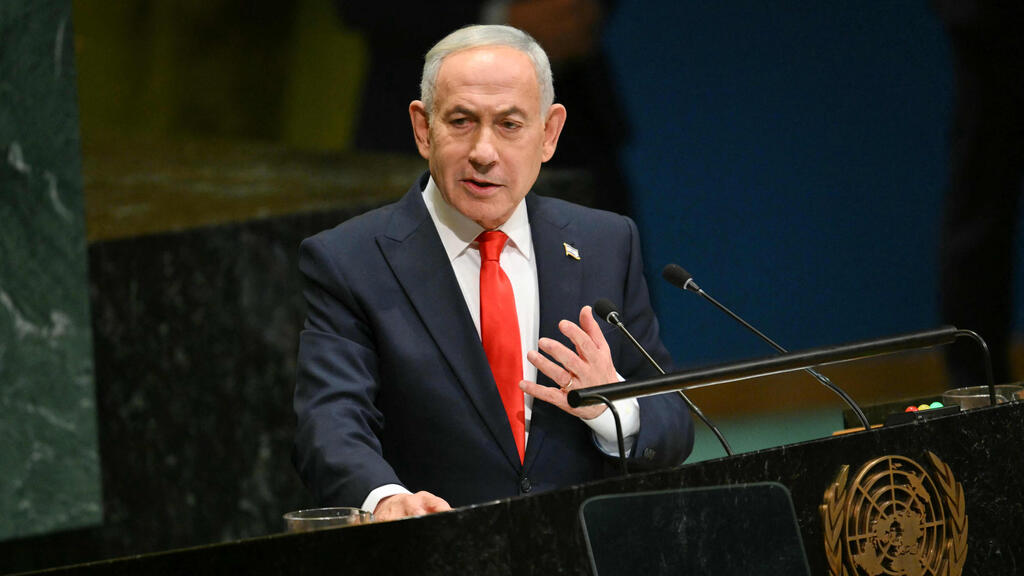
Benjamin Netanyahu speaking at the United Nations
(Photo: ANGELA WEISS / AFP)
Not every walkout matters equally. Iran, Pakistan, Algeria, Malaysia, and Indonesia already have deep structural political distance from Israel, so another hostile diplomatic gesture tells us relatively little. The countries that matter more are those where political disagreement is beginning to become economic policy.
Spain and Ireland belong in that category. Political criticism is increasingly moving into regulation, especially around settlements, defense, procurement, and other politically sensitive activities. These countries matter because they have both the institutional capacity and the economic relationship with Israel to make political disagreement commercially costly.
Germany, Britain, France, the Netherlands, and Denmark belong in a different group. They may criticize Israel sharply while maintaining significant commercial, technological, and security ties. For Israeli firms, the risk is therefore increasingly sectoral rather than national.
Slovenia is especially revealing because it recently moved in the opposite direction. Under one government, relations deteriorated and restrictions increased; under the next, many of those measures were reversed and ties improved. Slovenia shows that some political distance is structural, while some is electoral and reversible.
Turkey and South Africa present another model. In these cases, political confrontation is more deeply embedded in state policy, legal action, or repeated bilateral conflict. Businesses exposed to these markets must treat politics as part of the operating environment, not as background noise.
The Abraham Accords countries show the opposite problem. Public criticism of Israel can coexist with strong underlying interests in security, technology, investment, and strategic cooperation. In the Middle East, public diplomacy and actual economic behavior often need to be analyzed separately.
The key is not to classify countries as friends or enemies. The real risk appears where three factors meet: political distance, institutional capacity, and economic relevance. That is where diplomatic symbolism is most likely to become business risk.
Israel should act before the economic costs become visible. The government should build a permanent political and economic risk index that tracks UN behavior, sanctions proposals, procurement restrictions, research cooperation, investment decisions, and regulatory change by country. Israeli firms should also diversify away from jurisdictions where political deterioration is becoming institutionalized.
Israel should also stop treating Europe as one bloc. Germany is not Spain, Slovenia is not Ireland, and national politics matter. Economic diplomacy should focus especially on countries where relations are politically contested but still recoverable.
Finally, Israeli diplomacy must become more commercial. Ambassadors and ministers should identify the sectors, companies, universities, investors, and procurement authorities where political deterioration could become economically costly and intervene before restrictions are adopted. Once sanctions arrive, diplomacy is already late.
The empty seats at the United Nations are not the story. They are an early-warning system. Diplomats may leave the room first, but capital, contracts, and companies can follow.