


In retrospect, it appears that Operation Rising Lion in June 2025 marked the peak of Israel’s military and strategic achievements in the war with Iran. By contrast, the memorandum of understanding signed by the United States in the early hours of Thursday, which effectively ended Operation Roaring Lion, represents a strategic low point in the yearslong campaign against the regime in Tehran.
There were impressive achievements by U.S. Central Command and the IDF. The historic and successful cooperation itself, along with setting back Iran’s nuclear and missile programs by years, was of strategic significance. But the memorandum of understanding that an eager Trump was maneuvered into by the Iranians gave the ayatollahs a psychological victory that will strengthen their ability to survive and suppress their people, as well as an economic lifeline that will grow and enable them to rebuild capabilities and repair the destruction. Along the way, they also used the American president to limit the IDF’s freedom of action in Iran and Lebanon and drive a diplomatic wedge between Jerusalem and Washington.
Gallery
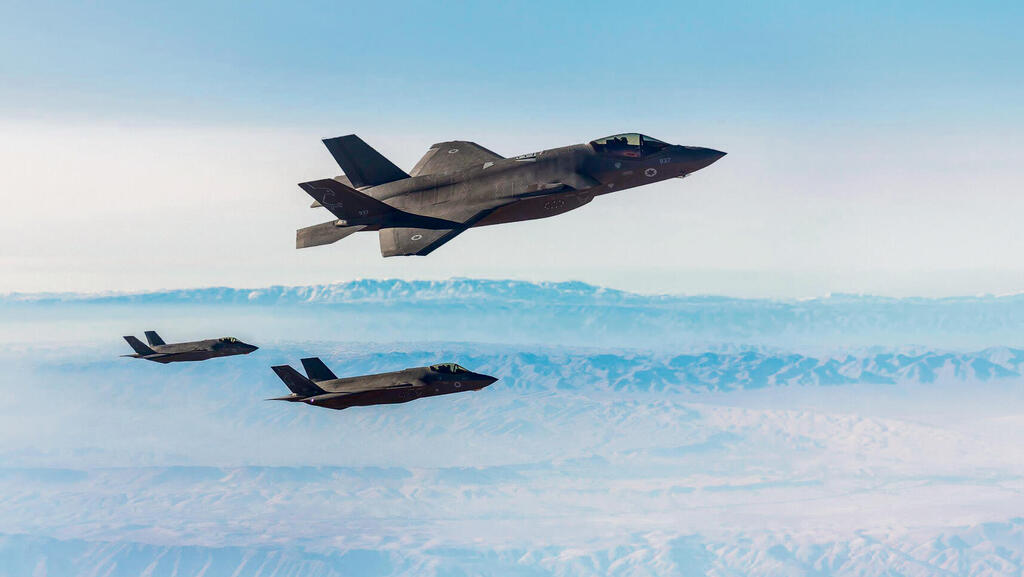
Air Force F-35 jets; historic military cooperation on one hand, a psychological victory for the ayatollahs on the other
It is important to clarify: Everything written here is based on current information and conversations with senior experts in intelligence, military operations and strategy, as well as professionals in the nuclear field, both scientific and security-related. All of them requested anonymity. I have stuck to their facts and assessments, and I am trying to provide a clear situation report — without politics — that allows for a sober assessment of what may lie ahead.
So how did a military campaign that succeeded in most of its stages, dealing Iran blow after blow, end in a memorandum of understanding that advances the enemy’s real interests in exchange for vague and nonbinding promises?
Trump’s January declaration, in which he signaled to protesters in Iran that “help is on the way,” set in motion the process that led a month later to Operations Roaring Lion and Epic Fury. Contrary to claims by opponents of the war in the United States, Netanyahu did not drag the Americans into it. In his view, he merely seized an opportunity and, together with the Mossad chief and IDF chief of staff, quickly presented Trump with an operational plan to fulfill his pledge to the protesters.
But in the U.S. media, the perception took hold that Israel had enticed Trump into a war that did not serve American interests and amounted to a glaring waste of resources. That perception was one of the main reasons for the accelerating strategic collapse in U.S.-Israel relations. Trump and Netanyahu wanted to deepen the achievements of Rising Lion and create conditions for the swift fall of the regime. But they did so hastily, in part because in February Military Intelligence unexpectedly presented an intelligence opportunity to decapitate Supreme Leader Ali Khamenei and the entire leadership of Iran’s intelligence and security institutions within minutes.
Trump, who often makes decisions by instinct, accepted Netanyahu’s proposal and approved the operation without the United States having prepared a military response to the possibility that the Strait of Hormuz would be closed or to the implications for the global economy. Trump also failed to take into account the internal political and public opposition that intensified as the operation and negotiations dragged on.
Iran, by contrast, fully and successfully exploited the only card it had. It closed the Strait of Hormuz and carried out what in judo would be called a strategic ippon against Trump and, indirectly, against Israel as well. It correctly bet that the American president would not have the courage to go against public opinion at home, which threatened his political standing ahead of the midterm elections, or against the wishes of the Arab Gulf states, which feared Iranian retaliation.
Trump: There is no reason Iran cannot have missiles


The ayatollahs were right. Trump, who did not act with cool judgment, did not carry out his blustering threats to resume the fighting. He also made a mistake that even a novice negotiator would not make, displaying eagerness to reopen Hormuz through diplomacy despite the immense military power at his disposal. Iran thus turned a military defeat into a strategic victory in the diplomatic arena. The main casualty is Israel, which has almost entirely lost its ability to influence issues related to its national security. Trump has reduced it, in American and global public opinion, to the status of an effective but irresponsible attack dog whose very existence depends on his goodwill.
To assess what may or might happen next, it is necessary to understand the overall picture: the military situation on the fronts that remain open and the current strategic position of the State of Israel.
The nuclear program: No imminent breakout danger
It is inaccurate to say that Israel faced an immediate danger of destruction, as Netanyahu claimed, but it launched Operation Rising Lion because the Iranians had taken steps that could have given them, within a short time, the knowledge and physical capability to produce an initial nuclear explosive device. Such a capability, combined with the large quantity of uranium that had already been enriched by June 2025 to a high level of 60% — almost weapons-grade material — created a real atomic weapons threat within months.
Rising Lion was planned as a short operation meant to thwart both the immediate nuclear threat and the missile threat emerging as Iran’s next major project. Trump stopped Israel after 12 days, but only after it had achieved nearly 80% of its military objectives. After a thorough strike on components of the nuclear program, Trump completed the mission with American bombers, putting the Fordow enrichment facility — which Israel could not neutralize on its own — out of action for a long time.
As a result, the main enrichment facilities were disabled, key nuclear scientists were eliminated and 440 kilograms of uranium enriched to 60% were buried at three sites: Natanz, Fordow and Isfahan. At least based on what is known, the nuclear program was thereby set back for a prolonged period, between three and five years.
In Roaring Lion, Israel and the United States attacked fortified and secret underground nuclear facilities where components of the bomb itself were being developed and produced. But it appears the operational gain there did not fundamentally change the picture. Today, Iran cannot break out to a nuclear weapon within a few weeks, or even months, even if it has immediate secret access to some of the material and even if a hidden enrichment facility exists.
The reason is mainly technical. Experts explain that to produce a reliable nuclear weapon, Iran needs two things. First, it must be certain the weapon itself will work, especially if it is a nuclear warhead mounted on a missile. Second, it must possess an arsenal of several bombs. A state cannot base nuclear deterrence on a single weapon, because there is always the possibility that the warhead will be intercepted, fail or not function properly.

An Israeli pilot before takeoff for Iran; control of the skies as a strategic deterrent asset
Even if one assumes the current regime is extreme and would seek revenge against Israel, its leaders do not act recklessly. That can be seen in the way they conducted negotiations with Trump. They know well that Israel, according to foreign reports, has a significant nuclear response capability — what is known as an air, land and sea-based second-strike capability, including from submarines. Israel’s ability to strike Iran’s population, government and industrial centers is a very serious threat. Therefore, if Iran ever decides to use a nuclear weapon, it will want to be certain that the weapon works and that it has at least five operational warheads, according to documents from the nuclear archive obtained by the Mossad.
Beyond that, there is another factor that is no less important: Every country that sought to join the nuclear club first carried out several tests. India, Pakistan, North Korea and others all did so. It is known that the Iranians prepared sites intended for underground tests, but a nuclear test is not something that can be hidden. It is quickly detected by international monitoring systems, intelligence agencies and the International Atomic Energy Agency. If Iran conducts such a test using an initial explosive device, it will serve as a warning to the world before it has an operational nuclear capability. Israel will be able to act, if the IDF is ready at that point with the necessary intelligence and munitions.
Indeed, after a nuclear test, the world would treat Iran as a nuclear power, but the damage to its international standing and the sanctions that would be imposed on it would be crippling, similar to the case of North Korea. It is therefore likely that in the near future, and given its current economic situation, Iran will avoid such a step.
It can be assumed that U.S. intelligence agencies, the Mossad and Military Intelligence under Maj. Gen. Shlomi Binder are closely monitoring the nuclear program. In the near term, Iran is unlikely to try to break out to a nuclear weapon. Moreover, as noted, its program has been significantly set back, especially the part related to the bomb. Rebuilding it will take a long time, even under the harsh assumption that the Iranians drag out the negotiations and refuse the U.S. demand to hand over their highly enriched uranium and stop enrichment completely.
The missile threat remains
In Rising Lion, Israel destroyed many launchers and missiles, as well as production facilities for missiles and the materials used to manufacture fuels and explosives. But the ballistic missile threat remains.
Despite the deterrence Israel achieved, the intelligence community had accumulated information by early 2026 showing that Iran had a plan to destroy Israel with conventional means, based on lessons learned from the previous confrontation. At its center was the idea of producing many thousands of ballistic missiles and launching dozens or hundreds in each barrage, overwhelming the air defense systems of Israel and the United States together. Netanyahu described it as “like a small atomic bomb.”
Operation Roaring Lion was designed to thwart that plan, deepen the damage to the nuclear program and pursue an additional goal: “creating the conditions for the fall of the regime by the Iranian people.” The operation was originally planned for June 2026 — this month — but Trump’s pledge to opponents of the regime and the opportunity to decapitate the leadership led to it being moved up. As the saying goes, haste was the work of the devil.
On the eve of the operation, Iran had about 2,500 long-range ballistic missiles and several hundred launchers, most of them hidden in tunnels and missile cities beneath rock layers more than 100 meters thick. Because Israel does not have bombs capable of directly penetrating to such depths, and the Americans had only a very limited number of roughly 12-ton bombs of the type used at Fordow, it was decided to seal the entrances to the tunnels and missile cities so the launchers could not emerge.
That tactic worked well in Rising Lion, but the Iranians learned a lesson and used a countermeasure: They had prepared huge D9 bulldozers in advance for the tunnels and missile cities. When the bombings ended, they cleared the rocks and dirt blocking the entrances and resumed launches within days. Israeli intelligence identified this, air force jets bombed and sealed the entrances again, and the cycle repeated. During the ceasefire, the Iranians opened more and more sealed tunnels.
The bottom line is that more than 50% of Iran’s ballistic launchers and missiles were put out of action. A cautious assessment holds that it still has more than 1,000 missiles of all types and ranges. That is not a small number, but it is not the 8,000 missiles Iran had planned to produce quickly on the eve of the operation. Together with the several thousand explosive drones it still has, Iran can still threaten Israel, the region and even Europe. It must now manage its munitions economy carefully and make do with several dozen launches a day, which Israeli and U.S. defense systems can handle. But the ballistic missile threat remains.
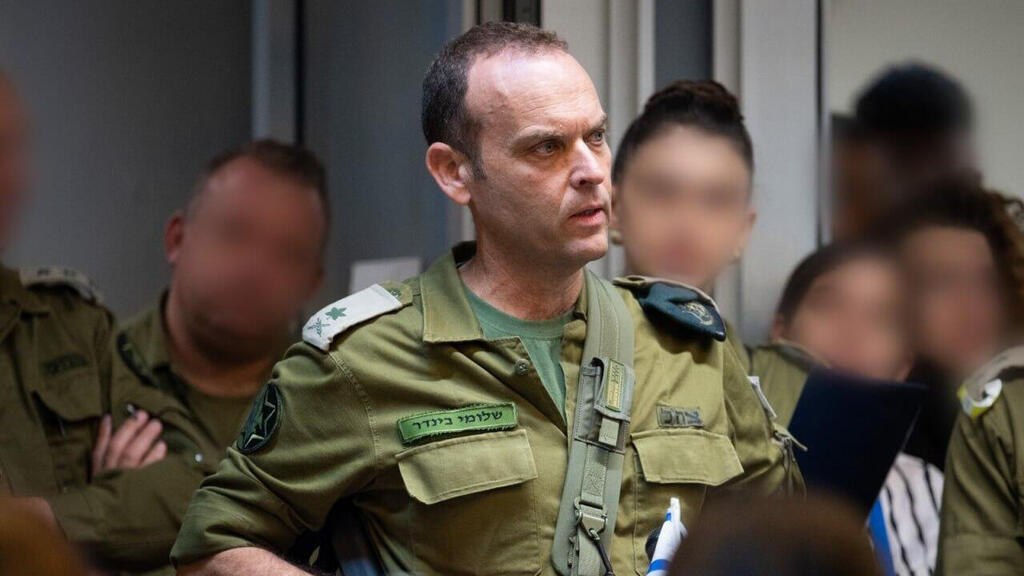
Military Intelligence chief Maj. Gen. Shlomi Binder; closely monitoring the nuclear program
(Photo: IDF Spokesperson’s Unit)
The main strategic achievement of the IDF and the U.S. military was the systematic and extensive destruction of defense industry plants and the massive research and development infrastructure that served the nuclear project, the ballistic missile project and other military-strategic arrays. The IDF defined the factories as vital targets because they contain Iran’s ability to restore its capabilities and develop the next generation of weapons. Therefore, military industry complexes, steel plants and petrochemical facilities were attacked, and according to more than one authorized source, with a high level of certainty, 100% of them were destroyed.
This means Iran’s ability to reproduce large quantities of missiles that would allow it to overwhelm Israel’s defense systems has been neutralized for a long time, probably years. Even if an agreement is signed and the United States releases large financial resources to Iran, it will need at least two to three years to restore the production system and return it to operation.
Freedom to operate over Iran
Another achievement was the almost complete disabling of Iran’s air defense detection and interception systems. The air force repeatedly created freedom of action in Iranian airspace, and that has strategic deterrent significance. Iran’s leadership knows that almost every vital infrastructure asset it has — governmental, military, nuclear, industrial and economic — is exposed to attack. That is why the Iranians demanded that the U.S. ensure Israel be committed to ending the war. Trump’s surrender to that demand ostensibly ties Israel’s hands if Iran fails to meet its nuclear commitments.
The memorandum of understanding is vague on this issue, but a very senior defense official made clear to me that the IDF has clear instructions regarding Iran: “We have detailed operational plans, backed by the necessary means, to prevent a situation in which Iran has nuclear weapons. We are ready to carry them out today if the political leadership approves them.”
He stopped there, but it is not hard to guess that he means that, as far as the IDF or Mossad is concerned, this situation could change to Israel’s detriment if and when Iran succeeds in restoring its detection and interception systems on its own. That is urgent for Iran, and it could happen quickly if it receives help from China or Russia. For now, however, it remains a major Iranian vulnerability and a significant component of Israeli deterrence against it.
Whether and when the regime falls
The Mossad is leading the regime-change effort, with the IDF playing a supporting role. There is no point in retelling how Trump approved the initiative that was supposed to ignite an uprising in northwestern Iran by Kurds brought in from Iraq after being armed by Israel and the CIA. Trump himself, after a conversation with Erdogan, torpedoed the initiative, which was supposed to lead other minorities to rebel and tie down forces of the Revolutionary Guards and Basij.
Either way, the Mossad believes the fall of the regime — which would not only delay its nuclear and missile ambitions but bring them to an end — will come. In the new influence division established by Mossad chief David Barnea to focus on the issue, there is great confidence that there is a good chance it will happen within two to three years at most.
The regime will now have to contend with the hardships of the population, crumbling water, sanitation and electricity infrastructure, soaring inflation and youth unemployment. “Only Trump can save the regime, which is cracked from within,” said a source who knows Iran well. “That will happen if he rushes to release frozen funds and lift sanctions. Our most important mission is to influence him so he does not lose interest.”
Where relations with the proxies are headed
During Operation Rising Lion, the Iranians discovered that the proxies they had built up for years failed to provide the assistance expected of them in a moment of truth. Hezbollah refrained from opening a front against Israel, the Houthis disappeared and went silent, and the Iraqi militias talked a lot but did little. For Iran, this was a strategic disappointment.
But in Operation Roaring Lion, there was a shift, especially with Hezbollah, which is under growing pressure and, with no other mentor on the horizon, decided to bet on the Iranians. Secretary-General Naim Qassem responded to pressure from Tehran and carried out his threat to open fire on Israel.
Hezbollah’s launches after Khamenei’s assassination, which violated the ceasefire in Lebanon, were symbolic. But Israel saw them as an opportunity to expand the security zone north of the border. What followed is known. Launches toward the Galilee sent tens of thousands of frustrated Israelis into shelters several times a day. They expressed their anger at the government they felt had abandoned them through the media. Tehran noticed and understood that this time Hezbollah was effective.
At the same time, about 1 million displaced Shiites from villages in southern Lebanon fled north, and buildings in the Dahiyeh fell like cards. Iran’s grateful leadership came to help, and the strategy of linking the arenas took hold. It was imposed on Trump, who wanted a deal, and the result is that he is now limiting Israel’s operational freedom of action in Lebanon.
Tehran is now trying to rebuild its relationship with the proxies. From its perspective, this is not only a flak jacket but also a central mechanism for exporting the revolution and projecting regional power. Still, the Iranians understand that returning the proxies to their previous status requires investing resources and creating a new logistical network for transferring weapons in place of Syria, which was taken over by a Sunni jihadist who despises Shiites. For now, their ability to do so is limited. They can still transfer some money, but their capabilities in that area are also more limited than before.
Lebanon: The story is far from over
Hezbollah was significantly weakened in Operation Northern Arrows and later by Operation Rising Lion, which exposed the weaknesses and vulnerability of its patrons in Tehran. The organization lost most of its long-range and heavy missile arrays as early as 2024, and since Oct. 8, 2023, about 8,000 of its fighters and commanders have been killed, out of roughly 30,000. Internal opposition to it is growing by the day, including within the Shiite community, and Lebanon’s government wants an arrangement with Israel that would deprive Hezbollah of legitimacy to wage a war of “resistance.”
In this respect, Israel’s position is immeasurably better than it was on the eve of the war. The threat to communities in the Galilee from direct fire and ground infiltrations has largely been removed, after the IDF deployed on the outskirts of Nabatieh and on the Beaufort and Ali Taher ridges. This made it possible to uncover and destroy kilometers of combat tunnels Hezbollah had built so it could rain fire on the Galilee without fear of the air force.
However, Hezbollah still has the ability to prevent northern residents from living normal lives and to wage a sophisticated guerrilla war against the IDF between the border and the “yellow line” inside Lebanon. It has enough rockets, anti-tank missiles, UAVs and attack drones for that purpose.
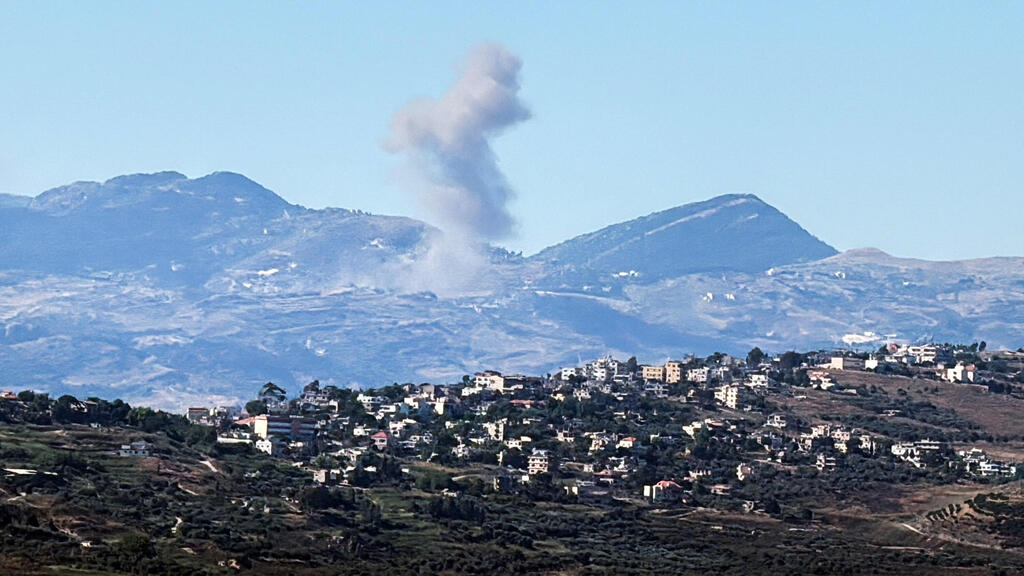
IDF strikes in southern Lebanon
(Photo: REUTERS/Avi Ohayon)
Hezbollah has not been decisively defeated, and it will not be until it is disarmed. In the current situation, only the IDF can do that, but doing so would require conquering most of Lebanon. The truth must be acknowledged: The IDF currently does not have the manpower, resources or plans needed for such an operation. The memorandum of understanding has made the situation worse because Israel has lost another important share of the freedom of action it had throughout Lebanon.
In the current complex situation, the IDF, with the approval of the political leadership, has adopted the following courses of action:
- The IDF will continue defending the Galilee from the yellow line, which has been moved north and west again and now runs through southern Nabatieh Heights to the sea. The area between the border and the yellow line is now called the “security area,” and the IDF will continue operating inside it to dismantle infrastructure discovered above and below ground, recently mainly in the Nabatieh Heights. The memorandum includes a demand for withdrawal, but the political leadership rejected it in contacts with Washington. The IDF says the issue will be discussed in negotiations with the Lebanese government, and there is currently no intention of withdrawing from the entire area, certainly not immediately.
- Despite Iranian threats and the ultimatum, the IDF will not hesitate to strike in order to thwart and deter any actor in any place from which launches toward the north are carried out. That applies to people, sources of fire or buildings that pose a risk to forces. It is reasonable to assume that Netanyahu, after the humiliating reprimand he received from Trump in recent days, will not rush to order a strike in Beirut. But the Bekaa Valley is in the updated target bank.
- The IDF is demanding that all Hezbollah operatives still south of the Litani leave the area and move north of the new yellow line.
- Residents of southern Lebanon whose villages are inside the security area will not be allowed to return to their homes. This directive will be reviewed if an agreement is reached with the Lebanese government. The IDF is part of these negotiations, whose aim is to stabilize the ceasefire, disarm Hezbollah where the Lebanese army can ensure it and reach normalization. As part of this, the IDF is preparing to evacuate several limited areas that would be transferred as a trial to Lebanese army control.
- The IDF will continue implementing the new security concept, under which IDF forces physically separate terrorist organizations from border communities. This concept provides greater security for civilians, but troops stationed in fixed posts become targets for guerrilla raids, roadside bombs and Hezbollah fire. There is still no adequate response to the threat of explosive drones, especially those guided by fiber optics. But the number of casualties has recently declined, thanks to the IDF’s efforts to eliminate drone operators, use several technological channels, apply field conduct methods and deploy defensive networks.
The bottom line is that the Lebanese story is far from over. The political leadership and the IDF will now have to learn how to operate within the strange ceasefire forced on us by the Iranians through Trump. At the same time, it must be recognized that the only path open to Israel for ending the confrontation with a stable arrangement is through serious diplomatic negotiations with Lebanon’s government and by mobilizing economic, Saudi and American support that will strengthen President Joseph Aoun and his army, enabling him to normalize relations with Israel, move Hezbollah away from the border and prevent it from rebuilding with Iranian money.
No diplomatic endgame
To sum up the military picture, Israel’s security situation has improved on the Iranian and Lebanese fronts. The threats have not disappeared, but they have been delayed and pushed farther away geographically. In the meantime, operational experience has been accumulated that will allow better handling of future threats.
The IDF has found itself with 12 brigades inside 1,220 square kilometers of territory that was under enemy control before October 7. But all these arenas remain active, and fighting could resume in any of them at any moment. That is a situation a country will struggle to live with over time. National security is not determined by the number of missiles destroyed or tunnels demolished, but mainly by the ability to leverage military achievements into diplomatic arrangements and gains. Right now, Israel lacks a diplomatic endgame.
As a result of the trauma of the massacre, Israel developed a security doctrine based on the assumption that every problem can and must be solved by force. As a result, it could miss a diplomatic arrangement in Lebanon that would neutralize Hezbollah for years until Israel can deliver the final blow, if needed. Trump is managing our diplomatic and security affairs according to instincts and in line with his narcissistic and fickle character, and therefore the end is not in sight.
The good news is that the chief of staff has taken the initiative and informed his generals that in the coming days, the IDF will begin gradually returning to readiness. The goal is for the regular combat force to return to a routine of training and operational deployment by the Tishrei holidays, and for most reserve brigades to be released. It is not clear how this will happen when even the law extending mandatory service has not yet passed in the Knesset, but one must assume Zamir knows what he is doing.
It can be assessed with certainty that the war with Iran will not resume soon. Even given difficulties in the negotiations — and there will be many — and even if the talks collapse, the U.S. will not resume fighting at least until the end of 2026, and it will not allow Israel to launch a significant operation in Iran or Lebanon. Fighting will also not resume because the ayatollahs have an overriding interest in not angering Trump in the coming months. They want sanctions lifted and have therefore committed not to change the nuclear status quo. For the Iranians, as a matter of worldview and culture, nothing is urgent. Even if they want to break out to a nuclear weapon, they are likely to wait a year or two.
To sum up the war that began on October 7, Israel has not eliminated the threats, but its citizens are safer than they were before the massacre. Strategically, however, its position is among the worst in its history — some say the worst since the War of Independence ended in 1949.