


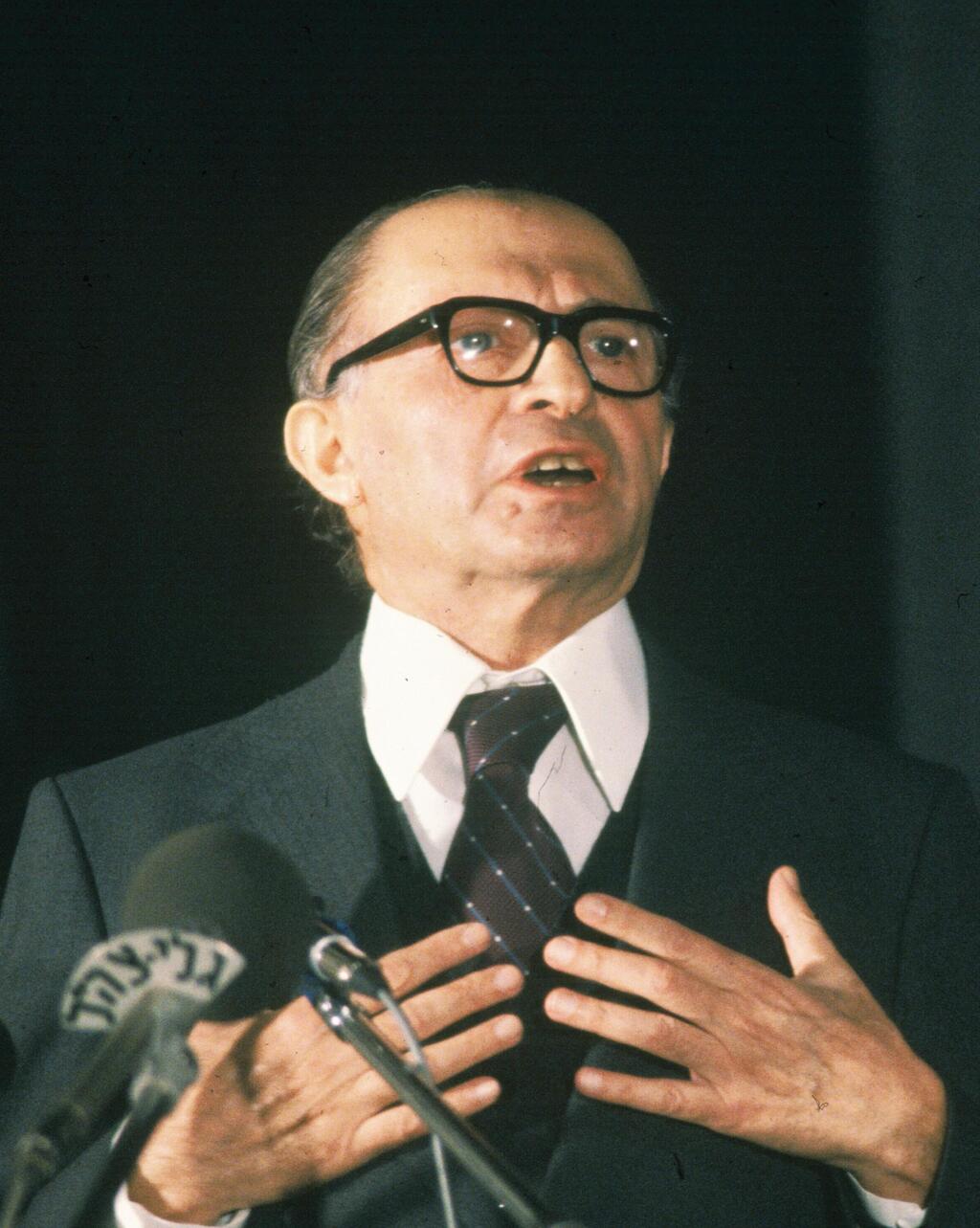
For decades, Likud could make one claim about itself with confidence: It was a party of the nationalist right, but it was not the party of the racist and supremacist fringe. Menachem Begin, the historic leader who transformed Likud into Israel’s governing right, understood that distinction and insisted on maintaining it.
He was a fierce nationalist and political warrior, but he drew a clear line between Likud and the movement of Rabbi Meir Kahane, whose followers promoted an openly racist vision of Jewish supremacy and the removal of Arabs from Israel. That line mattered. It told Likud voters, and the country, that there were positions the democratic right would not legitimize simply because they came from further to the right.
Benjamin Netanyahu spent years tearing that barrier down. Not necessarily because he embraced every element of that ideology himself, but because his political survival increasingly depended on assembling every possible faction of the Israeli right into a governing majority. Each election, each coalition crisis and each threat to his rule made the far right more useful. And each time Netanyahu helped bring those forces closer to the political mainstream, they became a little more legitimate.
That process has now reached the point where Netanyahu appears increasingly concerned not only about the power of Itamar Ben-Gvir outside Likud, but about the influence of Ben-Gvir-style politics inside his own party. Reports ahead of the Likud primaries suggested concern in Netanyahu’s camp that hard-line lawmakers such as Tally Gotliv and May Golan could eventually take their Knesset seats and defect to Ben-Gvir’s Otzma Yehudit after the election. But the more revealing question is why they would need to defect at all. When the ideological distance between the two parties keeps shrinking, the distinction between them becomes increasingly difficult to see.
Ben-Gvir did not move closer to Likud. Likud moved closer to Ben-Gvir.
If only it were possible to blame the primaries. It is true that recent weeks produced a competition among candidates over who could take a harsher line against the attorney general, the Supreme Court and anyone branded part of the “deep state.” There was barely a word about the real issues confronting Israel: Iran, Hezbollah and Hamas, despite a government failure of historic proportions. So what remains? Not merely pointing a finger at supposed enemies within, but waving a fist and promising that after the election they will settle scores, dismantle institutions and perhaps even put their imagined enemies on trial.
Excuse me? You were in power. A fully right-wing government. Instead of initiating a necessary judicial reform, you produced proposals so aggressive that even supporters of reform, myself included, found them impossible to accept. And now you remember? Now you threaten? That may fit Ben-Gvir. It does not fit a governing party.
The deeper problem is that Likud’s radical wing no longer looks like an insurgency challenging the party from the margins. It increasingly shapes the party’s tone. Figures such as Gotliv and Golan represent a political language and worldview that once would have stood far outside Likud’s accepted boundaries. Golan has said that “there are no ideological gaps between Otzma Yehudit and Likud.” Gotliv has repeatedly praised Ben-Gvir, who has openly invited her to join his party. Likud lawmaker Nissim Vaturi has said that “Kahane was right about many things” and that today he would receive the Israel Prize. These are not simply provocative remarks. They show how far the ideological border has moved.
In 2022, Netanyahu still understood that Ben-Gvir carried a political stigma. He refused to be photographed with him. Yet that did not stop Netanyahu from helping bring Ben-Gvir’s political camp into the mainstream. He pushed alliances on the far right because he needed every possible vote to secure a governing majority. The calculation worked. But political alliances change more than parliamentary arithmetic. They confer legitimacy. Once politicians who had been treated as beyond the democratic mainstream become coalition partners, ministers and regular fixtures of government, their ideas stop appearing exceptional. They become part of the political conversation. Eventually, they become part of the governing party itself.
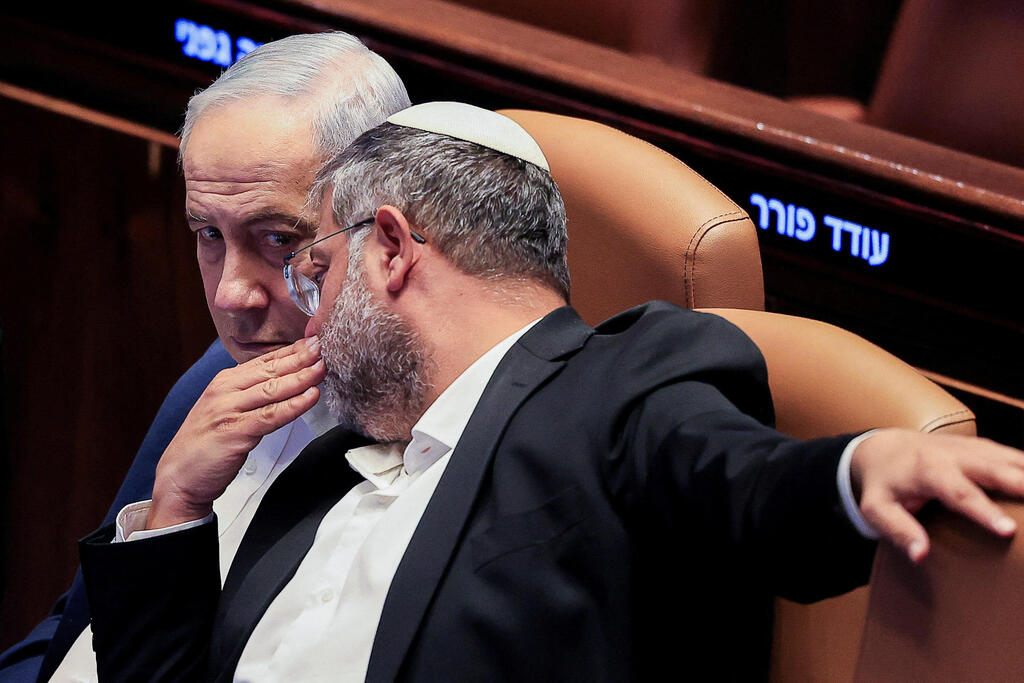
Prime Minister Benjamin Netanyahu and National Security Minister Itamar Ben-Gvir
(Photo: REUTERS/Ronen Zvulun)
That is what Begin understood and Netanyahu forgot. Begin did not reject Kahanism because he was a man of the left. He rejected it precisely as a leader of the right. He understood that a democratic nationalist movement required boundaries, and that racism and extremism could not simply be absorbed in the name of ideological solidarity or political convenience.
For years, Netanyahu could assume that no matter how far he pushed Likud’s boundaries, he would remain the indispensable authority at its center. He would choose the coalition. He would determine the strategy. He would decide how far right was too far. That assumption is becoming harder to sustain.
The politicians who have risen inside Likud by attacking the courts, the attorney general and other state institutions do not necessarily owe their power to Netanyahu. Some know perfectly well that he would prefer a more disciplined and less incendiary party list. If they win despite him, they may feel even less constrained by him. That is why these primaries matter. They are not simply an internal contest over positions on a slate. They are a test of whether Netanyahu still controls the ideological forces he spent years legitimizing.
There was always a political logic behind Netanyahu’s strategy. The Israeli right is fragmented, and Netanyahu understood that elections could be lost if votes on his side were wasted on parties that failed to enter the Knesset. Bringing small right-wing factions together was electorally rational. Without them, he risked losing power. But that strategy came with a price. The forces Netanyahu helped normalize now have their own leaders, their own constituencies and increasingly their own representatives inside Likud.
And that matters because Likud voters are not synonymous with the radical right. Many are traditional nationalists, security hawks and conservatives who see themselves as heirs to the movement of Begin and David Levy. They are right-wing. They are not Kahanists. Yet Netanyahu’s endless battle for political survival has steadily weakened the distinction between those two traditions.
He needed the far right, so he legitimized it. He needed its voters, so he helped bring its leaders into the political mainstream. He needed coalition partners, so positions once considered beyond the boundaries of Likud became negotiable. Now, with another election approaching and the primaries revealing how powerful the party’s radical wing has become, Netanyahu may be discovering that this process cannot simply be reversed when it becomes inconvenient.
The danger for Netanyahu is no longer merely that Likud politicians might defect to Ben-Gvir. It is that Ben-Gvir’s politics have already moved into Likud.
Begin built a wall against that politics. Netanyahu tore it down.
That wall must be rebuilt.
For Israel, and for the right.