

There are legitimate reasons to debate Hollywood consolidation, corporate influence, media ownership and the concentration of cultural power. Yet when actor and activist Mark Ruffalo weighed in on Paramount's acquisition of Warner Bros. Discovery, his criticism traveled somewhere remarkably familiar: Israel, Gaza, and the Jewish family behind the company.
According to Deadline, Ruffalo connected his opposition to the business deal to the Ellison family's relationship with Israel and Oracle's technology business. After Paramount characterized his comments as antisemitic, Ruffalo accused the company of attempting to silence him.
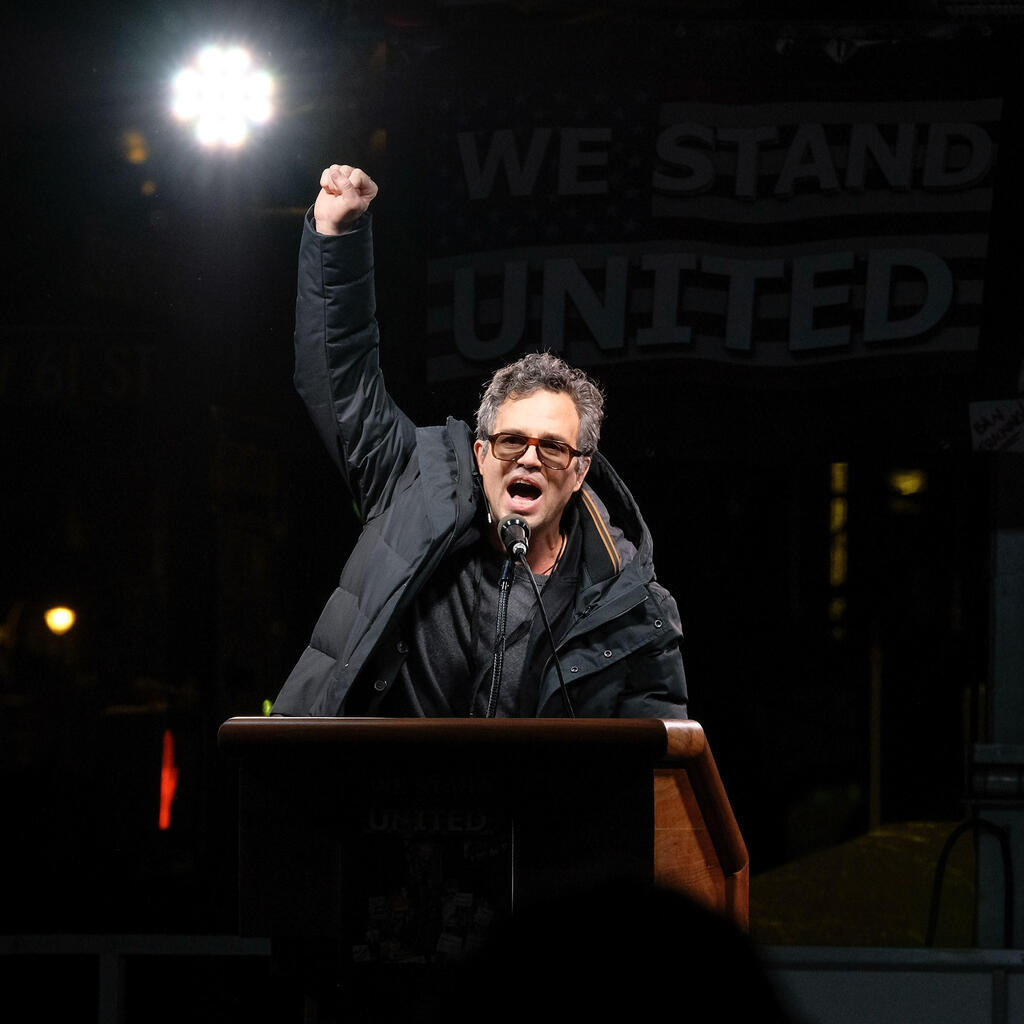
Ruffalo has the right to criticize Israel, Zionism, Jews, Israeli governments, military operations in Gaza or American foreign policy. Free expression also protects speech that is hateful, bigoted, or profoundly wrong, and it permits people to repeat claims that may be false or misleading, subject to applicable law. But the right to speak is not a right to be believed, applauded, or insulated from consequences. It certainly does not confer immunity from criticism, scrutiny, fact-checking, or accusations of prejudice when the evidence warrants them. Ruffalo is free to say what he believes; everyone else is equally free to examine what he says, challenge his claims, identify misinformation, and question the prejudices or double standards reflected in his rhetoric.
That distinction is central to the current controversy. There is a difference between criticism and fixation. When Israel, Zionism, and Gaza repeatedly become focal points of moral condemnation—even in controversies originating elsewhere—the pattern deserves examination. When the Jewish identity of people involved becomes relevant to a critique of corporate power, that examination becomes even more necessary.
This is not an isolated episode. Ruffalo was among entertainment figures who signed a pledge refusing to work with Israeli film institutions deemed by its organizers to be implicated in “genocide and apartheid,” a campaign covered by ynet. Paramount publicly condemned the boycott, arguing that silencing individual artists based on nationality does not advance understanding or peace. Ruffalo has also opposed the IHRA Working Definition of Antisemitism, joining critics who contend that it can inhibit legitimate criticism of Israel.
Precision matters. Criticism of Israel is not inherently antisemitic, even though opposition to Zionism almost always demonstrates hostility toward Jews. Israelis and Jews themselves vigorously debate Israeli governments and policies. The IHRA definition explicitly states that criticism of Israel comparable to that directed at other countries cannot be regarded as antisemitic. But the inverse is equally important: describing rhetoric as “anti-Zionist” does not automatically immunize it from antisemitism. Political terminology cannot transform double standards, conspiracy tropes, or suspicion directed at Jewish identity into something benign.

Ruffalo was among entertainment figures who signed a pledge refusing to work with Israeli film institutions
(Photo: Tartezy, shutterstock)
The deeper problem with Ruffalo's approach is the binary framework through which Israel and the Palestinians are so often presented. A conflict involving competing national movements, wars, terrorism, failed negotiations, regional powers, religious ideologies, security dilemmas and generations of trauma becomes a morality play of oppressor and oppressed. In this overly simplified false narrative, Palestinians become permanent victims; Israel becomes the permanent villain. Facts that complicate this framework are too easily discarded.
Any serious discussion of Gaza must address Palestinian suffering and Israeli conduct. It must also account for Hamas, Palestinian Islamic Jihad, Palestinian terrorism, the October 7 massacre, hostage-taking, Iran's regional strategy, the role of Iranian-backed armed groups, Arab conquests, and mujahideen, people who engage in jihad. Recognizing these realities does not negate Palestinian suffering. It recognizes that Palestinians, Israelis, their governments, and armed organizations all possess agency. Human-rights advocacy should be capable of recognizing Palestinian rights and Israeli security simultaneously. Human rights advocacy should also clearly express where human rights are protected and by whom, and which organizations clearly do not protect human rights.
Ruffalo's own history demonstrates the danger of allowing moral certainty to outrun factual precision. During the 2021 Israel-Hamas conflict, he used the term “genocide” to characterize Israel's conduct and later publicly apologized, acknowledging that the term had been inaccurate and inflammatory and that such language was being used to justify antisemitism. Yet he later joined the viral “All Eyes on Rafah” campaign, sharing a campaign built around an AI-generated image rather than an actual photograph of Rafah. Palestinian suffering is real and deserves attention. That is precisely why advocacy about it should depend on verified information rather than viral simplification.
There is also a broader contradiction within this style of activism. The Middle East contains authoritarian governments and armed violent movements responsible for political imprisonment, religious persecution, repression of women and minorities, terrorism, executions, and other grave abuses. No activist must address every injustice, and selective advocacy alone does not prove prejudice. But when one nation becomes an object of exceptional and recurring moral scrutiny, while its national movement and eventually the identity of its people become part of that indictment, it is reasonable to ask why.
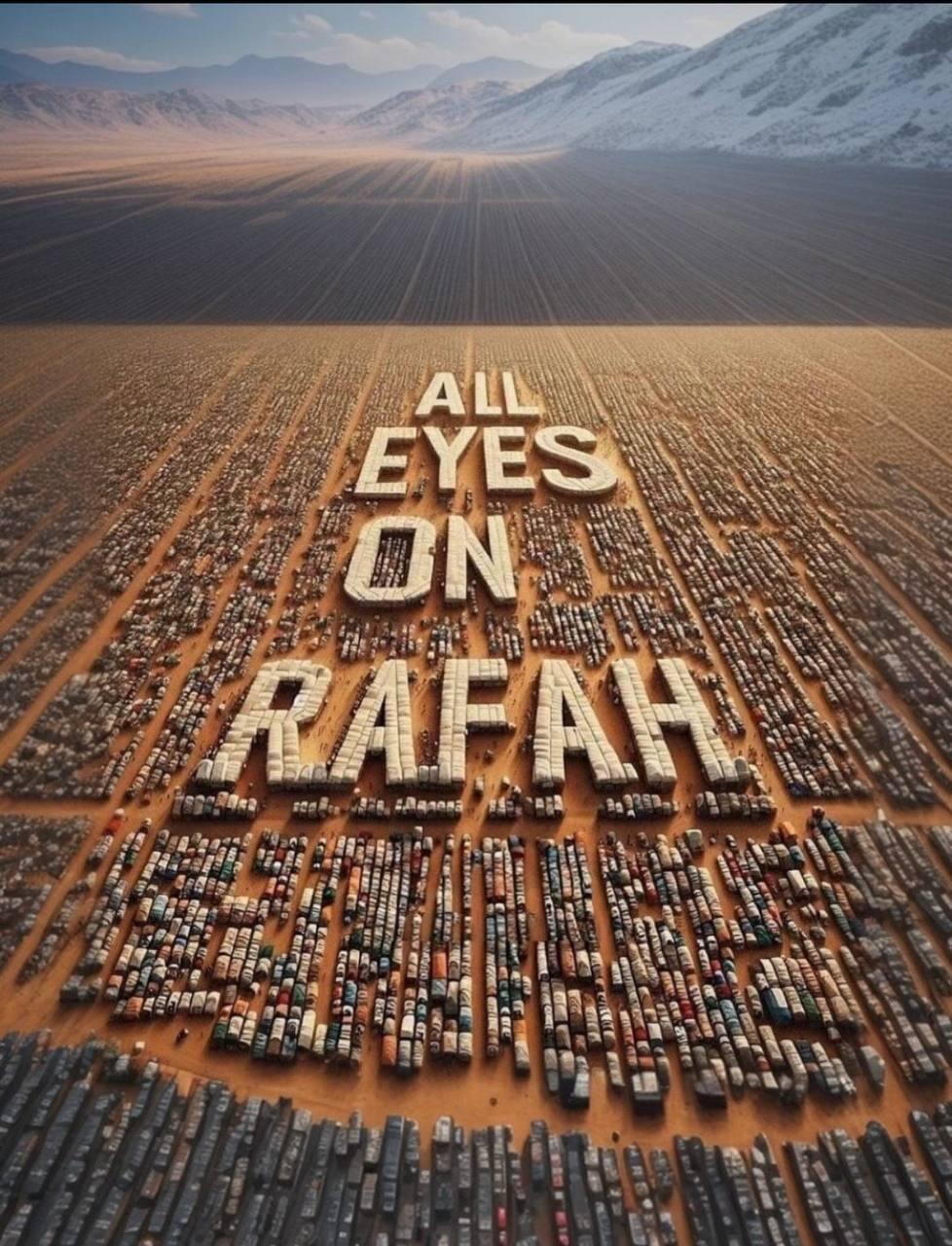
The viral 'All Eyes on Rafah' campaign, sharing a campaign built around an AI-generated image
Within parts of progressive politics, Israel has become more than a country whose policies are criticized. It is falsely and obsessively portrayed as an embodiment of colonialism, racism, militarism, and oppression. Zionism consequently becomes defined not as the diverse historical movement for Jewish national self-determination, but as something inherently sinister. From there, Jewish attachment to Israel itself can become suspect.
That is why the latest Ruffalo controversy should concern people beyond Hollywood. Criticizing, scrutinizing, and closely studying billionaires, media consolidation, or corporate influence is legitimate. Introducing Jewish identity into an indictment of power carries a different historical significance. Antisemitism has long portrayed Jews as possessing sinister or disproportionate control over finance, media, governments, and cultural institutions. A person need not consciously embrace those beliefs to reproduce rhetoric that echoes them, and substituting “Zionist” for “Jew” does not automatically erase the problem.
Ruffalo matters here less as an individual than as an example of a larger culture of performative activism. Social media rewards certainty over nuance, emotional imagery over context, and moral condemnation over careful analysis. Celebrity magnifies those incentives, allowing political narratives to reach millions before evidence, context, or corrections catch up.
A genuinely universal human-rights framework demands more. Palestinian civilians deserve dignity, security, political rights, and a future beyond war. Israelis deserve the same. Palestinians should not be stripped of agency to preserve a political narrative, and Israelis should not be transformed into permanent villains to sustain one.
Mark Ruffalo has the right to speak. He has the right to be offensive. He has the right to express views others regard as hateful or bigoted, and he can make claims that prove false. But freedom of expression works in both directions. The public has the same right to scrutinize his words, expose inaccuracies, challenge double standards, and identify antisemitism when his rhetoric crosses that line.
Free speech protects Ruffalo's right to speak. It does not protect his ideas from judgment.
And when Israel repeatedly emerges as the villain, inconvenient facts are subordinated to ideology, Zionism becomes shorthand for evil, and Jewish identity itself enters discussions of power and culpability, calling the resulting rhetoric “anti-Zionist” does not end the conversation about antisemitism—it is where that conversation begins. Forcing facts to fit his opinions, as opposed to shaping his opinions based on facts, leads to overly simplified performative-activism that easily reveals hypocrisy and bigotry.
Yuval David is an Emmy Award–winning journalist, filmmaker, actor, news commentator, and strategic advisor focused on combating antisemitism, extremism, and disinformation while advancing democratic values, human rights, and the U.S.-Israel relationship. He advises policy organizations and appears regularly across major American, Israeli, and international news networks. He is a fellow at the Middle East Forum and a council member of Voice of the People, founder of the Jewish & Indian Alliance and the Mosaic Impact Labs.