

“In 1948, my uncles stayed in Haifa, and today my cousins are doctors and engineers,” a Palestinian I met in the Yarmouk refugee camp in Damascus told me, during a story I prepared for ynet's outlet sister Yedioth Ahronoth on the year since Syrian President Bashar Assad fell.
“In the end, it’s Kafkaesque, but those who found themselves in Israel succeeded more than those who found themselves among the Arabs.” Yarmouk was once the capital of the Palestinian diaspora. It no longer exists. Assad bombed everything.
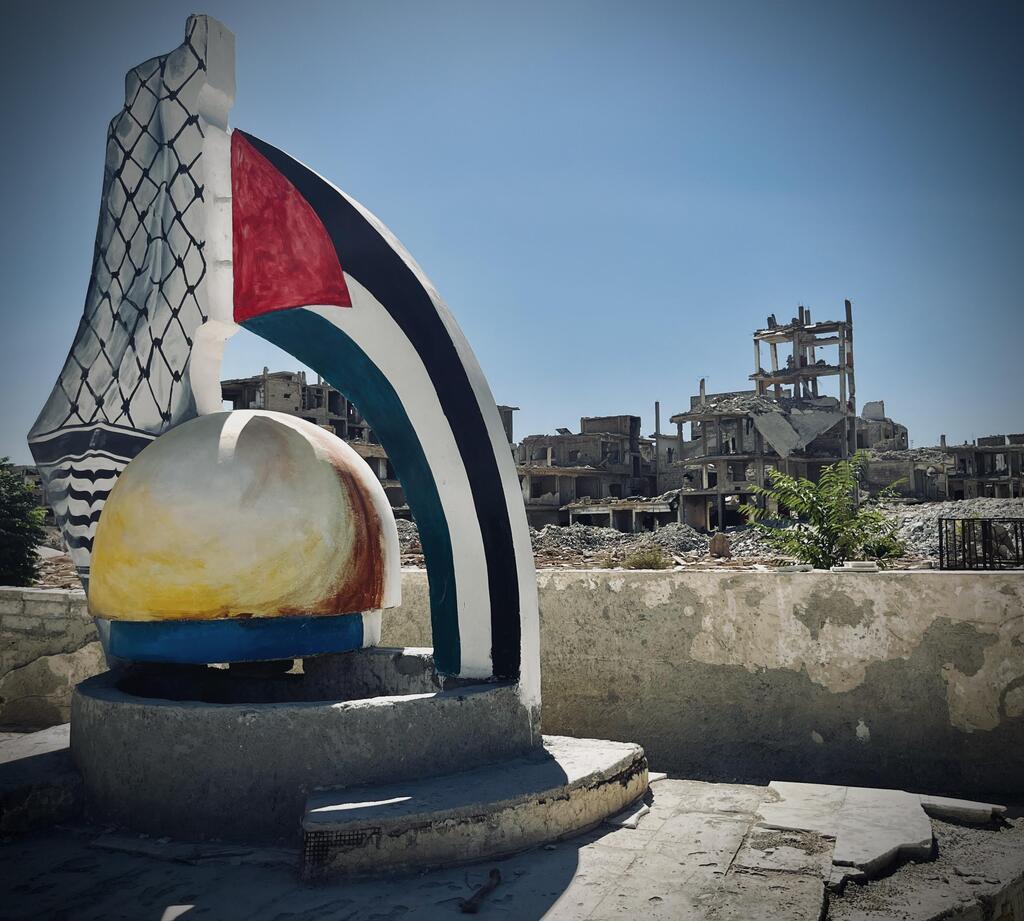
Yarmouk's graveyard
(Photo: Francesca Borri)
The Middle East is confusing right now. In Jenin, an activist who used to travel to Ramallah to buy wine to drink in secret with friends told me, “Everything here is stuck in place, culturally and socially. If it weren’t for the occupation, we would all want to live in Tel Aviv.” In Baghdad, a musician said, “After the Holocaust, the Jews started again from zero. Look at Israel now. For a moment, don’t look at the occupation. Look at the economy, the technology. Here, by contrast, there is only what was built hundreds of years ago. There is only what we inherited. We only destroyed.”
In Beirut, the barista at my favorite cafe is an admirer of Netanyahu. “I don’t relate to the occupation. Netanyahu is a decision maker. He has a strategy I don’t agree with, but he goes straight ahead. And here? Here there isn’t even a government. Here we don’t even know who decides.”
In Europe, if you so much as mention the October 7 massacre, they accuse you of complicity in genocide. In bookstores, you can find everything; everyone has written a book about Gaza, but you can’t find Eli Sharabi’s book “Kidnapped.” You try to understand Israel, and they tell you there’s nothing to understand, that everyone is a murderer. In the Middle East, it is the opposite. People speak openly about Israel, a country like any other country, one that exists and will continue to exist, that will face criticism but will not be erased.
 Francesca BorriPhoto: Haim Zach
Maybe that is not so strange. On October 7, no one answered Hamas’ call. No one joined the war, not even Hezbollah, not even Iran. For all Arabs, what was clear to Syrians long ago was suddenly clear again: they are pawns. For Assad, for the Gadhafis, for the Saddams, opposition to Israel was mostly rhetorical, an excuse to impose permanent emergency rule, justify general collapse and cling to power.
Now there is a new Middle East. You can choose to fear it and bomb it, or be brave and talk to it. Assad left Syrians in absolute poverty. But one day we will walk in Damascus the way we walk in Paris, London or Venice, and we will find the antiques shop beside the Umayyad Mosque, where all of Syria is still whole. It is packed with carpets, textiles, ceramics and silver. The owner knows the history of every object and every corner of Damascus. Listening to him over a cup of tea is like stepping into “One Thousand and One Nights.” His name is Salim Hamdani. He is Jewish.