

While most attention is focused on events in Iran, a complex and increasingly dangerous maze is taking shape on Israel’s other fronts. The chief of staff’s warning that assigning additional security missions in the West Bank could cause the army to “collapse into itself” drew attention. Yet that same chief of staff, along with the political leadership, is simultaneously walking with open eyes into a reality in Lebanon that could further strain the military, without delivering northern residents the security they deserve.
Defense Minister Israel Katz, who rivals President Donald Trump in the pace of declarative statements, has already outlined the northern war plan: the creation of a “security zone” at least 8 kilometers wide across southern Lebanon, cleared of Shiite residents and populated by IDF forces that would maintain, according to one report, “at least 18 positions” across the sector.
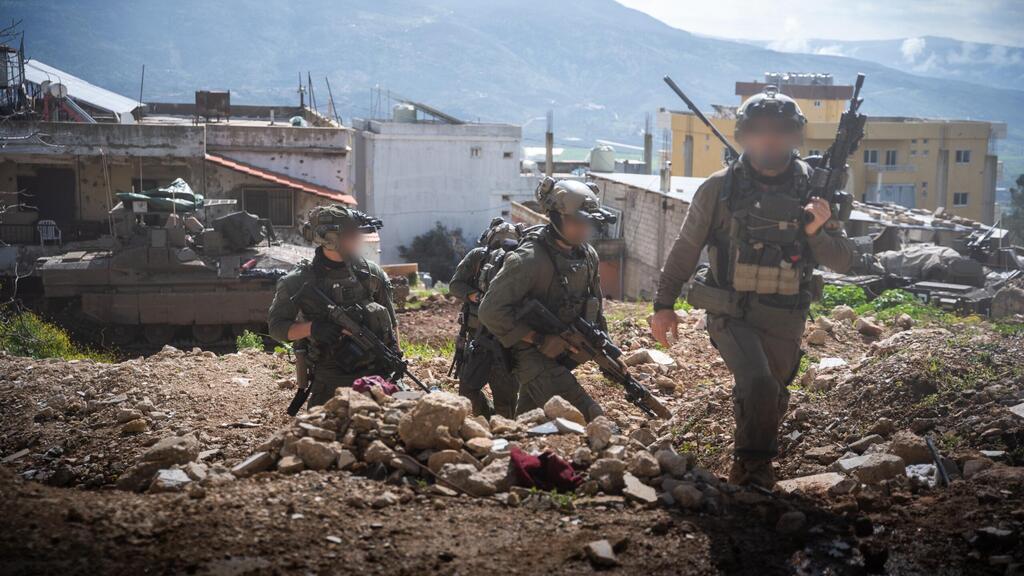
IDF forces operate in Lebanon
(Video: IDF)


Such a zone, according to the minister and senior military officials, would push Hezbollah’s threat of raids and direct fire away from northern communities and allow residents to live safely. Experienced ears may recall Menachem Begin’s 1982 promise that “the land will be quiet for 40 years.”
To understand what is now taking shape, it is worth recalling what the original “security zone” was between 1985 and May 2000. Over time, a narrative took hold that the zone protected northern communities, and that Israel withdrew only because a weak society, symbolized by the “Four Mothers” movement, could no longer bear the cost of remaining in Lebanon.
In reality, the security zone was not truly held by the IDF and did not effectively protect the north. The vast majority of positions and troops in the zone belonged to the South Lebanon Army. Most IDF positions were close to the border, with only a few deeper inside Lebanon, and they were insufficient to prevent infiltration into northern communities or rocket fire against them.
Whenever the South Lebanon Army appeared close to collapse, Israel launched major operations such as “Accountability” and “Grapes of Wrath,” while Hezbollah responded with heavy rocket fire on Israeli communities. This concept not only exacted a heavy toll in lives but also proved strategically futile. Among the first to recognize this were senior commanders such as Amiram Levin and Giora Inbar.
This time, the plan is entirely different: a solid belt of military presence composed solely of IDF forces, controlling a stretch of territory 120 kilometers long and with considerable depth. It will not be able to prevent high-trajectory fire, but it is intended to create a real buffer between Hezbollah, which along with local residents would be pushed out of border villages, and Israeli communities.
This would require thousands of troops at any given time. Even then, it is doubtful they could stop small, determined squads familiar with the terrain from infiltrating Israel. Not in a scenario like October 7, to which we will return, but even preventing isolated attacks in one or two communities would be difficult.
The plan would involve fixed positions connected by predictable and vulnerable logistical routes, given the rugged and complex terrain. Such a deployment is a dream scenario for a local guerrilla force, which could harass a large, cumbersome and stationary army from near and far. Such a force, whether Hezbollah or another actor, will inevitably emerge. Hezbollah itself grew out of resistance to Israel’s 18-year presence in Lebanon; it or its successors would grow again under similar conditions.
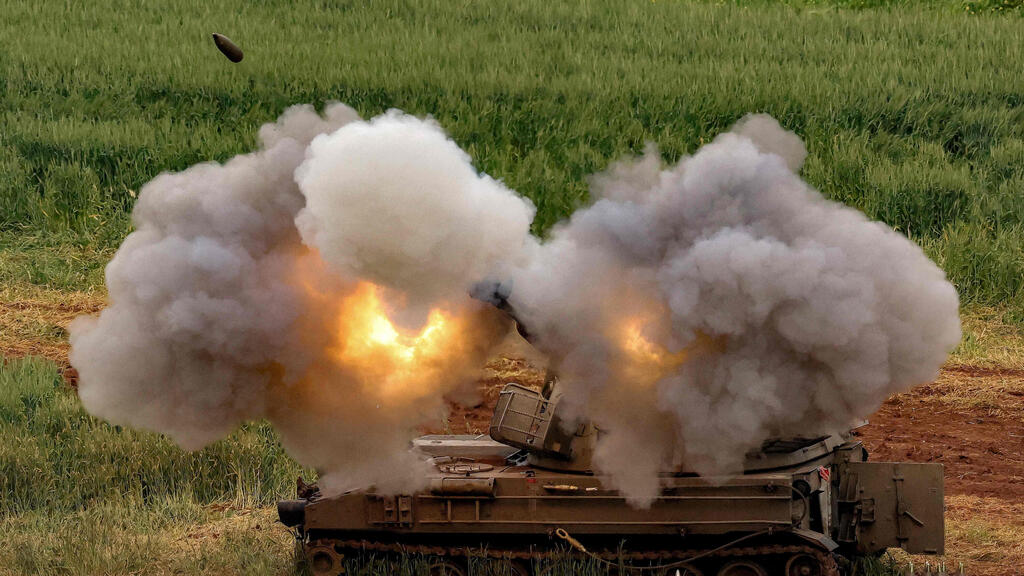
Artillery Corps activity along the northern border
(Photo: Jack Guez/ AFP)
It is true that the intolerable situation that existed on October 6, 2023, on the northern front will not return. But that situation did not stem from the absence of a security zone. It resulted from a policy of deterrence failure, culminating in the decision not to remove a Hezbollah tent erected beyond the border.
Just as the events of October 7 were not caused by the absence of an Israeli presence inside Gaza, but by a profound failure of intelligence and border defense, combined with a long-standing policy of strengthening Hamas to undermine the possibility of a Palestinian state.
A security zone would not eliminate the need for significantly reinforced defenses along the border itself. Northern residents will not accept anything less, and rightly so. The limited forces previously deployed by the Galilee Division would need to be at least doubled, alongside strengthening the border barrier and internal defenses within communities.
In total, this would require a force at least four times larger, fully staffed and maintained 365 days a year.
As the concept of “forward defense” becomes the new doctrine of the IDF, similar demands will arise wherever politically feasible, in Gaza and in Syria once the situation stabilizes. Add to this the West Bank, which already consumes large numbers of battalions, and a new division along the Jordan border, and the result is a multiplication of forces that will not merely strain the military but leave little left to strain.
No ultra-Orthodox enlistment plan will resolve this. Those relying on reservists should reconsider. Even this remarkable system, already under immense strain for two and a half years, cannot sustain a permanent reality in which soldiers are required to serve hundreds of reserve days annually.
On the diplomatic front, a security zone would all but guarantee that no arrangement with Lebanon, formal or otherwise, will be possible. No Lebanese government could accept a situation in which the country’s south is effectively occupied by Israel. The justification for disarming Hezbollah, a step supported in principle by Lebanon’s current president and government but difficult to implement, would also erode under such conditions.
As in many moments in Israel’s history, what begins as a temporary measure would likely become entrenched, and Israel would bear the consequences. Lebanon, unlike Gaza, is a state with international support, and large-scale destruction for its own sake, it is worth recalling, approaches a war crime.
Why is this happening, and what should be done instead?
It is happening due to a combination of a government inclined toward military solutions, a military leadership still shaped by the trauma of October 7, and a public exhausted after two and a half years of being told that force is the only answer.
It is happening because of short memory, empty rhetoric and disregard for a fundamental historical principle: force alone does not achieve lasting results without a political framework to sustain it, a principle now evident in Iran as well.
What should be done instead is clear: strong, reinforced defense along the border, including limited tactical adjustments. Operational freedom beyond it through targeted and, if necessary, mobile action that is forceful but temporary.
At the same time, Israel should strengthen international involvement, particularly by bolstering the Lebanese government, whose ability to confront a weakened Hezbollah, facing disrupted supply lines and a distracted Iranian patron, has grown significantly.
What is needed is a sober assessment of reality, of the military’s condition and capabilities, and of Israel’s national objectives. This approach may be less visually compelling, but the alternative is a far worse reality.
Ofer Shelach is head of the National Security Policy Program at the Institute for National Security Studies.