

The Houthis have spent years cultivating an image as Iran's most reliable partner in the "axis of resistance." Yet as U.S. and Israeli forces systematically degrade Iran's military capabilities, nuclear program and repressive apparatuses, the Houthis have done nothing. I have previous argued here that this inaction reflects structural factors, including the group's independence from Tehran and its concerns about the financial fallout of another war. But beyond those structural considerations, the regime's own media output offers a separate window into Houthi intentions.
Before delving into specific statements, it is worth noting a broader trend. In earlier years, officials like Mohammed Ali al-Houthi, a top political figure and cousin of the group's leader, Abdelmalek al-Houthi, appeared to speak freely while spouting rhetoric aligned with the movement's agenda. He had a distinctive style of spelling out his messages like an acrostic, one letter per line, which made his social media brand both unique and entertaining.
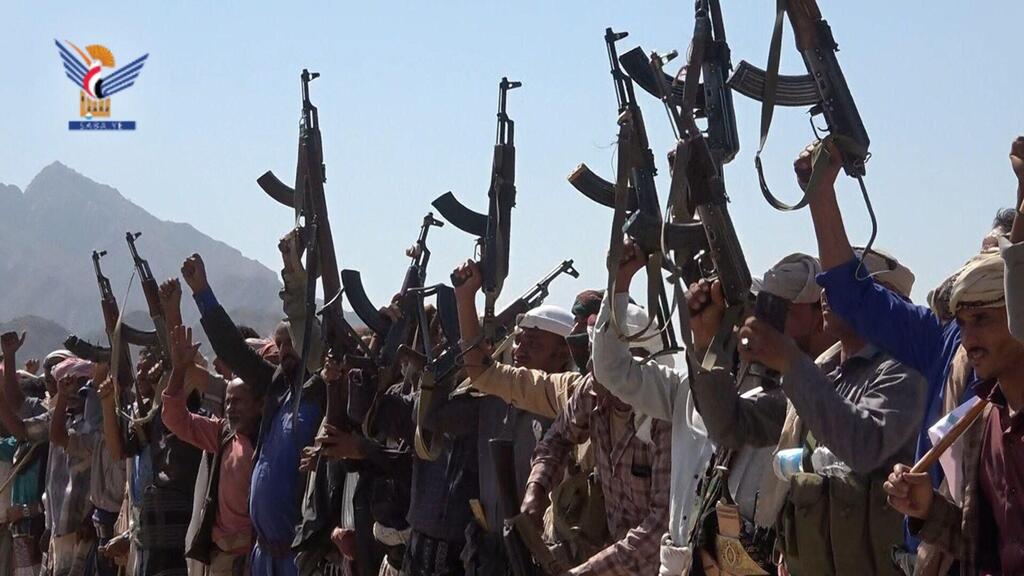
Over the past year, and especially during the two rounds of U.S.-Israeli strikes on Iran, messaging has been much more tightly controlled. Officials are no longer posting on their own behalf in their own style but appear to be operating in line with regime directives. Media personalities now prefer reposting official statements over devising their own rhetoric, jokes and threats. This shift likely reflects two impulses: a desire to professionalize the regime by projecting a unified message, and a need to prevent unnecessary escalations caused by the loose lips of overenthusiastic followers.
With that context, three recent regime statements merit close examination for what they reveal about the Houthis' posture toward the ongoing campaign against Iran.
'Hands on the trigger'
In his 16th Ramadan address, delivered on March 5, Abdelmalek al-Houthi stated: "We are active across all fronts, and our hands are on the trigger when it comes to escalation and military action, ready to move at any moment as developments call for it. We consider this battle the battle of the entire ummah (brotherhood of all Muslim believers)."
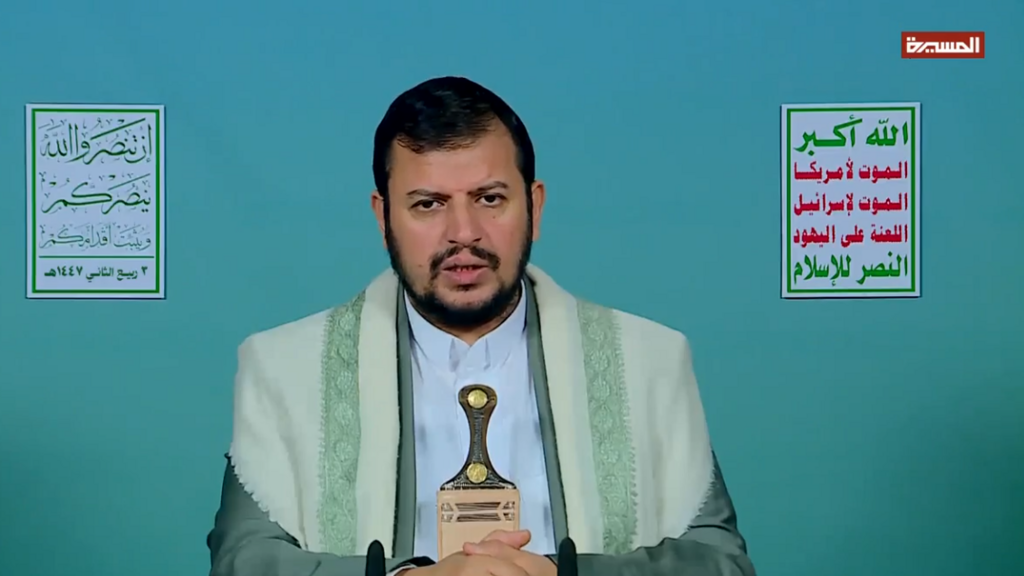
Houthi leader Abdelmalek al-Houthi
This was not his first time using the "hands on the trigger" formulation. He had employed it twice before when the Houthis paused attacks on Israel during an Israel-Hamas ceasefire. In those instances, the obvious interpretation was that the group did not plan to attack at the moment but was willing to do so if certain lines were crossed. This time, however, he used the phrase after Israel had eliminated Iran's supreme leader along with many of its top officials and was in the midst of a massive bombing campaign against the Islamic Republic. The reasonable conclusion is that the implied red lines are not about Iran but more likely about direct attacks on Yemen and perhaps, begrudgingly, on Hamas in Gaza.
'A matter of time'
Nine days after Abdelmalek's address, Mohammed al-Bukhaiti, the governor of Dhamar and a member of the Houthi political office, referenced those remarks and added: "Yemen's participation is a matter of time." On its face, this sounds like a far more definitive declaration of war, but there are good reasons to believe it is not.
Al-Bukhaiti's statement could be read as signaling imminent entry into the fighting. But it is more plausibly understood as a commitment to the broader, long-term conflict between the "resistance" and the U.S.-Israel camp, in which future Houthi participation is inevitable. Framed this way, it is not an immediate declaration of war but an effort to generate noise and anticipation that mitigates the Houthis' discomfort with sitting on the sidelines during the current round. This interpretation also makes more sense given the messenger: it would be odd for a second-tier leader to declare war on behalf of the movement while the supreme leader himself is delivering nightly addresses without doing so.
The sermon promoting Calm – momentarily
In Abdelmalek's recent Ramadan addresses, he has stressed the importance of acting in a calm, measured, and composed manner rather than through emotional knee-jerk reactions. The same night that al-Bukhaiti supposedly declared war, Abdelmalek stated: "We noted that when handling sensitive responsibilities, individuals risk acting unjustly if driven by their volatile emotional states, such as distress, anger, harshness, resentment or sadness. Allowing emotions to dictate actions bypasses rationality and sound judgment, which risks committing injustice and negatively impacts one's moral standing and relationships with others."
Delivered alongside his usual vitriol toward the United States and Israel, given the context, this reads like the rhetoric of a leader urging his followers to resist the impulse to join a fight, at least for now.
Staying out without saying so
The Houthis have not declared whether they will join the current round of fighting, and that ambiguity itself signals a greater degree of restraint than was widely expected. They frame the current conflict as part of a perpetual struggle between "good" and "evil" and affirm their general commitment to the "resistance" against the U.S. and Israel. With such a long-term horizon, they appear to be in no rush to war, given the challenges they face at home, while also taking great pains to avoid projecting weakness.
Ari Heistein is a research fellow at the Jerusalem Institute for Strategy and Security and a consultant on defense technology