

The agreement between Israel and Lebanon, mediated by the United States, is an important one. Not because it guarantees peace, and not because the region has suddenly been freed from the power struggles that have defined it for decades. It is important because, for the first time, it reflects a deep shift in Lebanese consciousness, one born not of illusion but of painful reality.
Lebanon has paid a heavy price to understand a truth many preferred to ignore for years: Hezbollah does not protect Lebanon. It destroys it. It is not the Lebanese army, but an Iranian army operating on Lebanese soil, serving Iranian goals and sacrificing Lebanon’s national interest for Tehran’s strategy.
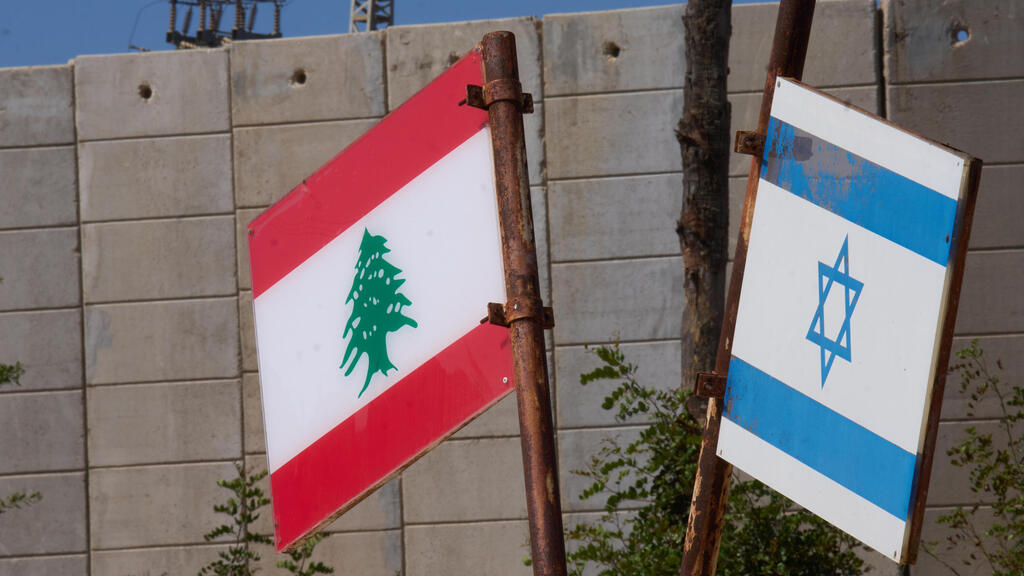
Lebanon deal faces its real test after Hezbollah leaves the border
(Photo: AP Photo/Ariel Schalit)
For years, Hezbollah prevented Lebanese governments from asserting sovereignty over the entire country. It damaged the economy, weakened state institutions and dragged Lebanese citizens, again and again, into wars that did not serve their future.
Even the remarks by Hezbollah Secretary-General Naim Qassem, who effectively acknowledged that there is no comparison between the IDF’s power and the organization’s capabilities, reflect the depth of the change. When even Hezbollah’s leadership recognizes the gap in strength, it becomes harder to keep selling the Lebanese public the myth of an undefeated “resistance army.”
But the agreement, as good as it may be, is only a framework. History teaches that the Middle East is not tested by the quality of signed documents, but by the quality of implementation. Agreements rise or fall not on the wording written into them, but on what happens afterward.
That is precisely where the great challenge lies, and perhaps also the most significant missing piece.
The real struggle will not be waged only against weapons depots, launchers or tunnels. It will be waged over the heart of the Lebanese citizen. For years, the residents of southern Lebanon had one address for nearly every need: Hezbollah. The organization did not provide only weapons. It provided fuel, welfare, health care, education, financial assistance and jobs.
That is how it built its real source of power: the population.
If, after the Lebanese army enters the south, Iranian money also flows in for reconstruction and welfare, while the state makes do with deploying security forces, nothing fundamental will change. The spring from which Hezbollah recruits its manpower will continue to flow.
That is why the Lebanese army must not arrive alone. The Lebanese government must arrive with it. Not only uniforms, but government ministries. Not only checkpoints, but health care, welfare, education, jobs and community reconstruction. The citizen must feel that the state is his first address, not Hezbollah. This is an enormous challenge, one the Lebanese government is bravely taking upon itself.
At the same time, Beirut must gradually dismantle Hezbollah’s civilian-economic infrastructure: gas stations, service networks, businesses, welfare institutions and all the mechanisms that turned Hezbollah into a state within a state. Dismantling its military capabilities is important. Dismantling its civilian sources of power is no less important.
Israel also has a clear interest in the success of this process.
For years, we became accustomed to thinking about relations with Lebanon only in terms of deterrence. But the new reality also allows us to think in terms of shared interests. Israel is not the central threat to Lebanon. For many Lebanese, it may even become part of the solution.
Israel can assist, directly or indirectly, openly when possible and discreetly when necessary. It can provide gas that would help stabilize Lebanon’s energy sector, share intelligence that would help the Lebanese government confront Iranian attempts to reestablish itself, and act against regional threats before they reach Lebanese territory.
This is not generosity. It is policy.
When Lebanon becomes a functioning and sovereign state, Israel too will need fewer forces along the border, reduce the risk of another war and improve its own national security.
 Yitzhak GershonPhoto: Jeff Ellis
The success of the agreement, therefore, depends not only on disarming Hezbollah but on replacing the source of authority in the eyes of the citizen. As long as citizens believe Hezbollah cares for them more than their own government does, the organization will find a way to rebuild. When the Lebanese government provides personal security, services and hope for the future, Hezbollah’s base of power will begin to erode.
After Iran lost a significant part of its influence in Syria, a rare window of opportunity has opened to reduce its grip on Lebanon as well. This will be a long and complex struggle. But for the first time in years, there is an alignment of interests between Israel, the Lebanese government and most Lebanese citizens: a sovereign, functioning Lebanese state, free from the control of a foreign army.
If we know how to turn this agreement from a diplomatic document into a civilian, economic and security plan of action, we may one day look back and see it not as another failed attempt, but as a historic turning point that changed the reality along Israel’s northern border and across the Middle East.
What remains is not only to hope, but to act in every possible way so Lebanon’s president and government can meet the challenge.
Maj. Gen. (res.) Yitzhak Gershon commanded the IDF’s West Bank division during the Second Intifada and Operation Defensive Shield, served as Home Front Command chief during the Second Lebanon War and as deputy commander of Northern Command during the Swords of Iron and Northern Arrows war.