


On Tuesday morning this week, I stood on Ali Muntar Hill, on the outskirts of Gaza City's Shuja'iyya neighborhood, and recalled the first time I climbed it many years ago. It was shortly after the Six-Day War, in July 1967. From the hill, barely two refugee camps could be seen: Jabaliya and Shuja'iyya. Most of the area around the hill, which rises 90 meters above sea level, was covered with citrus groves, cultivated fields and sand. To the east, I could see Nahal Oz and Kfar Aza. The small town of Sderot was not yet visible from there.
Today, the view is completely different. The Palestinian side is now a sea of ruins: slabs of concrete, roofs lying almost flush with the ground, skeletal steel bars jutting upward and gray as the dominant color. On the Israeli side, the orchards and fields of Nahal Oz are green. Tractors and other agricultural machinery work almost to the final furrow, very close to the security fence, which in some places now rises more than 10 meters.
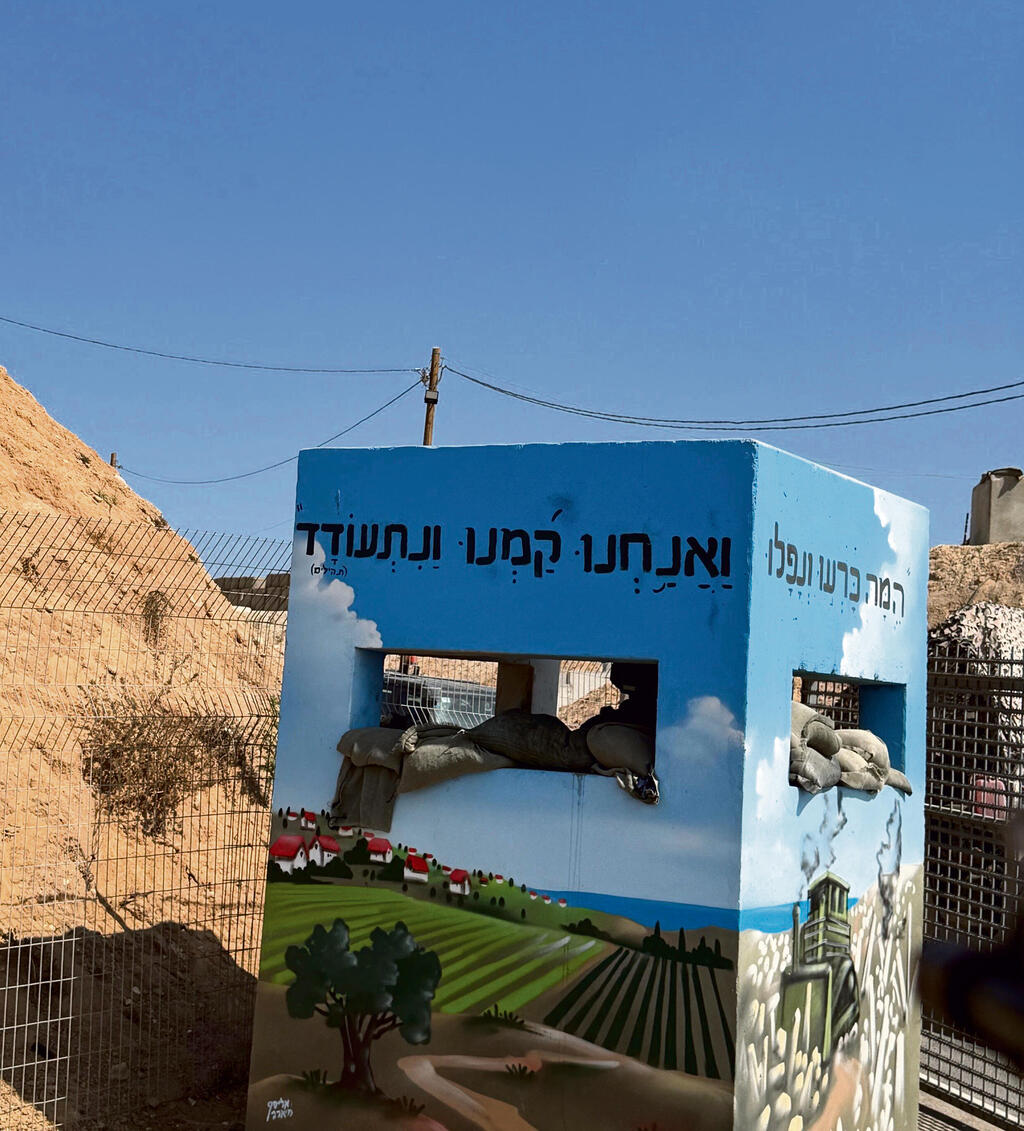
IDF outpost on the Ali Muntar ridge; tanks, mortars, observation posts and an array of technology
(Photo: Ron Ben-Yishai)
Some biblical commentators identify Ali Muntar Hill with the "Gates of Gaza" — the place associated with the biblical Samson and the Philistines. An 18th-century European traveler who drew a map of Gaza marked Ali Muntar as "Mount Samson."
The term "Gates of Gaza" aptly describes what I saw while standing on the earthen berm surrounding the large IDF outpost recently established atop the strategic hill. It is a large square compound capable of housing a company-sized force or more, the latest word in military outpost architecture in Gaza. It has tanks, mortars, observation posts and an array of optical, electro-optical and radar technology designed to prevent a surprise attack on the outpost and allow its troops to dominate the surrounding area through observation, intelligence sensors and firepower, up to the Yellow Line and beyond it.
The yellow concrete barriers marking the Yellow Line, the official boundary of IDF control inside Gaza, are barely visible amid the ruins of Shuja'iyya. The outpost lies several hundred meters east of the Yellow Line so that Hamas and Islamic Jihad terrorists cannot charge it directly from territory still under their control. They would have to cross hundreds of meters of killing ground before reaching it.
A few kilometers to the north and south, one can see earthen berms topped with modular walls made of iron frames filled with sand, surrounding neighboring outposts built according to the same design. Forty-two such outposts currently encircle the territory controlled by Hamas. According to Southern Command figures, the IDF now controls 64% of the Gaza Strip, while Hamas controls 36%.
In October 2025, when the ceasefire under which the remaining hostages were released was reached, the division of territory between the IDF and Hamas agreed upon by the mediators was roughly 50-50. But in the nearly year since then, the IDF has moved the Yellow Line westward and northward. It is a highly effective pressure lever that has caused Hamas to show greater flexibility in negotiations with senior members of the Board of Peace.
We walk along the upper section of the outpost wall, see a group of soldiers below staring at screens and hear brief exchanges over the radio. Suddenly, a small drone rises from among them and flies toward what was once the Shuja'iyya neighborhood.
The officer commanding the drone team explains: "We received an indication that there are probably terrorists observing us or planning to plant an explosive device. We're trying to locate them without their noticing us. This drone can get there quietly, without being detected."
He shows me a person moving inside a ruined building on the screen. "He may be one of the group, but right now he isn't armed, so at this stage we aren't required to act against him or against others who may be hiding in that building."
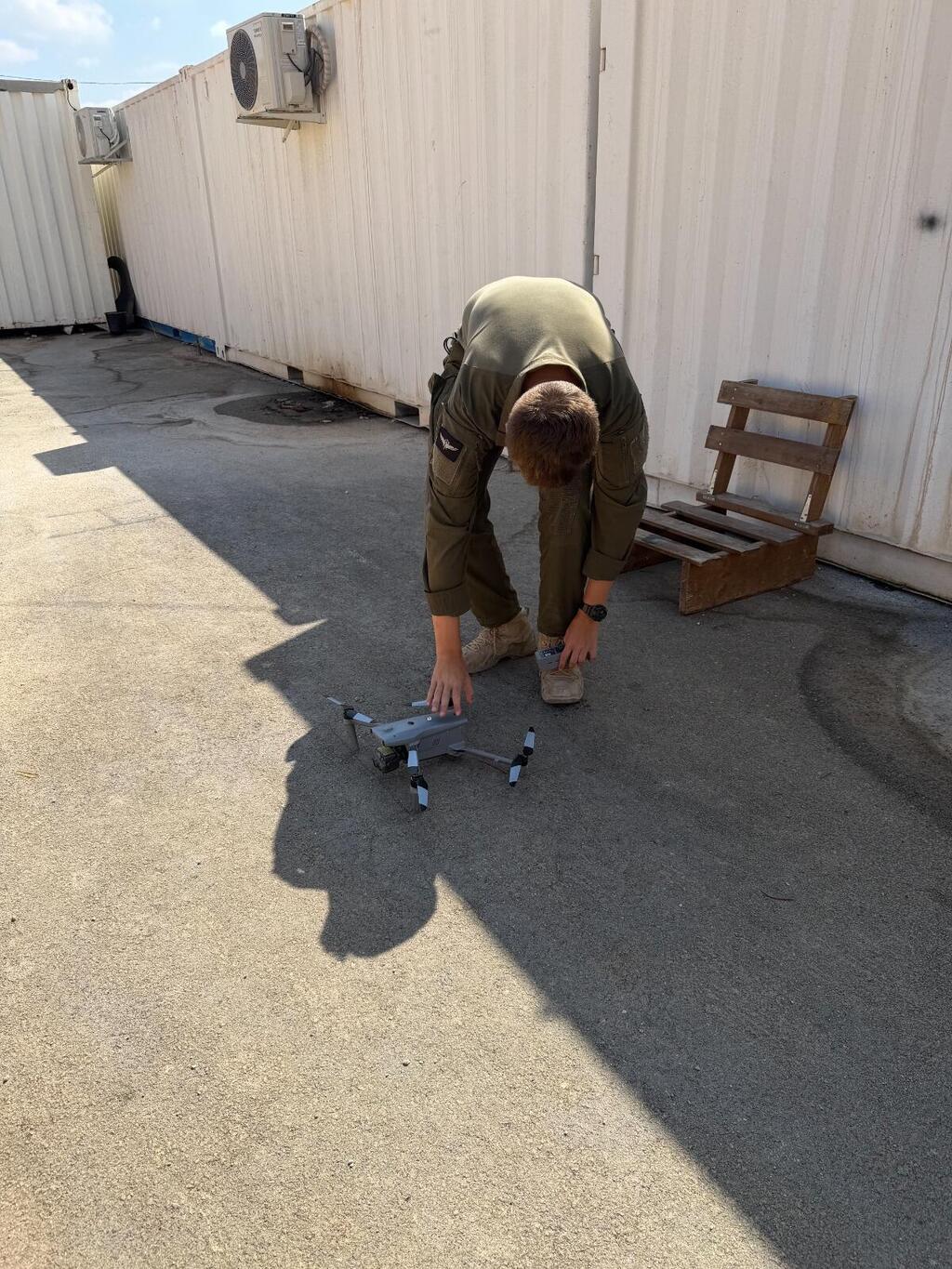
The drone team in action
(Photo: Ron Ben-Yishai)
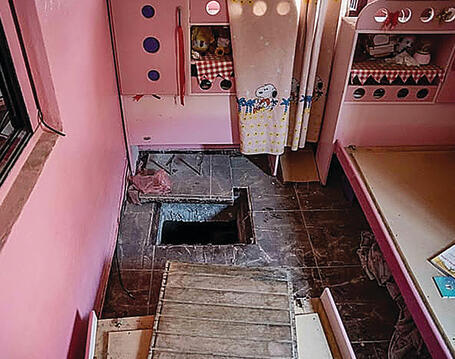
A shaft inside a children's room; some of the tunnels begin at the Indonesian Hospital
(Photo: IDF Spokesperson's Unit)
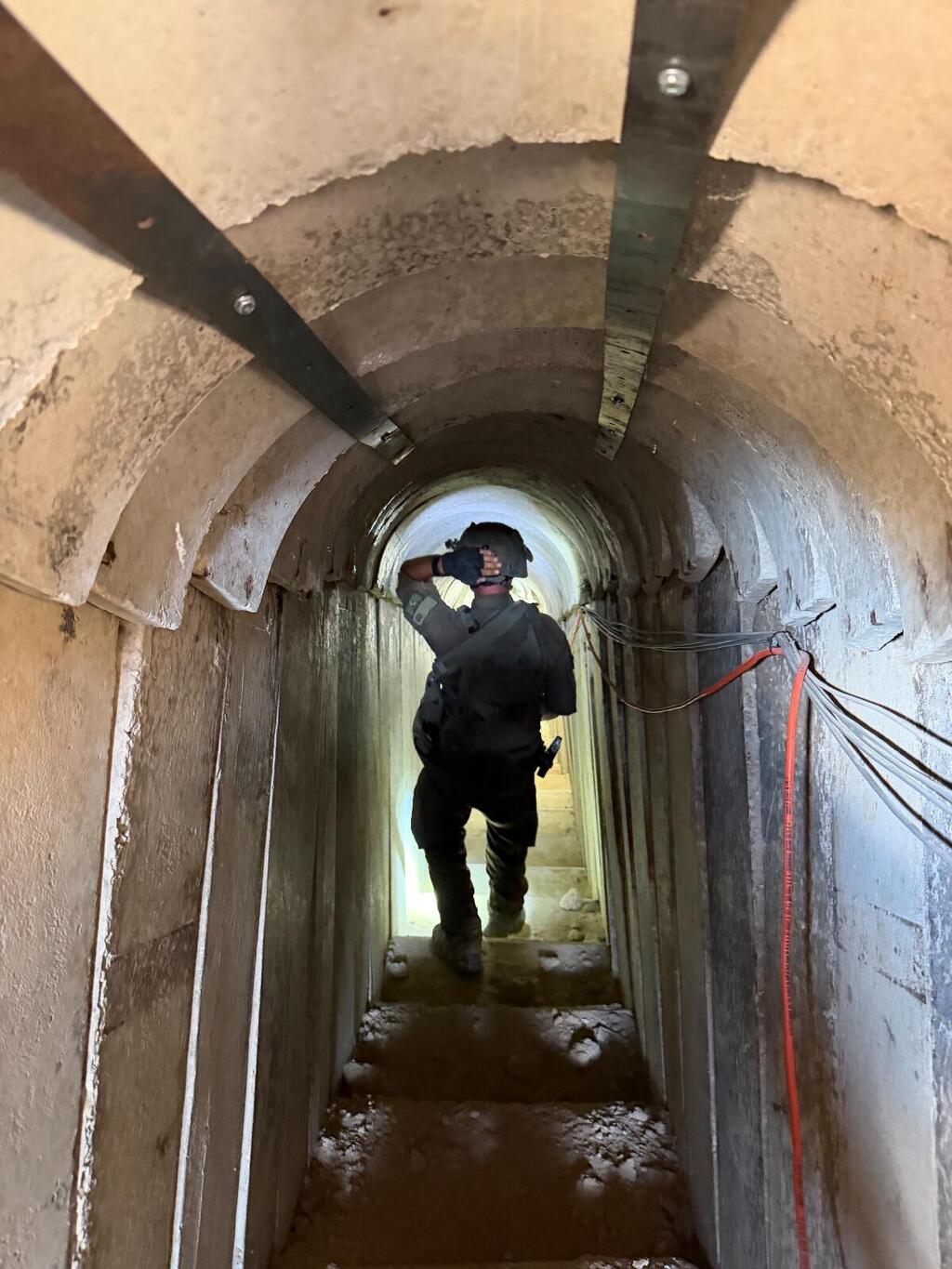
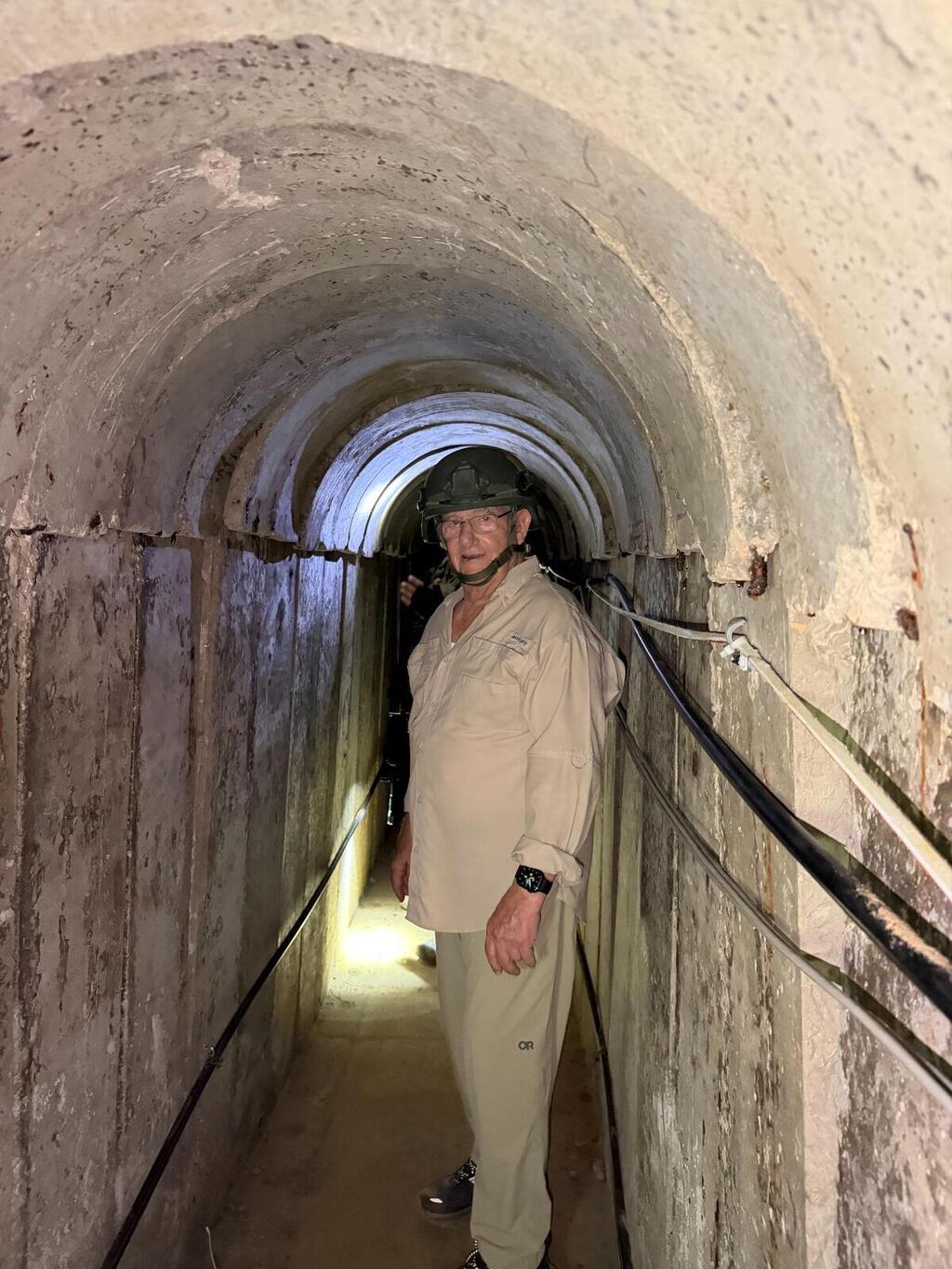
An IDF soldier in a Hamas tunnel this week
(Photo: Ron Ben-Yishai)
"How would you act?" I ask. The officer points to an array of drones of different sizes and configurations that can not only observe and film what is happening inside the Gaza neighborhood but also carry out surprise attacks. Contrary to what is sometimes reported in the media, troops in Gaza face no restrictions if they identify something or someone in the immediate vicinity of the Yellow Line or near the outpost who could pose an immediate threat.
"They say you're frustrated because you need the chief of staff's approval to fire at armed terrorists who provoke you. Is that true?" I asked one of the soldiers.
"I'm not familiar with anything like that," says the soldier, a conscript serving in the regular Paratroopers Brigade. "I have no such restriction, and the rules of engagement against anyone threatening us are the same as they were when we arrived here."
The gap between media reports and what happens on the ground stems from the rules governing targeted killings deep inside Gaza, which do indeed require the chief of staff's approval and sometimes that of the political echelon as well. On the same day this week that I toured the Gaza outposts, such a targeted strike was carried out in the evening, killing two senior Hamas commanders and several company-level commanders as they sat in a cafe planning what the IDF spokesperson described as a "terror attack plot."
Palestinians reported that six civilians were also killed in the strike, which was apparently carried out by a drone after precise intelligence identification by the Shin Bet.
There was a certain slowdown in the pace of targeted killings two weeks ago following a request from Washington, but this week the pace accelerated again, reaching a peak in recent days. Most are carried out using attack drones and unmanned aerial vehicles.
According to IDF figures, since the ceasefire took effect on Oct. 10 last year, about 730 terrorists have been attacked. Of these, 520 were confirmed killed, including around 80 members of Hamas' Nukhba force who took part in the October 7 massacre and were identified by a dedicated Shin Bet command center, two heads of Hamas' military wing and around 125 senior or mid-level commanders. On Tuesday alone, another six Hamas commanders and one Islamic Jihad commander were added to the list. The Paratroopers Brigade force I joined killed a Nukhba operative and another Hamas commander on Wednesday and destroyed a tunnel in the Shuja'iyya area along the way.
The American green light for an accelerated pace of targeted killings in Gaza, as well as for aggressive action in Syria, indicates that Trump understands Netanyahu and his government's need to project a tough security posture ahead of the elections in an effort to appeal to right-wing voters.
Kung Fu Panda in Gaza
A senior commander in the area, whom I accompanied, takes me to the foot of the outpost and leads me through a narrow door into a tunnel dug beneath the ridge on which Ali Muntar Hill sits.
The tunnel was discovered after the ceasefire as part of a highly ambitious IDF effort to locate and disable all offensive and combat tunnels. As part of that effort, closely spaced drilling was carried out over dozens of kilometers, with impressive results. The drilling and advanced technological sensors used by the IDF exposed underground networks on a vast scale.
Sealing the underground tunnel route in the central Gaza camps area
(Video: IDF Spokesperson's Unit)


Military Intelligence had estimated that Hamas and other Palestinian organizations had dug hundreds of kilometers of tunnels beneath Gaza, but their locations were unknown. Southern Command said Thursday that "about 85% of the underground infrastructure in areas inside the Yellow Line has been destroyed or neutralized." According to the IDF, that amounts to more than 260 kilometers of tunnels.
Southern Command officials say with confidence that there are no longer tunnels in IDF-controlled territory that are unknown or have not been exposed. Their destruction will soon be completed, either by detonation or by pumping concrete into them. On Wednesday alone, troops from the elite Yahalom engineering unit sealed two kilometers of tunnels in the central Gaza camps area, still under Hamas control, and in southern Gaza.
The reason the IDF does not blow up all the tunnels is that flooding them makes it possible to seal and disable tunnels currently located under Hamas-controlled territory as well and to identify the precise locations of the shafts leading into them. Flooding the tunnels, for example, revealed that some begin and end at the Indonesian Hospital, visible from the Ali Muntar outpost. The hospital is still standing, though it is not operating.
Together with the engineering officer of Division 99, Lt. Col. M., I descend into the tunnel, which begins in the Shuja'iyya neighborhood to the west and branches into command rooms, living quarters and combat shafts near the Israeli border. This tunnel was not designed to cross into Israeli territory like nearby attack tunnels. Rather, it formed part of a network of underground infrastructure and Gazan homes prepared as defensive and combat infrastructure for the Gaza Strip.
Hamas knew Israel would invade Gaza after October 7, perhaps even before then, and prepared the entire Strip, particularly the built-up areas near the border, as defensive compounds above and below ground.
The organization scattered thousands of cameras at various heights in homes to determine precisely where IDF troops were moving, then planned to ambush them underground, emerge from a nearby shaft — itself located in a civilian home — attack them and escape back underground.
There were thousands of booby-trapped homes, some of which exploded on our troops, as well as homes from which terrorists in the tunnels received water and electricity.
"That's why we had to destroy 70% of the Strip," a senior commander in the sector tells me. "If we hadn't done so, our casualties would have been on an unbearable scale."
Much of the enormous destruction visible from Ali Muntar Hill was caused using what the IDF now calls "Kung Fu Panda." These are old Zelda armored personnel carriers loaded with hundreds of kilograms of explosives, fitted with remote-control systems and sent into the heart of areas beneath which Hamas had dug tunnels and prepared for combat, after residents had been ordered to evacuate.
The explosions severed electrical wires and cables carrying information to Hamas' command-and-control centers in the tunnels, preventing the organization from fighting as it had planned.
But the IDF finds it difficult to explain these basic facts to international public opinion. The destruction, which Israel says is the result of Hamas' use of the population as human shields, is widely perceived as revenge for the atrocities of October 7, particularly because of statements by government ministers, foremost among them Itamar Ben-Gvir, Bezalel Smotrich and Defense Minister Israel Katz.
Footage released this week showing Hamas operatives beyond the Yellow Line
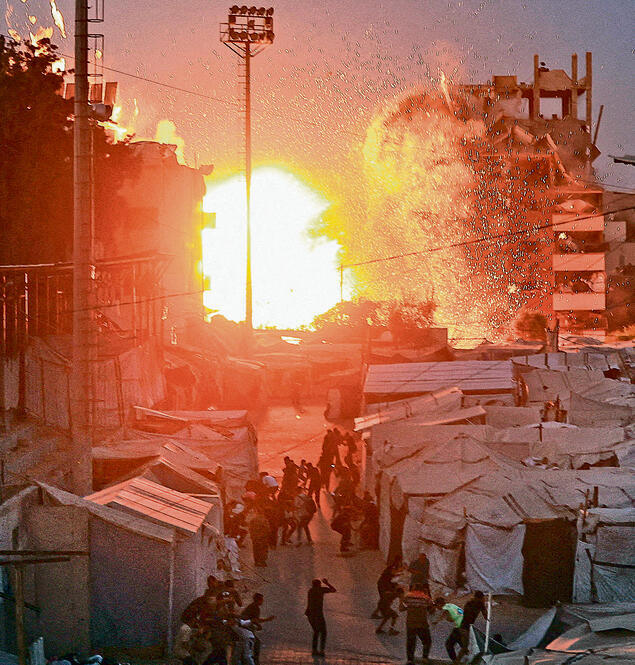
Strike in Gaza; Hamas uses civilians as human shields, but Israel struggles to explain this to the world
(Photo: Dawoud Abu Alkas, Reuters)
As I look out at the devastation, I notice several shells of buildings inside Shuja'iyya that have not been completely destroyed and show signs of life. It turns out these are homes belonging to armed clans opposed to Hamas that, according to reports in Arab and Western media, receive weapons and assistance from the IDF and Shin Bet.
The homes of the Helles and Jundiya clans are inside the Yellow Line but also within the outpost's field of fire, and they bear clear markings so the IDF will not strike them from the air or ground.
The two clans are organized under what is known as the "Shuja'iyya Popular Defense Forces," which Hamas views as a bitter enemy and a threat to its rule in Gaza. It therefore fights them continuously, with clashes sometimes ending in defeat for the armed militias and at other times forcing Hamas itself to retreat.
Such an incident occurred at the beginning of the week and was mistakenly described in Israeli media as an explosive device and gunfire targeting IDF troops, with no casualties. In fact, it was a battle between one of the clans and Hamas, which ambushed and attacked its members.
From the Israeli outpost, it initially looked like gunfire directed at our forces, but the IDF quickly understood what was happening and acted accordingly. In general, a substantial portion of Hamas' current military activity is directed against these clans rather than against the IDF.
The creeping Yellow Line
As you tour the Gaza Strip, the picture becomes clearer, and in many respects it differs from the one portrayed in both international and Israeli media.
It is therefore useful to take a bird's-eye view of the forces operating in Gaza, what they seek to achieve and what is actually happening on the ground. In this context, it should be noted that none of the four main players on the Gaza front tells the whole truth, and at times they also lie in their statements about what they are doing on the ground.
I also want to make clear that the picture I will try to present here is free of political leanings and agendas.
The four parties influencing what happens in Gaza are the Israeli government, the IDF, the Board of Peace and the American headquarters in Kiryat Gat, and Hamas.
Let us begin with Hamas, which currently refuses to cooperate with the other parties. Western assessments indicate that both the Hamas leadership in Gaza and its political leadership outside the Strip are highly interested in avoiding a renewed war with Israel.
As time passes, it is becoming clear that Israel's threat to conquer Gaza City was what prompted Hamas in October 2025 to agree to a ceasefire and the release of the hostages.
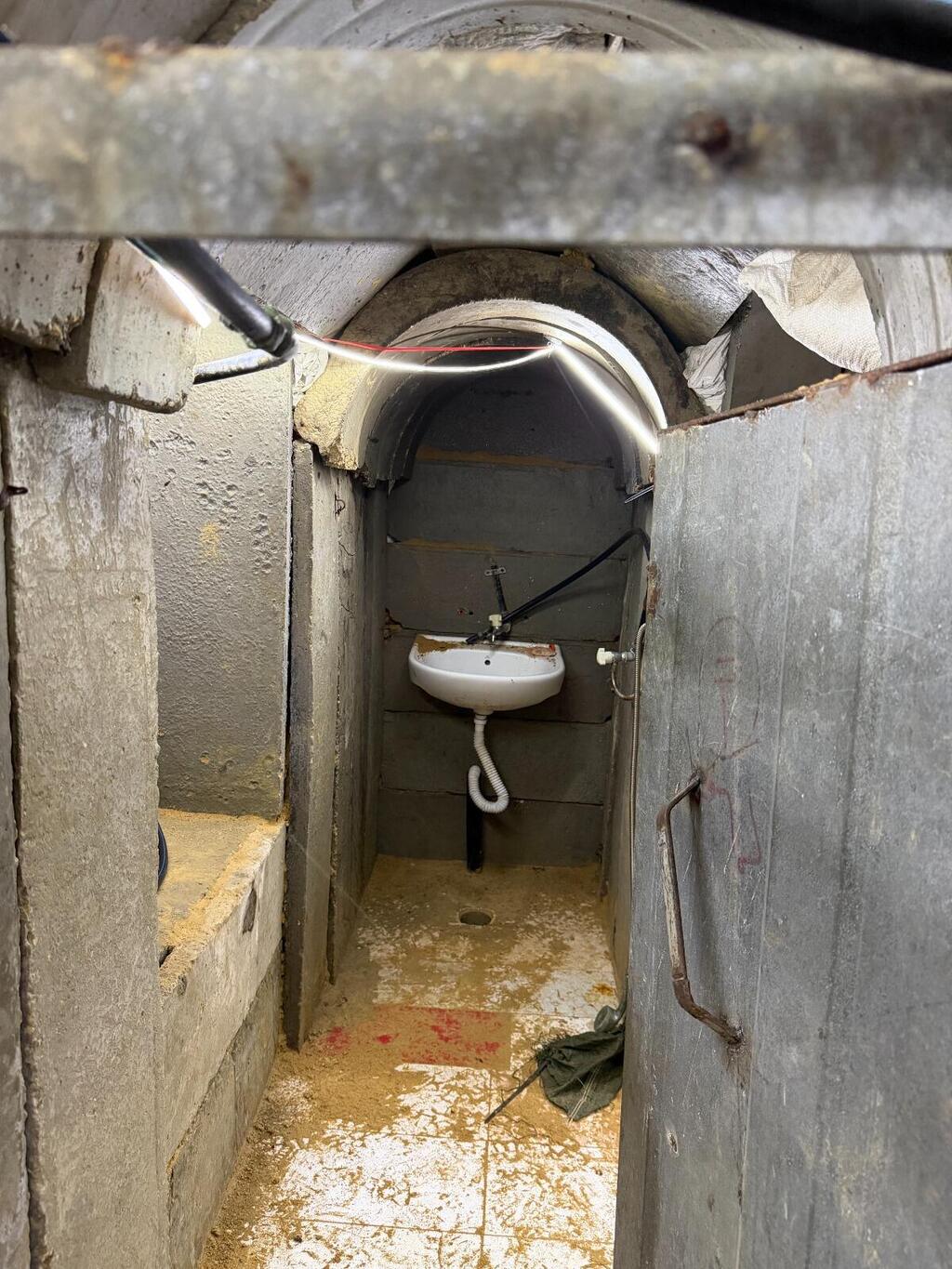
There is a reason the tunnels are flooded rather than blown up; a sink underground in the Gaza Strip
(Photo: Ron Ben-Yishai)
Hamas' second objective is to end the targeted killings and the creeping movement of the Yellow Line — in other words, the IDF's repeated westward movement of the line, meter by meter, steadily shrinking the territory under Palestinian control. The Yellow Line's advance and the targeted killings place heavy pressure on Hamas and are a major source of concern for the organization.
The third thing Hamas wants is to move as quickly as possible to Phase 2 of Trump's plan, under which Israel is supposed to withdraw and Hamas, along with other Palestinian organizations, is supposed to disarm.
Hamas faces a severe dilemma because Israel has told the mediators that the IDF will not withdraw even a millimeter — and may even advance — until the organization completely disarms. Hamas has issued vague hints that it may show flexibility on the issue because it is under pressure, but for now it is unwilling to disarm completely.
That is the strategic level, where Hamas is seeking to survive as Gaza's governing power and preserve as much of its military capabilities as possible so it can rebuild itself into a military force within several years.
On the civilian front, Hamas is working to preserve its control over Gaza's population through intimidation, tax collection and control over humanitarian aid entering the Strip. At the same time, it is restoring civilian infrastructure, including water, sewage and roads, particularly those operated by municipal authorities inside Gaza.
Hamas is trying to rebuild its economic infrastructure by taking control of some humanitarian aid and selling it, as well as by collecting taxes and fees.
Hamas is recruiting young men using the funds at its disposal and exploiting the population's distress, and it has in effect already replenished the ranks depleted during the war. It has tens of thousands of young recruits whom it is trying to train in military skills, primarily the use of small arms and the planting of explosive devices and apparently drone operation as well.
About two weeks ago, Gaza Division intelligence received information about such a gathering of Hamas members that appeared to be preparations for a training exercise or the organization of a major terrorist attack. A UAV sent to the area did not locate the gathering. It may have been a brief assembly or a misinterpretation of what was happening, and the group therefore was not attacked.
The incident illustrates how detailed and current the intelligence available to the IDF and Shin Bet is, and how, unlike before October 7, every slight suspicious movement on the ground is now taken with the utmost seriousness. The decision not to act was made only after commanders verified that the intelligence had either been mistaken or incorrectly interpreted.
Hamas is trying to enforce its rule by force against anyone it regards as rebellious, from beatings of those whose remarks could be interpreted as criticism to gunfire and explosive attacks against armed clan militias that oppose its rule.
There are seven main militias of this kind, including the Abu Shabab group in the Rafah area and the militias already mentioned around Gaza City.
Khalil al-Hayya and his associates, now operating from Turkey, are trying to keep Hamas in Gaza as a political and eventually military power, but from behind the scenes. Hamas wants a status similar to Hezbollah's in Lebanon: control of the country without responsibility for the welfare of its residents.
The organization is trying to bolster its political strength within the Palestinian camp and has therefore announced that it will take part in Palestinian Authority elections that Palestinian Authority President Mahmoud Abbas intends to announce in November this year.
Hamas has even joined forces with Mohammed Dahlan, who fled Gaza in disgrace when the terrorist organization seized control there in June 2007. Dahlan now enjoys the backing of the rulers of the United Arab Emirates and significant financial resources. He is stirring the Gaza pot and apparently intends, together with Hamas, to reemerge as an influential force within the Palestinian Authority.
But Hamas' main objective at present is to rebuild Gaza to ease the distress of the population under its control.
In the 64% of the Strip controlled by Israel, there are almost no uninvolved Gazan civilians. But Hamas, as the governing authority, must provide welfare, food and drinking water for a population of about 2 million Gazans, more than half of whom live in intolerable conditions.
Most do not even have proper tents and live under plastic sheeting or makeshift shelters. The fourth winter they will spend in such conditions is approaching rapidly, bringing disease, cold and flooding that threaten to worsen the humanitarian disaster.
In this context, it is important to note that Hamas no longer enjoys the same absolute control over the population it once did and fears the domestic criticism directed against it.
An intelligence line of defense
At the political level, the Israeli government also has considerable influence over what happens in Gaza.
According to reliable security sources, Prime Minister Benjamin Netanyahu and Defense Minister Israel Katz continue to declare, including in closed-door discussions, that they have not abandoned the goal of defeating Hamas — "total victory" — meaning the organization's complete disarmament and the expulsion of all its senior leaders from Gaza.
The IDF is therefore required to continue applying military pressure on Hamas even though Israel accepted the ceasefire announced as the first phase in implementing Trump's 20-point plan.
The current government's direction can be summed up as follows: neutralize Hamas as a political and military force for many years without confronting Trump and his people, but without conceding too much and thereby angering the current coalition's voters.
Netanyahu is trying to walk a tightrope between Steve Witkoff and Jared Kushner, who have Trump's ear, and Smotrich, Ben-Gvir and Orit Strock.
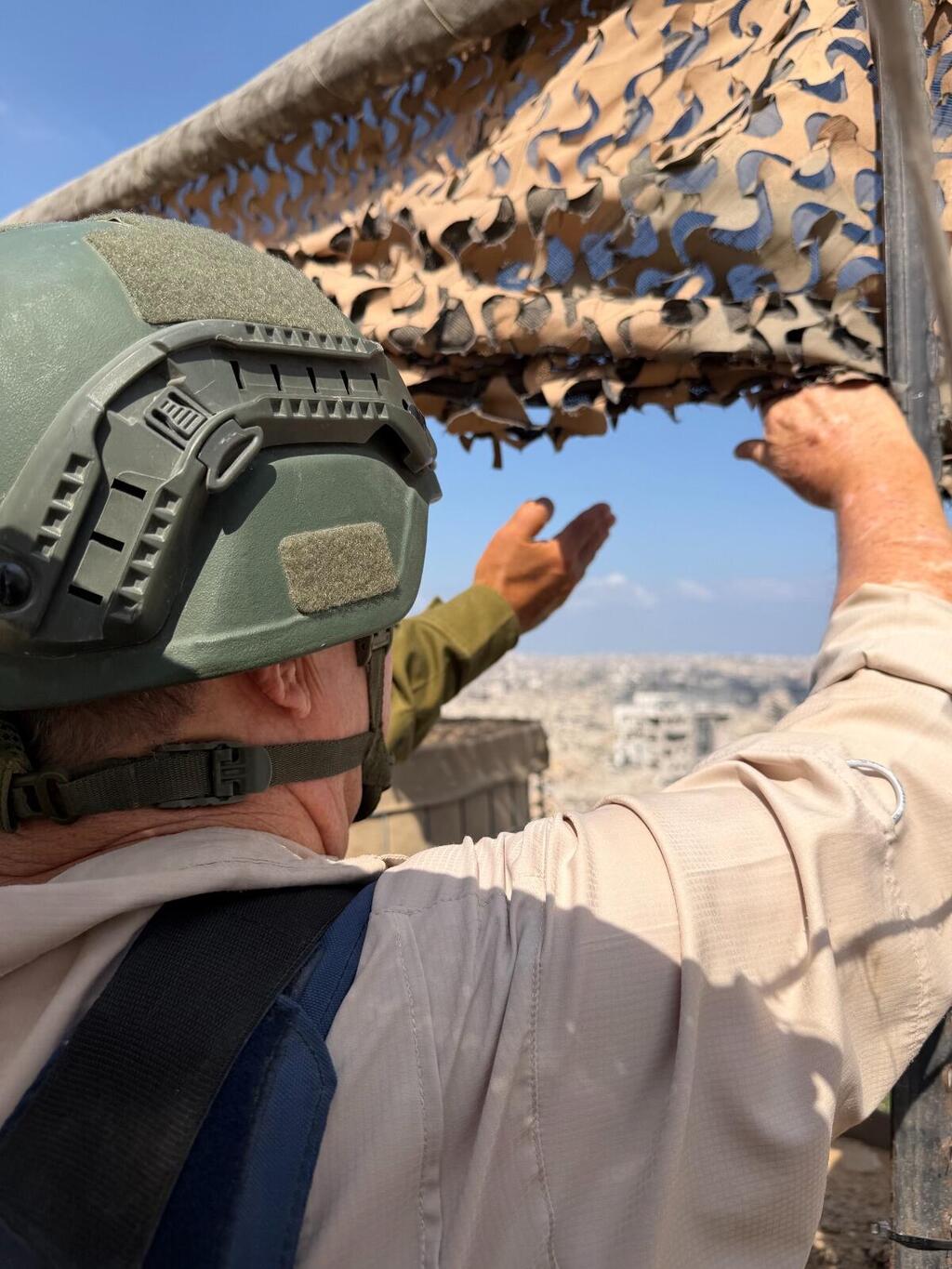
The ruins of Shuja'iyya this week
(Photo: Ron Ben-Yishai)
IDF activity in Gaza, of course, stems from directives issued by the political echelon, though it is also clear that the military sometimes gives its own interpretation to the policy dictated to it.
The first directive the General Staff issued to Southern Command, even before the ceasefire was declared, was to establish a defensive deployment that would prevent at almost any cost — with a budget of billions — another hostile attack from Gaza on the scale of October 7, or even anything far smaller.
The defensive deployment in Gaza therefore includes not only 42 outposts along the shifting Yellow Line but also an anti-vehicle barrier, of which a 3.5-kilometer section between Khan Younis and Rafah remains to be completed.
These defensive measures also include a security fence extending underground and rising several meters above ground, as well as two division headquarters and five infantry and armored brigades physically separating Hamas-controlled territory from the Israeli communities bordering Gaza.
No less important is the intelligence line of defense led by the Shin Bet and Military Intelligence together with combat intelligence units. This virtual line, supported by extensive technology and human intelligence, enables the IDF to thwart threats deep inside Hamas-controlled territory.
A senior commander on the ground stresses that, unlike before October 7, there is now no situation in which an obstacle is not covered by surveillance and fire 24 hours a day, 365 days a year.
There may occasionally be cases in which one or two Palestinian terrorists slip through the ruins into Israeli-controlled territory, but as experience over the past year has shown, they are detected within a short time and forces are dispatched toward them.
Alongside its defensive posture, the IDF is conducting an offensive effort whose primary goal is to pressure Hamas into agreeing to disarm, while also preventing the organization from rebuilding its military capabilities and growing stronger.
This effort can be described as a "war of attrition" in the sense of systematically grinding Hamas down. It is not a war of mutual exhaustion, since IDF troops in Gaza are deployed under comfortable conditions that allow them to remain for long periods and operate in all weather, while Hamas is forced to remain constantly on the defensive.
The campaign is conducted through targeted killings inside Gaza, destruction of infrastructure above and below ground and continued movement of the Yellow Line deeper into Hamas-controlled territory.
"I can't change their jihadist intentions, but I can take away their military and command capabilities, and I'm doing that thoroughly," a senior officer in the sector tells me.
According to him, Hamas is under intense pressure from the loss of territory and especially from the wholesale killing of its senior figures, and that is one reason it is showing flexibility in negotiations with Trump's Board of Peace.
At the same time, Southern Command and the General Staff are preparing for the conquest of Gaza City because of its symbolic and strategic value, should Hamas refuse to disarm to Israel's satisfaction. The threat of conquering Gaza City is an effective means of pressure on Hamas.
Alongside these operations, the IDF is allowing the Board of Peace established by Trump and the American headquarters based in Kiryat Gat to make preparations on the ground to implement their plans.
The military stresses that this does not involve withdrawing from territory and transferring it to the Board of Peace, but rather activities carried out inside areas under IDF control.
The two most prominent examples are an area between Khan Younis and Rafah, where the IDF is allowing the American headquarters to establish a model neighborhood for what are described as "uninvolved Gazans," into which Hamas members would not be permitted to enter.
The Americans call this neighborhood "Green Gaza" or "New Gaza," but so far not a single building has been erected there. The IDF cleared unexploded ordnance and mines and leveled the ground in preparation for construction, and stopped there.
At the same time, private Palestinian and other civilian companies cleared a substantial portion of the ruins of homes near the site, crushing the concrete and walls into fine gravel that will later be used to build structures and infrastructure in the new neighborhood.
In effect, these are the beginnings of the reconstruction work that Israel had insisted would not begin until Hamas disarmed. But the IDF, acting on instructions from the political echelon, is allowing the Board of Peace and the American headquarters to establish the new neighborhood.
Hamas, incidentally, is doing everything it can to sabotage the work because it fears it could allow the Americans and the IDF to empty the Hamas-controlled area of the Palestinian civilians now living there in dire conditions.
If that happens, Hamas members would be the only people left in the area west of the Yellow Line, making them easy prey in a fast, aggressive IDF operation.
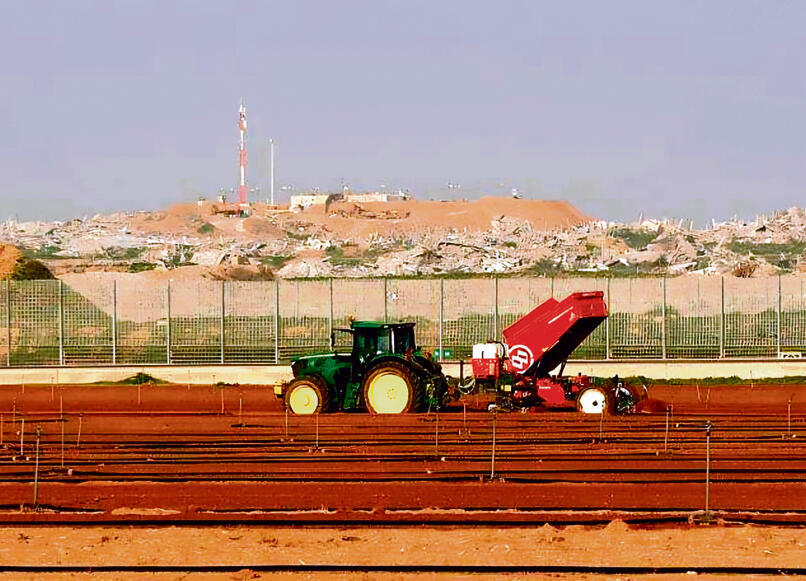
The fields of Nahal Oz along the border; in some places, the fence reaches 10 meters high
(Photo: IDF Spokesperson's Unit)
Alongside preparations for the new neighborhood, the IDF participated in establishing a large fortified compound for the multinational stabilization force in the Rafah area, which is intended to serve as a buffer between Israeli forces and Hamas and assist in disarming the organization.
It is a large area surrounded by high earthen berms where the multinational force will have to build housing for troops from Morocco, Uganda and Burundi who are expected to take part in the International Stabilization Force (ISF). For now, the compound is almost entirely empty and awaiting deployment.
At the strategic level, the IDF is trying to neutralize Hamas both as a governing authority and as a military guerrilla force through its grinding campaign.
At the same time, it is lobbying the political echelon and the Board of Peace to preserve its ability to ensure that Hamas does not rearm through smuggling, manufacture new weapons or dig new tunnels under cover of reconstruction efforts.
The IDF is demanding the right to use force to prevent guerrilla activity and efforts by Hamas to rearm and rebuild its military strength.
The Shraga Biran initiative
The fourth actor influencing what happens in Gaza is the Board of Peace and the American headquarters operating from Kiryat Gat. These bodies have four objectives.
The first is to advance implementation of Trump's 20-point plan to satisfy the president and perhaps even secure for him the Nobel Peace Prize he so deeply covets.
The second is to end, or at least significantly alleviate, the enormous and prolonged humanitarian crisis affecting some 2 million Gazan civilians.
The IDF therefore allows the American headquarters to manage the entry of humanitarian aid into Gaza largely as it sees fit, while maintaining Israeli security requirements.
Another facility will soon be established at the Erez Crossing to scan entire trucks and ensure they are not carrying smuggled military equipment or materials for weapons production, as occurred at the Rafah Crossing before October 7.
One such facility already operates at the Kerem Shalom Crossing, through which all humanitarian aid currently passes. The IDF's goal is to accelerate the entry of humanitarian assistance into Gaza.
Indeed, according to UN reports as well, there is currently no shortage of food or medicine in the Strip. That could, of course, change with the onset of winter.
The Board of Peace's most important goal, from both the Israeli and Washington perspectives, is to disarm Hamas and dismantle its military infrastructure.
The Board of Peace therefore agreed, under pressure from Israel and the White House, to amend the road map it presented two weeks ago.
The official road map unveiled this week calls not only for the removal of all of Hamas' heavy, medium and light weapons but also for putting those weapons permanently beyond use.
Under the updated map, Israel also has the right to pursue and target those who took part in the October 7 massacre.
Another point the Board of Peace agreed to this week under Israeli pressure, in talks between Kushner and Netanyahu, is that the IDF will be permitted to act to eliminate immediate threats and prevent Hamas from rebuilding and rearming.
On this issue, the Board of Peace moved a step toward Israel under White House pressure.
The question is whether Hamas, which agreed to the previous version of the road map, will also accept the current amended version.
Turkey, Qatar and Egypt, which are members of the Board of Peace, have an interest in preserving a weakened Hamas in Gaza, but one still strong enough to remain a political and military power.
Israel views this unfavorably and is demanding that the White House rein in the mediators, particularly Qatar and Turkey.
One important incentive for the Board of Peace to advance implementation of the 20-point plan on the ground is the enormous profit the United Arab Emirates, Egypt, Qatar and perhaps Turkey stand to make from Gaza reconstruction projects estimated to be worth tens of billions of dollars.
Heavy pressure is therefore being applied to both Israel and Hamas.
An official with the Board of Peace strongly rejected the claim that the board or its senior officials have business motives or intend to profit from Gaza's reconstruction.
According to the official, members and employees of the Board of Peace do not deal with anything involving the business interests of any board member or member of the U.S. administration.
"We have people in the organization whose job is to prevent such conflicts of interest," he said.
He also asked to emphasize that Kushner and Witkoff's involvement is entirely voluntary and at their own expense.
In this context, it is worth mentioning an initiative by Israeli attorney and real estate developer Shraga Biran that is drawing considerable interest.
Under his proposal, Gazan civilians would be the tenants and owners of homes they themselves help build. The Board of Peace and private developers managing the projects would provide them in advance with mortgages to purchase the rights to the properties in which they would live, to be repaid in modest, manageable installments as work on the project proceeds.
One factor currently delaying implementation of Trump's plan is the Board of Peace's empty coffers. Participants have pledged substantial sums, but the money has not yet arrived.
The board is also having difficulty filling the ranks of the International Stabilization Force (ISF), further delaying implementation of the plan.
The bottom line is that all relevant parties are now waiting for the results of Israel's elections and for Hamas to agree to the Board of Peace's new road map, which requires effective and complete disarmament before Israel withdraws even a single millimeter.
The board is trying to overcome the difficulties by proposing that Hamas disarm in stages, in a different area each time, with each such step rewarded by an Israeli concession.
Israel is prepared to consider this on condition that there be no IDF withdrawals before Hamas is fully disarmed, but only benefits such as the construction of a new hospital in an area where the organization gives up its weapons.
It is reasonable to assume there will be no dramatic developments in the Gaza arena before Oct. 27.
It is entirely possible that even after the elections, the current situation will continue, with rises and falls in the pace of the IDF's grinding campaign depending on the mood in which the American president wakes up each morning.