


On August 27, 2026, within the military command halls of Rawalpindi, Kuwaiti Defense Minister Sheikh Abdullah Ali Abdullah Al-Salem Al-Sabah and Pakistani Defense Minister Khawaja Muhammad Asif signed Protocol Agreement-2026.
Flanked by Chief of the General Staff Lt. Gen. Khalid Al-Shriaan and senior Pakistani commanders, the ceremonial signing marked the formal transformation of a previously passive security relationship into an active operational military framework.
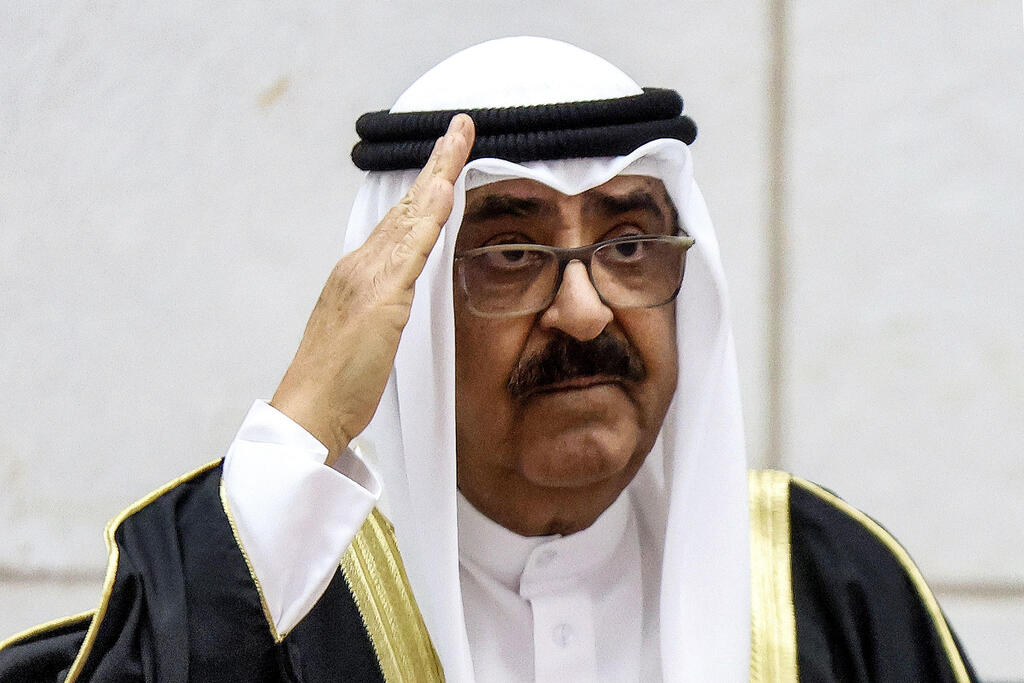
Building upon their 2023 agreement, this protocol establishes binding mechanisms for military training, capacity building, border management, technical exchanges, logistical integration and defense-industrial cooperation.
Kuwaiti officialdom framed this accord as a routine measure to elevate operational readiness and safeguard national borders. A rigorous strategic assessment, however, immediately strips away this diplomatic veneer.
The Rawalpindi protocol does not signal the maturation of Kuwaiti defense planning; rather, it exposes a chronic structural failure that continues to undermine the sovereign integrity of the oil-rich monarchies of the Persian Gulf: the endemic inability to generate native, self-reliant military power.
Faced with a chaotic regional environment and shifting superpower priorities, Kuwait has made a deliberate choice not to reform its domestic defense institutions, but rather to contract out hard security to foreign mercenaries.
The chronic externalization of Gulf defense
Kuwait’s strategic posture has suffered from a fundamental delusion: the belief that national defense is a commercial commodity purchased off the shelf through petrodollars. Possessing vast hydrocarbon wealth yet lacking a martial civic culture, an effective standing army or a population willing to endure the rigors of military service, the Kuwaiti state has consistently substituted lavish procurement contracts and outsourced manpower for genuine national discipline and self-sacrifice.
This rental defense model yielded disastrous results in August 1990. When Saddam Hussein’s Iraqi armored divisions rolled across the border, Kuwait’s heavily funded military apparatus collapsed within hours. The royal family fled across the Saudi border, while the country’s physical liberation ultimately required the intervention of a massive, American-led coalition. The fundamental lesson of 1990 was unequivocal: an army that cannot fight for its own soil does not possess real sovereignty.
Thirty-six years after that catastrophic collapse, as Washington systematically recalibrates its global footprint and expects Middle Eastern allies to assume primary responsibility for their own security environment, Kuwait City remains fundamentally unwilling to confront its internal vulnerabilities.
Rather than undertaking painful military reforms, instituting rigorous national conscription or building an enduring warfighting ethos among its citizenry, the Kuwaiti establishment has reverted to its historic pattern. It is attempting to insulate itself from regional warfare by purchasing external protection from foreign militaries.
The Pakistan vector: renting an Islamist shield
The choice of Pakistan as Kuwait’s primary defense subcontractor is an act of profound strategic desperation that introduces severe risks into the Persian Gulf. Pakistan is not a stable regional power capable of delivering durable strategic guarantees. On the contrary, it is a fragile, nuclear-armed state whose military apparatus—specifically the Inter-Services Intelligence—has long deployed radical Islamist proxy networks across South Asia to achieve geopolitical objectives.
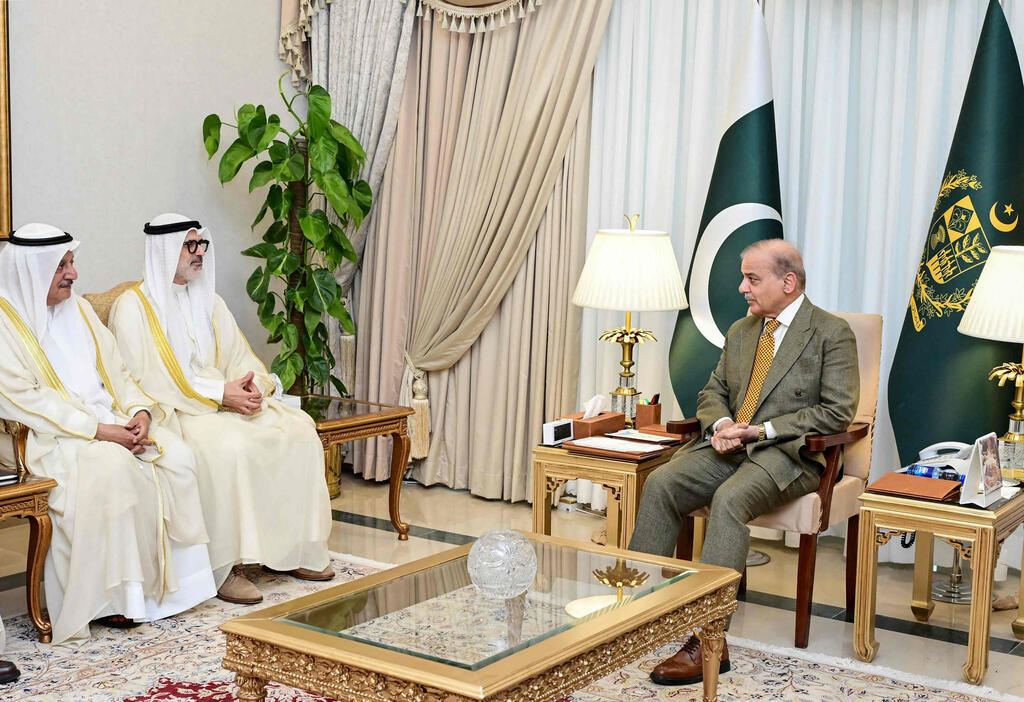
This handout photograph taken on July 29, 2026 and released by Pakistan's Prime Minister Office shows Pakistan's Prime Minister Shehbaz Sharif (R) speaking with Kuwait's Foreign Minister Sheikh Jarrah Jaber al-Ahmad al-Sabah (2L) during a meeting at the Prime Minister House in Islamabad
(Photo: AFP PHOTO / Pakistan's Prime Minister Office)
Furthermore, the institutional culture of Pakistan’s armed forces is thoroughly saturated with pan-Islamist ideological doctrines. For the military high command in Rawalpindi, exporting military advisers, training modules, intelligence officers and border control units to the Arabian Peninsula is not an act of disinterested altruism. It is a vital economic survival strategy designed to generate foreign exchange, secure subsidized energy supplies and funnel needed capital into Pakistan's domestic defense sector.
For Kuwait, however, opening its national command structures, intelligence networks and border security infrastructure to Pakistani personnel creates an institutional conduit for radical ideological influence.
Renting an army steeped in Islamist dogma does not build genuine external deterrence; it merely invites ideological infection, operational compromise and structural vulnerability into the core of the host state's security apparatus.
The hypocrisy of anti-Israel rejectionism
What makes Kuwait’s strategic posture particularly absurd and self-defeating is its stubborn adherence to anti-Israel rejectionism.
While forward-thinking regional states recognized through the Abraham Accords that genuine long-term security requires technological integration, shared intelligence and economic collaboration with Jerusalem, Kuwait remains frozen in Cold-War-era ideological orthodoxy.
Kuwaiti law continues to strictly criminalize any form of normalization, diplomatic engagement or commercial trade with the Jewish State, enforcing draconian anti-boycott statutes designed primarily to appease domestic Islamist politicians and populist parliamentarians.
The strategic irony is striking. Kuwait systematically rejects any association with Israel—the region’s undisputed technological powerhouse in cyber warfare, real-time tactical intelligence, counter-terrorism and multi-layered missile defense—while simultaneously placing its physical survival in the hands of a radicalized, unstable South Asian military establishment.
Kuwait City prefers the ideological comfort of a pan-Islamic defense shield over pragmatic, effective security partnerships that could genuinely protect its territory against aggressive non-state militias and regional destabilization.
By placing outdated dogma above hard strategic calculations, Kuwait sacrifices its long-term national security on the altar of political symbolism.
An emerging parallel security architecture
Protocol Agreement-2026 must not be evaluated as an isolated, transactional bilateral arrangement. It represents a key component of an evolving alternative security architecture extending across the Sunni Islamic world.
This protocol directly complements the Mecca Joint Defense Agreement signed on August 7, 2026, which established a trilateral security alignment between Pakistan, Saudi Arabia and Turkey designed to merge Turkish defense technology, Saudi financial assets and Pakistani troop capacity into a consolidated military bloc.
By binding its national defense systems directly to Pakistan, Kuwait is embedding itself within this emerging parallel security matrix.
For Israel, this trend demands scrutiny. The expanding footprint of Pakistani military personnel, intelligence officers and operational assets throughout the Persian Gulf introduces an unpredictable, nuclear-armed player into crucial maritime and air corridors, including the Strait of Hormuz and the Red Sea.
This South Asian military presence increases the probability of intelligence leaks, technology proliferation to hostile actors and unexpected escalation during future regional crises.
The Israeli doctrinal imperative
For Israel, the Kuwait-Pakistan protocol offers a powerful validation of core Zionist national security doctrine. Jerusalem has always operated under the absolute premise that sovereign survival can never be rented, borrowed or delegated to third-party guarantors.
A security posture that relies on outsourced protection and hired shields is a dangerous mirage that inevitably dissolves when subjected to the harsh realities of armed conflict.
 Amine Ayoub
While Gulf monarchies purchase expensive weapon systems, they lack the capacity to maintain and recruit foreign forces to police their borders, Israel conceptualizes, builds and commands its own defense capabilities.
From Iron Dome, David’s Sling and Arrow atmospheric interceptors to cyber warfare and artificial intelligence platforms, Israel relies on native innovation and a citizen army driven by national resolve.
While international alliances serve as valuable force multipliers, the fundamental responsibility for defending the Jewish State remains exclusively in Israeli hands.
The defense protocol ratified in Rawalpindi on August 27, 2026, exposes the profound structural frailty of Kuwait’s security architecture. Renting conventional military power from Pakistan may afford Kuwait City a brief, illusory sense of protection, but it irrevocably binds the emirate to a volatile, Islamist-infused military state.
Real security cannot be purchased with petrodollars, nor can it be constructed upon the shifting sands of mercenary alliances and ideological rejectionism. In a harsh Middle Eastern neighborhood, Israel’s proven model of absolute self-reliance, technological supremacy and unshakeable national resolve stands as the only durable path to sovereign survival.
- Amine Ayoub, a fellow at the Middle East Forum, is a policy analyst and writer based in Morocco. Follow him on X: @amineayoubx