

Conflicting messages to different audiences are inevitable in wartime, and managing them requires centralized coordination, according to policy and strategic communications adviser Gadi Ezra.
“Usually, and especially during war, a country’s messages to different target audiences contradict one another,” Ezra said. “When addressing the international community, we want to create legitimacy for the use of force, among other things by illustrating the harm done to us. When addressing the Israeli public, we want to build national resilience. When addressing the enemy, we want to create deterrence and demonstrate the cost of defeat.”
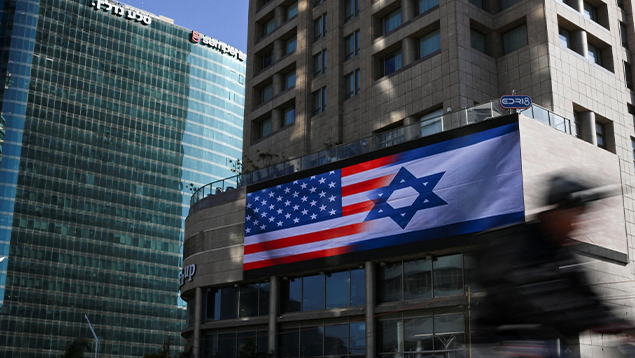
“This contradiction is not a bug, it’s a feature,” he added. “But we must have someone who can manage it.”
Ezra, an attorney, policy and perception adviser and a regular columnist for Yedioth Ahronoth, said Israel’s various spokesperson bodies do not need instruction on how to deliver messages, but rather a coordinating authority that can set overall policy.
“There are many bodies that convey information — the Foreign Ministry, the IDF Spokesperson’s Unit, COGAT (the Coordinator of Government Activities in the Territories), the Mossad, the Shin Bet, the Israel Police and others,” he said. “All of these are like a squadron with significant capabilities, but they need a general staff to regulate their work.”
In that sense, he said, the head of Israel’s National Public Diplomacy Directorate effectively serves as the chief of staff of the perception and messaging arena, responsible for ensuring the different bodies operate together.
According to Ezra, the current war demonstrates how central the perception dimension has become.
“In the current war, the cognitive dimension is stronger than ever,” he said. “Despite the enormous firepower we are seeing, this is also one of the largest influence operations in history.”
The ultimate objective, he said, is not necessarily the destruction of a specific target but motivating the Iranian public to act.
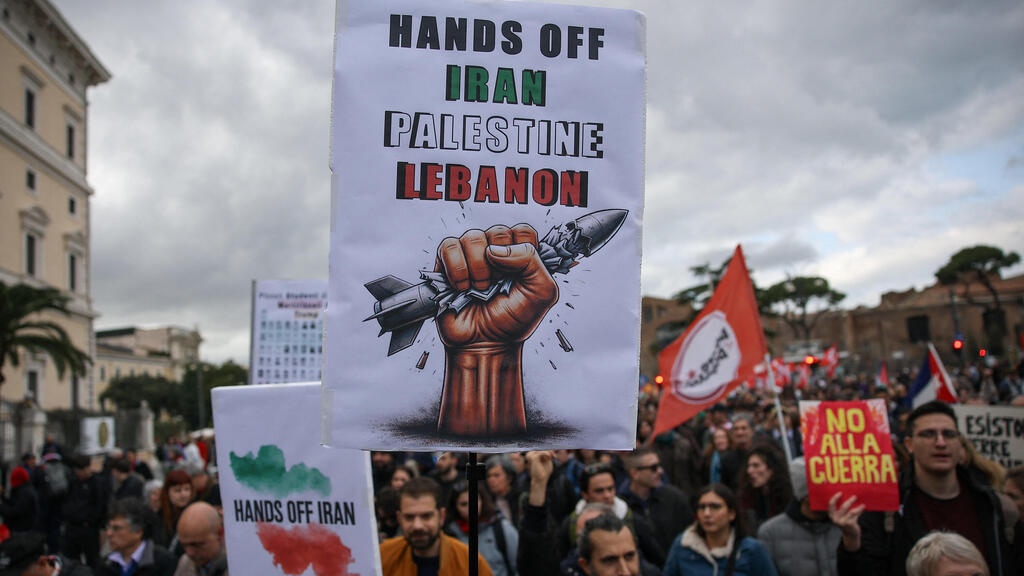
Protest against Israel and the United States and the war in Iran in Rome, Italy
(Photo: REUTERS/Francesco Fotia)
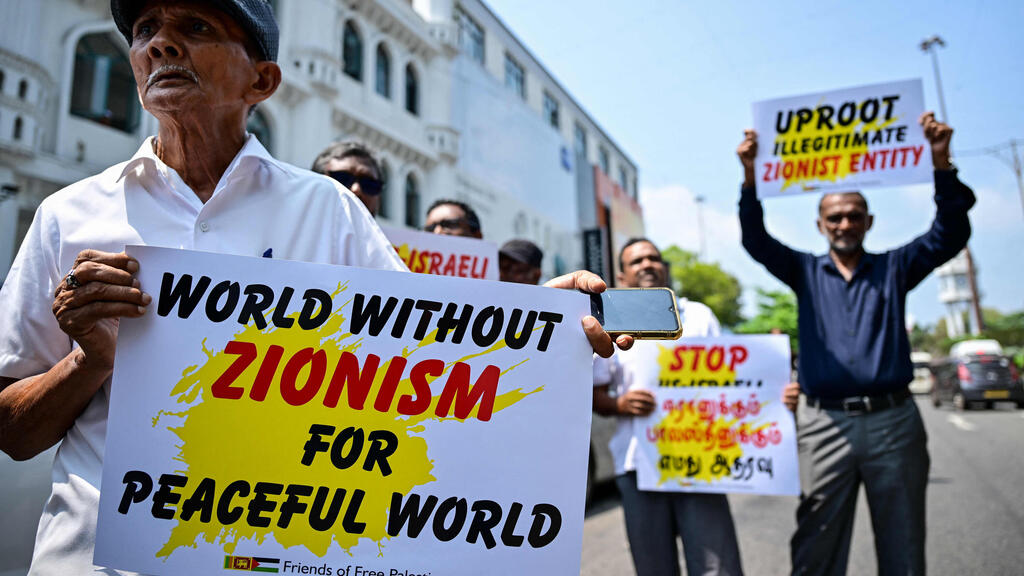
Anti-Israel protest in Colombo, Sri Lanka
(Photo: Ishara S. Kodikara / AFP)
“Our first audience is the Iranian audience, which can be divided into two,” he said. “The leadership, where the goal is to weaken and shake it, and the Iranian public, where the objective is to motivate action. Most of the activity directed at this side is carried out by the security establishment.”
A second key audience is the international and Arab world. Ezra said that here, too, the messaging must address different groups.
“The American public is a central audience, where the goal is to secure domestic legitimacy in the United States,” he said. “We need to counter the narrative that Israel dragged the United States into the campaign.”
Another audience is regional states, where the objective is to reinforce the narrative of a regional alliance and prepare the ground for the day after the war.
“At the same time, we do not want to accelerate events or push too hard,” he said.
The most important audience, however, is Israel’s own public.
“Here the goal is to develop resilience and endurance,” Ezra said. “We all know that a strong home front means a strong front line.”
Images of fighter jets and targeted killings can generate pride, he noted, but pride alone does not sustain resilience over time.
“What actually builds resilience among the public is the belief that the home front is functioning during war,” he said. “It is important to communicate the decisions that are being made. It will not solve all the problems, but it will give Israelis the feeling that they are being seen.”