


Saudi Arabia’s East-West oil pipeline was struck by drones launched from Iraq, forcing Riyadh to shut the route temporarily. Baghdad subsequently acknowledged that the attacks originated from Iraqi territory and dismissed a senior military commander in Maysan province, where the launches were traced. The episode exposed something more important than a single gap in Saudi defenses: even a wealthy state with extensive military capabilities can struggle to protect critical infrastructure from relatively inexpensive, low-flying systems.
For Israel, that should be a warning against complacency. It should also be a warning against the assumption that political alignment with Saudi Arabia automatically creates greater Israeli security.
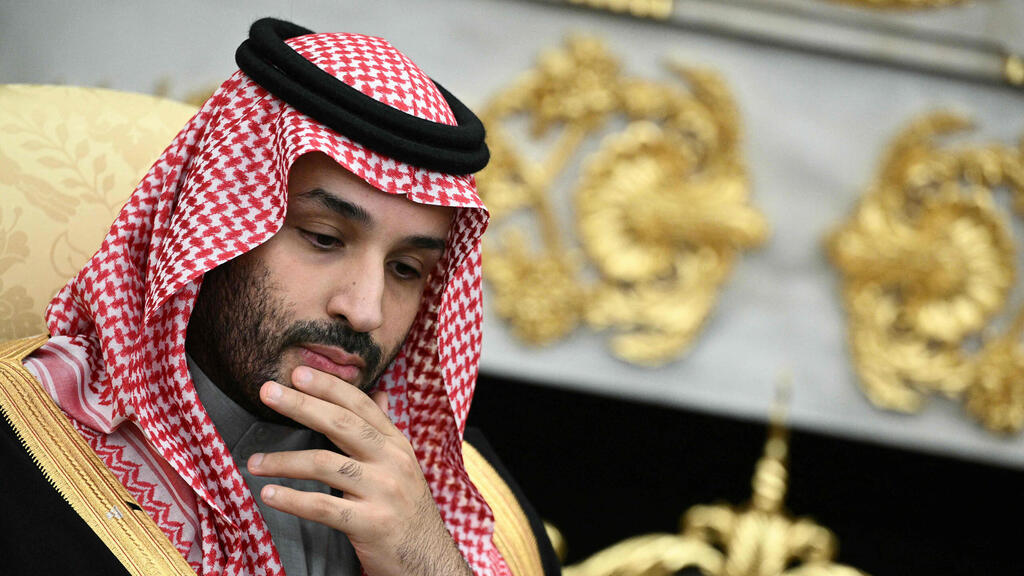
Mohammed bin Salman
(Photo: Brendan SMIALOWSKI / AFP)
The distinction matters because normalization with Riyadh is often presented as though it were inherently strategic. Under current circumstances, it is not. Israel should not enter a major diplomatic bargain simply because Saudi Arabia can offer economic access, regional legitimacy or selective security cooperation. A government can cooperate with Israel on one issue while pursuing very different interests on another. Saudi policy under Crown Prince Mohammed bin Salman has demonstrated a highly centralized and transactional approach to foreign affairs. Jerusalem should therefore judge every proposed arrangement according to concrete Israeli interests rather than assuming that a new partnership will remain reliable when circumstances change.
That does not mean Israel should reject useful cooperation. Intelligence sharing, early warning and deconfliction can sometimes serve Israeli interests. But such cooperation should remain an addition to Israel’s own capabilities, not a substitute for them. Israel can work with states when doing so makes it safer while retaining the ability to act independently when those states choose another course.
The Saudi pipeline attack demonstrates why that independence matters.
Low-altitude drones create a fundamentally different defensive problem from traditional ballistic missile threats. Ballistic missiles generally provide defenders with altitude, speed and warning signatures that can help establish a track. Small drones and cruise missiles can fly much lower, exploit terrain and approach from unexpected directions. Ground-based radars can be constrained by the curvature of the earth, terrain masking and clutter. Small uncrewed platforms can also be difficult to distinguish from background objects until they enter a more favorable detection window.
The attacks on Saudi energy infrastructure therefore illustrate a basic reality of modern warfare: no defensive network can guarantee that every threat will be detected in time.
Israel already understands this problem better than most countries. Its layered air-defense architecture has been tested repeatedly against missiles, rockets and drones. Yet Israel’s geographic characteristics create a special vulnerability. The country has limited strategic depth and a concentration of critical infrastructure. Electricity facilities, desalination plants, ports, refineries, industrial sites and offshore energy assets cannot simply be moved away from danger. A successful strike against a single critical node can have consequences far beyond the immediate physical damage.
This is why Israel should study the Saudi experience without turning it into an argument for normalization.
Washington is already encouraging greater regional air-defense integration. In January, U.S. Central Command and regional partners opened the Middle Eastern Air Defense Combined Defense Operations Cell at Al Udeid Air Base in Qatar. The facility is designed to improve coordination, information sharing, threat warnings and multinational planning. The broader concept is sensible. Earlier detection and better communication can give defenders more time to respond.
But integrated regional defense has a fundamental limitation: political relationships are not the same as military reliability.
Countries may share information during one crisis and withhold it during another. Governments may change priorities. Leaders may calculate that cooperation with Israel carries political costs greater than its security benefits. Intelligence-sharing arrangements can also become vulnerable when governments fear that sensitive information could expose their own strategic interests.
This is particularly important when considering Saudi Arabia under Mohammed bin Salman. His foreign policy has pursued rapid strategic shifts, balancing relations among Washington, Beijing, Moscow and regional powers according to Saudi interests. That flexibility may serve Riyadh. It should not be mistaken for an Israeli security guarantee.
The appropriate Israeli response is strategic clarity.
Israel should preserve independent intelligence, early-warning, command-and-control and interception capabilities even as it participates in useful regional mechanisms. Regional sensors can provide additional warning, shared intelligence can improve situational awareness and joint exercises can expose weaknesses. But none of these should become indispensable to Israel’s ability to defend itself.
The economics of drone warfare make this even more urgent.
A relatively inexpensive drone can force Israel to consider using a far more expensive interceptor, whether from Iron Dome or another layer of its defensive architecture. During prolonged campaigns, repeated interceptions can place pressure on finite stocks even when individual engagements are successful. An attacker does not need to destroy the defense outright if it can repeatedly force the defender to spend more resources than the attack costs. By combining drones with decoys, cruise missiles or simultaneous attacks from different directions, adversaries can create difficult choices for Israeli commanders and test the sustainability of the entire defensive network.
Israel cannot solve that problem simply by buying more traditional missiles. It needs a broader defensive architecture that includes short-range systems, electronic warfare, sensors and other cost-effective counter-drone capabilities. The objective should be to make the defensive response sustainable, not merely technically impressive.
The Saudi experience also shows why protecting infrastructure requires more than defending obvious military targets. Critical energy and transportation networks are interconnected. An attack on one component can disrupt another, creating economic effects disproportionate to the size of the initial strike. Israel’s small geography makes resilience especially important. Redundancy, rapid repair, dispersed capabilities and the ability to continue operating after localized attacks are therefore as important as interception itself.
Regional integration can contribute to that resilience, but Israel must remain capable of operating without it.
That principle should guide any future discussion of Saudi-Israel relations. Diplomacy should not be treated as a substitute for deterrence. Normalization should not be treated as a defense system. Political symbolism should never obscure the hard military reality that Israel must retain the capacity to protect itself regardless of what another government decides.
There is also a broader strategic lesson. Israel should be wary of measuring partnerships by the promises made when relations are improving. The Middle East is defined by reversals. A state that appears aligned today may distance itself tomorrow because of domestic politics, economic pressure, leadership changes or a new regional crisis. Israel should therefore build relationships that are useful without making its survival contingent on their durability.
 Amine Ayoub
That is especially relevant to any Saudi proposal that asks Israel to make significant concessions in return for normalization. Diplomatic agreements should be judged on what they actually secure for Israel, not on the assumption that signing them will transform the strategic environment. If the political conditions are unfavorable, Israel should have the confidence to say no. Security cannot be purchased with diplomatic optimism.
The Saudi attack makes that principle concrete. Riyadh’s wealth, military spending and international partnerships did not prevent a relatively small airborne threat from reaching critical infrastructure. Israel should draw the uncomfortable conclusion: capability matters, but assumptions matter too.
The Saudi pipeline attack is therefore more than another episode in the region’s expanding drone war. It is a warning about the limits of technology, the vulnerability of critical infrastructure and the uncertainty of relying on partners whose interests may diverge from Israel’s at precisely the moment when security matters most.
Israel should learn from Saudi Arabia’s vulnerability without becoming dependent on Saudi Arabia’s goodwill.
The strongest regional strategy is one in which cooperation expands Israeli options without narrowing them. Israel can share intelligence when useful, coordinate defenses when necessary and cooperate with regional governments where interests genuinely overlap. But it should preserve the ability to see, decide and act independently.
Regional cooperation can strengthen Israel’s shield, but it should never become the foundation of Israel’s survival. In the Middle East, the safest shield is ultimately the one Israel can operate alone.
- Amine Ayoub, a fellow at the Middle East Forum, is a policy analyst and writer based in Morocco. Follow him on X: @amineayoubx