

The defense eco-system tends to address three classic supports: technological superiority, quality intelligence and personnel reserves. These three legs are the foundation to a country’s ability to survive in a challenging geo-strategic region like ours. However, there is a fourth leg – hidden, unquantifiable but crucial – without which the other three bear no weight: moral superiority.
In Israel, moral superiority is not an abstract philosophical concept. It is based on a tangible Israeli reality: the values created here, forged under fire throughout generations, are a proven national resource. It is our most profound national resource: a combination of mission, mutual guarantee, the willingness to pay heavy prices for a shared future and the ability to remobilize, even when recovering from a national crisis.
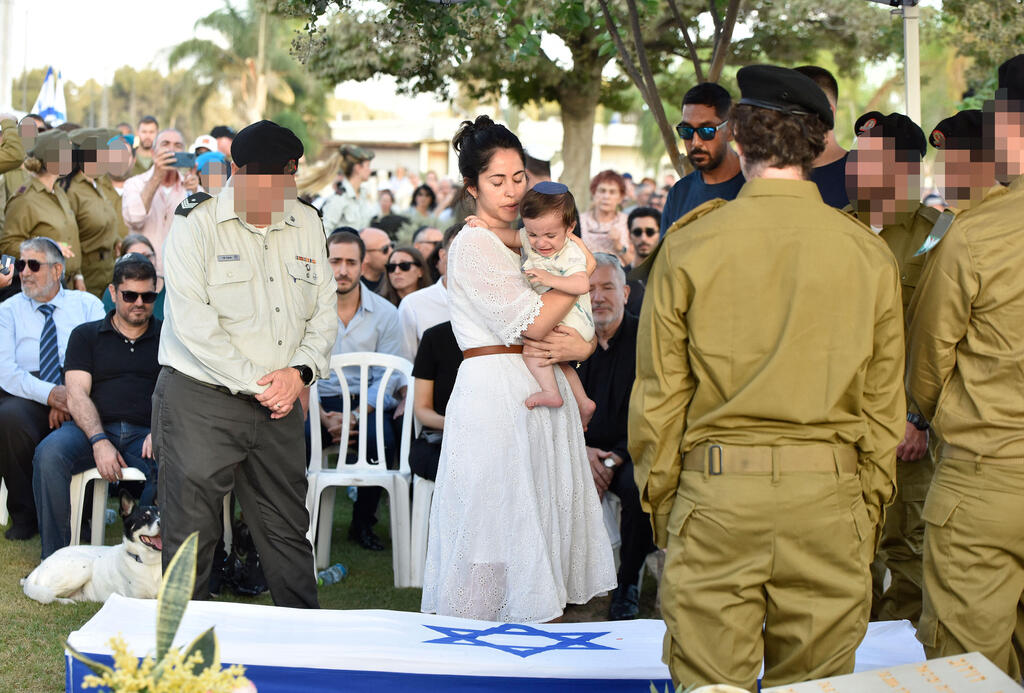
Who holds this capital? Not only the combat soldiers and the men and women of the Israel Defense Forces, but also the families that have paid the highest price of all. At the IDF Widows and Orphans Organization, I come across families from all parts of Israeli society. They all share one common denominator: human and moral quality. This quality is also evident in the next generation. Our sages of blessed memory (Chazal) spoke of a “Zechut Avot,” or merit of the forefathers, describing how the actions and values of previous generations continue to resonate and guide the next. Looking into the children’s eyes, I see endless sadness, depths of missed opportunities, but also the silent presence of a parent who imprinted in them a path and values.
My family also suffered mercilessly from grief. In the last war campaign and throughout the years, I lost a cousin, Michael (Michi) Mark, and three second cousins – Elchanan Kalmanson, Shlomi and Pedaya Mark.
On Simchat Torah, October 7, 2023, Menachem and Elchanan Kalmanson and Itiel Zohar left their homes in Otniel and drove 60 km to Kibbutz Be’eri in the south. They went from one house to the next, under endless fire, rescuing about 100 innocent men, women and children from the hellfire. In this rescue mission, Elchanan – a family man, devoted husband and father of five – was shot to death, dying in his brother’s arms. Three weeks later, we grieved another cousin, Second Lieutenant Pedaya Mark, only 22 years old, who fell in battle with Hamas terrorists in the Northern Gaza Strip. Seven years earlier, young Pedaya sat on my lap at the funeral for his father, Michael (Michi) Mark, who was murdered in a brutal terror attack on his way home. Shlomi, Pedaya’s brother and Michi’s eldest son, was killed in a car accident en route to a shift at the Mossad.
The painful truth is that there is hardly a home in Israel that was not touched by the void of loss. This reality, personal and national, does not allow me to remain on the sidelines. It compels me to harness every tool and resource at my disposal to ensure that their deaths will not only not be in vain, but that they will become a foundation of meaning, responsibility and life.
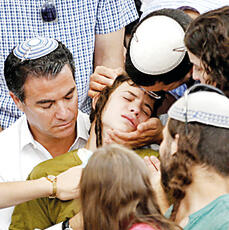
Pedaya Mark sits on lap of cousin Yossi Cohen during the funeral of his father, killed in a terror attack; Pedaya fell in Gaza in 2023
In the customary strategic approach, ‘capital’ is a resource that grants a country resilience and the ability to act. A defense industry generates technological superiority; intelligence engenders knowledge superiority and combat soldier training creates military superiority. The bereaved families possess everything that enable these components to exist – moral and national legitimacy. They embody the sense of meaning that enables us to prevail in the day to day tests that vanquish other nations. Strong countries survived thanks to their armies. The State of Israel has both an army and values, but it is these values that lend strength to the army.
This leads to the question of military service. The draft bill is not a discussion about an agreed or forced mechanism, but rather a deep question of national security; is there a moral common denominator leading to the willingness to protect the state. The army is not just a training program it is a derivative of faith and a shared destiny. When service is considered a burden borne by too few the problem is not in the numbers, but in the erosion of the moral legitimacy held by the bereaved families. The moral-national capital, born of loss and pain, calls for a fair and adapted service array based on a single principle; the national mission must be shared. Otherwise, it loses of its power and becomes a source of controversy impairing the Israeli tapestry.
History has proven that when countries collapse, it is not because of an external enemy – but due to erosion from within, the collapse of trust, decline in the motivation to serve, public cynicism and the absence of a shared sense of meaning. When moral cohesion weakens, even the strongest systems are unable to act. Thus, without continuous support for the families – those who bear the foundations of this cohesion – value erosion is not an extreme scenario, it is an almost certain outcome.
The families are familiar with the war, not from the newspaper headlines, but as their reality. They face it every day, forced to choose to rise. They serve as a live bridge between the generation of defenders and the next generation, pointing out the crisis points where we must provide support to strengthen them at least as much as they strengthen the entire nation.
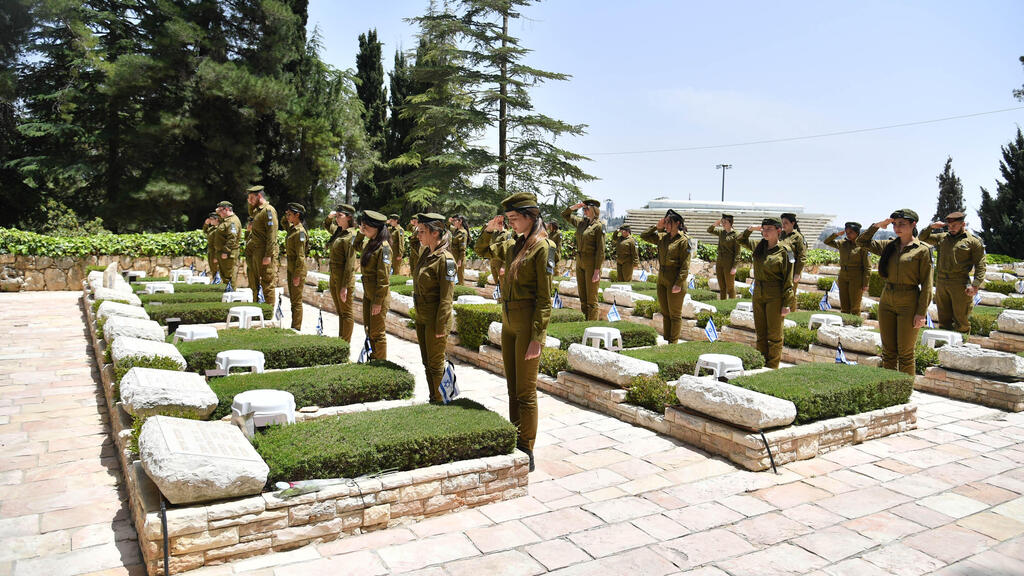
Memorial Day in Israel
(Photo: Yoav Dudkevich)
When a state invests in its bereaved families, it is not performing a social gesture; it is building a national continuity mechanism. In intelligence – the investment is in the ability to look ahead; in the defense industry – in the ability to react swiftly; in the economy – in stability. The bereaved families possess the moral fuel enabling society to continue fighting for its existence. It is an investment that pays for itself, not only in terms of morals, but in terms of the future as well.
That is why moral superiority is not a luxury. It is an integral part of the defense doctrine and a fundamental component of our national resilience. The bereaved families are the moral foundation underlying the existence of the State of Israel. Investing in them is a long-term strategic investment in the core of the mechanism that enables the state to continue to face any challenge.
In the future, the struggle will not be limited to physical borders, but also to boundaries of meaning. It will be determined not only on the battlefield or through technology, but in our ability to preserve the moral capital. Those who understand national security know: some resources are measurable and some cannot be lost. The bereaved families belong to the latter – a strategic asset that the state must protect.
The Torah sets a moral obligation to protect the widow and orphan – not as an act of grace, but as a pillar of our identity. It does not call upon us to show pity, but rather sets a challenge of justice; justice that focuses directly on places where life has broken hearts. Deuteronomy says: “Execute justice for the fatherless and the widow." Where a person loses the natural protection of family, the heavens themselves must provide support.
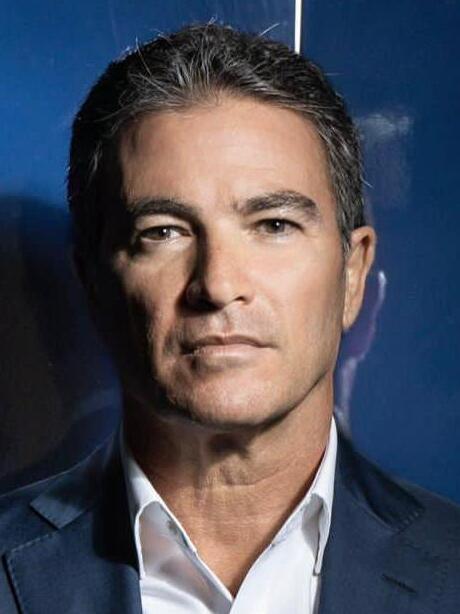 Yossi CohenPhoto: Rami Zarnagar
A great truth, in the form of society, lies within this frail alliance between God and the fatherless and widow. A society seeking true justice is measured in how it treats those who have lost their support. And it is this edict that leads to a deep social responsibility and commitment – to solidly provide these families support; not only not to harm them, but to protect them; not only comfort them, but encourage them; not only give, but be a shoulder for them; to stand by them always, even when the world tends to forget. That is where not only our humanity is tested, but also our power; the power to reestablish balances of a proper society, rendering us not only among the strongest armies in the world, but a nation bound by an eternal covenant.
Despite the destruction, loss and disputes, we have a moral vest – impermeable to them all. Our protection of the bereaved families is the candle that continues to burn for them. This Hannukah, now more than ever, we enjoy an ongoing light that embraces the entire country, giving it the strength to continue standing tall.
The author, the former director of the Mossad, is president of the Friends of the IDF Widows and Orphans Organization