

Every few weeks, U.S. President Donald Trump returns to the same threatening refrain. “We’ll beat the hell out of them.” “We’ll open the gates of hell.”
Then, several days ago, the U.S. War Department published another ominous message ahead of what appeared to be an imminent and powerful strike on Iran: “May God protect our troops.” The implication was clear. The decision had supposedly been made, and all that remained was to pray for the soldiers carrying it out.
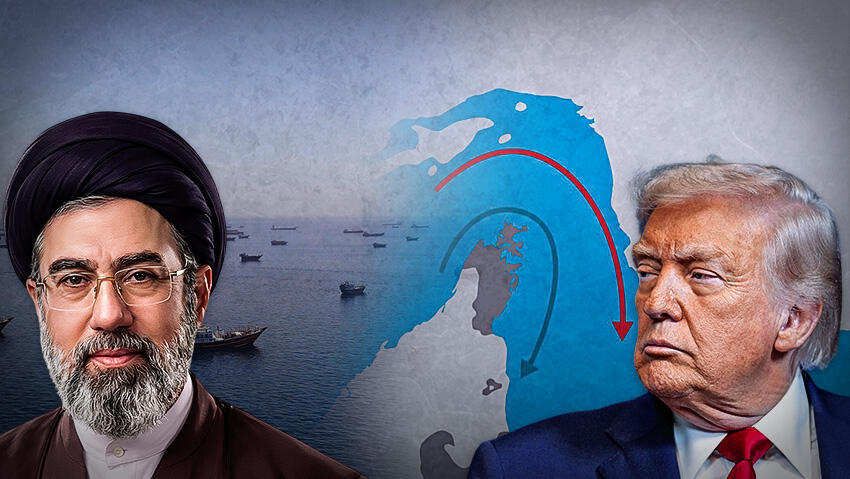
Donald Trump delays Iran strike once again
(Photo: shutterstock, AP/Alex Brandon, REUTERS/Stringer)
This time, however, no one was surprised when Trump announced that the strike had been postponed because “the Iranians asked,” or offered some other excuse.
As usual, Iran denied that any agreement had been reached and drove the message home by attacking another ship in the Strait of Hormuz.
The familiar cycle is now likely to repeat itself: the United States responds with force, the confrontation escalates, Gulf states and American bases come under attack, and tensions build toward a major U.S. strike. Then, at the height of the crisis, Trump postpones it once again.
With each reversal, he risks making himself look ridiculous and reducing the United States to the very opposite of “great.”
At the same time, he is alienating Washington’s Gulf allies, while he and members of his administration repeatedly slight Israel.
Several theories have been offered to explain this absurd zigzag.
The first was the World Cup, which Trump supposedly wanted to pass without Gulf war headlines disrupting the spectacle. The same logic was applied to the celebrations marking 250 years of American independence.
Another theory is that the current standoff primarily benefits the United States. Iran’s economy is being squeezed, Gulf economies are under mounting pressure, and America, as a major oil exporter, stands to gain. Its advantage is further reinforced by falling Russian oil exports amid sustained Ukrainian attacks.
The Gulf states are, in effect, America’s competitors in the global energy market. By sustaining a controlled level of regional instability, Trump strengthens the U.S. position at their expense, boosts federal revenues and allows continued pressure to erode Iran’s economy.
Under this theory, Iran is not merely an enemy but an instrument in Trump’s bid to establish American dominance over the global energy market. Once Tehran has served that purpose, he can move to finish the war and topple the regime.
The most persuasive explanation, however, lies in the U.S. midterm elections. Few issues shape American voting behavior as directly as gasoline prices, and when they rise, the party in power often pays a steep electoral price. Joe Biden learned that lesson firsthand.
Trump has no interest in reaching November with Gulf oil fields burning, the Strait of Hormuz blocked and energy prices surging. Instead, he appears to be alternating between escalation and de-escalation, trying to contain oil prices and buy enough time to shield Republicans from the political fallout.
Under this theory, once the midterms are behind him, Trump will be free to turn his full attention to bringing down the Iranian regime.
That is probably the clearest explanation for the president’s erratic conduct, assuming he is acting rationally and has not fallen under Qatar’s influence. Even so, Trump is making two grave mistakes.
The first is strategic. A war aimed at eliminating a global danger posed by a monstrous regime comparable to Nazi Germany should not be halted for economic reasons, particularly after that regime has already been badly weakened. Allowing such a dangerous regime time to regroup and recover is a reckless gamble with potentially catastrophic consequences.
The second mistake is tactical. Postponing the decisive strike until after the elections could prove a reckless gamble, because Trump is not the only player shaping events. The Iranian regime is also hearing the repeated predictions that a devastating blow awaits it once the midterms are over.
The ayatollahs need only play along and hold out for a few more months. Then, perhaps two weeks before Election Day, they could ignite the Gulf, send oil prices soaring, trigger a global economic crisis and deal the Republican Party a crushing defeat at the polls. It takes only one side to drive up oil prices. Trump does not control the board.
Iran could inflict an electoral defeat that leaves Trump confronting a hostile Congress, severely restricting his ability to continue the war and preventing him from finishing what he began. The result would make him look ridiculous and leave America weaker than it was under Barack Obama.