

This is not another opinion column about the “state of the nation” written from the outside, but rather a column by a bereaved father looking at his country and asking how it can keep going like this.
What exactly are we wishing for?
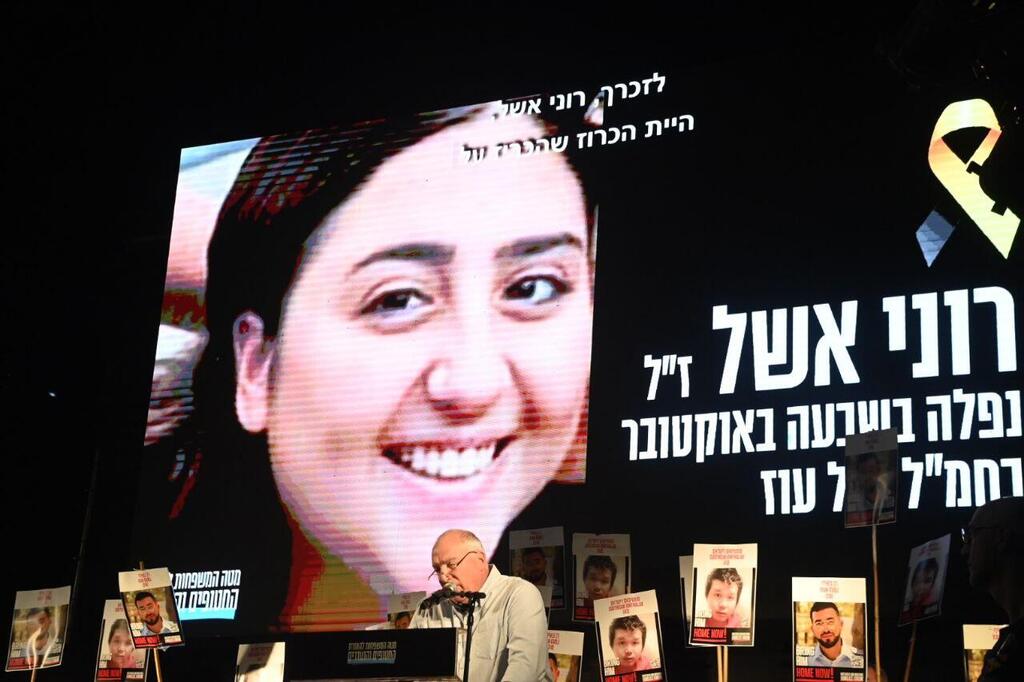
I look at Israel and ask myself: Have we really learned nothing?
I do not ask that as a political commentator. I ask it as a father. Roni’s father.
Roni was 20 years old. She was an IDF lookout soldier at the Nahal Oz base near the Gaza border. She was supposed to come home. She was supposed to keep living, loving, laughing, traveling and building a life of her own. Instead, I have had to continue mine without her.
Since that terrible morning, I have looked at this country differently. I watch every election campaign, every speech, every promise and every political argument and ask myself: Where is Roni in all of this?
Where is she in the calculations of those who want to lead this country? Where is she in the decisions they make? Where is she in the future they promise us?
Because Roni is not only a memory. Roni is the question. The question is whether Israel is still capable of stopping, looking itself in the mirror and admitting that it failed.
That question grows more urgent as the election approaches. I truly expected this campaign to be different. After October 7, after the worst disaster in Israel’s history and the immense loss endured by so many families, I expected leaders to understand that the country could not afford another ordinary political campaign as usual.
I expected less ego, fewer political boycotts and fewer personal vendettas. I expected more responsibility, more cooperation and a deeper understanding that Israel is in a profound crisis, and that anyone seeking to lead it must first understand the weight of that responsibility.
But as time passes, I see the same patterns returning. Political blocs. Boycotts. Candidates refusing to work with one another. Ego battles. And all of it wrapped in grand declarations about “the future of the country.” What future? Whose future?
While politicians argue over possible coalitions, Israel is still confronting serious security threats on several fronts. Gaza is still burning, Lebanon and Syria are deeply unstable, and Iran continues to loom over the region. The IDF is under strain, soldiers are exhausted and families are living with constant uncertainty.
And now we are entering the high holiday season while the country remains on alert, with the sense that our problems have not been solved. They are simply piling up.
This is exactly when I would expect the political system to recognize that Israel cannot carry on as usual. Yet the power struggle still seems to take precedence over the country’s needs. Political boycotts matter more than compromise, and coalition calculations matter more than the far more urgent question of how to put Israel back on track.
Let me say this as clearly as I can: Israel cannot afford another leadership consumed by its own political battles while the country pays the price.
We are approaching October 7. Three years have passed since the devastating disaster that struck Israel. Three years in which bereaved families have been asking the same questions: What happened, who knew, who warned, who ignored the warnings, who made the decisions and who still refuses to provide answers. Three years in which Israel has still not established a state inquiry commission. Three years.
How can we talk about the country’s future while refusing to fully investigate its most immediate past? How can politicians ask the public to believe that this time will be different when the worst failure in Israel’s history has still not been subjected to a full, independent investigation?
How can they promise security without examining why Roni and the other lookout soldiers were left alone in the operations room? How can they promise that the next disaster will not happen when we have not fully established how the last one happened?
Perhaps that is exactly what this election should be about. Not who will boycott whom. Not who will sit with whom. Not who will manage to assemble a coalition. The question should be who is willing to look the public in the eye and say: I will do everything necessary to make sure this country learns the truth.
Instead, we continue as though we can simply move on. Another school year has begun with an education system still struggling to give our children what they need. Hundreds of doctors have left the country. And we continue arguing about almost everything except the question of how to put Israel back on track.
Then the High Holidays arrive. People wish one another Shana Tova, a good new year, and Chag Sameach, a happy holiday. And I find myself asking: What exactly are we celebrating? A new year without answers? A holiday while families are still living with loss? A better future while we continue to avoid learning from the past?
I am not writing this to extinguish hope. Quite the opposite. I am writing because I want us to have something more meaningful than slogans or campaign promises: real hope, grounded in truth and accountability, and strong enough to move us forward without asking us to forget what happened.
I am Roni’s father, and I refuse to accept that Israel can simply carry on as though nothing happened. I refuse to accept that the worst failure in the country’s history will become just another chapter in a history book without the truth being fully investigated, without those responsible being called to account and without the lessons being implemented. I refuse to accept that those asking us to trust in the future can continue avoiding the questions of the past.
That is why I continue to fight for a state commission of inquiry. Not out of revenge, and not to assign blame in advance, but to establish the truth: what happened, why it happened, who was responsible and how Israel can prevent another such disaster.
A country that does not investigate its failures cannot truly learn from them. And a country that does not learn puts all of our futures at risk.
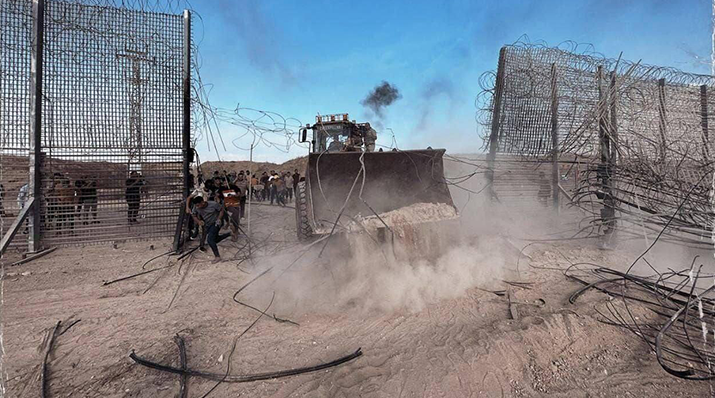
The breach in the Gaza border fence on October 7
So before the election, before the holidays and before October 7, I ask everyone seeking to lead this country to stop for a moment. Stop the boycotts. Stop settling scores. Stop fighting over political power and start talking about the country.
Talk about its security. Its education. Its health system. Its economy. Its society. Talk about our shared responsibility to make sure the next disaster is not simply a matter of time.
Israel does not need another election campaign that divides us into camps. It needs leadership capable of bringing us together around the most basic responsibility of all: protecting our lives.
If there is one thing I ask for as the new year approaches, it is not another promise of a good year. I ask for a year of truth. A year of responsibility. A year in which Israel stops being afraid of the hardest questions and finally begins searching for the answers.
Because without truth, there can be no repair.
And without repair, there can be no future.
And Roni? Roni does not need any more promises. Roni needs her country to understand why it was not there for her. And Roni needs her country to make sure it never happens again.
This is not politics.
It is our responsibility.