

Sudan’s civil war is often described as a brutal struggle between the Sudanese Armed Forces (SAF) and their former allies-turned-rivals, the Rapid Support Forces (RSF). In reality, the conflict reflects something deeper: a calculated effort by the Sudanese branch of the Muslim Brotherhood to reassert influence over the state through military channels.
Washington has increasingly raised concerns about this dynamic. The United States has designated the Sudanese Muslim Brotherhood as a Specially Designated Global Terrorist (SDGT) entity and announced plans to formally classify it as a Foreign Terrorist Organization (FTO) beginning March 16, 2026. American officials argue that the movement has played a role in violence against civilians during the war and continues to exert ideological and operational influence within Sudan’s military structures.
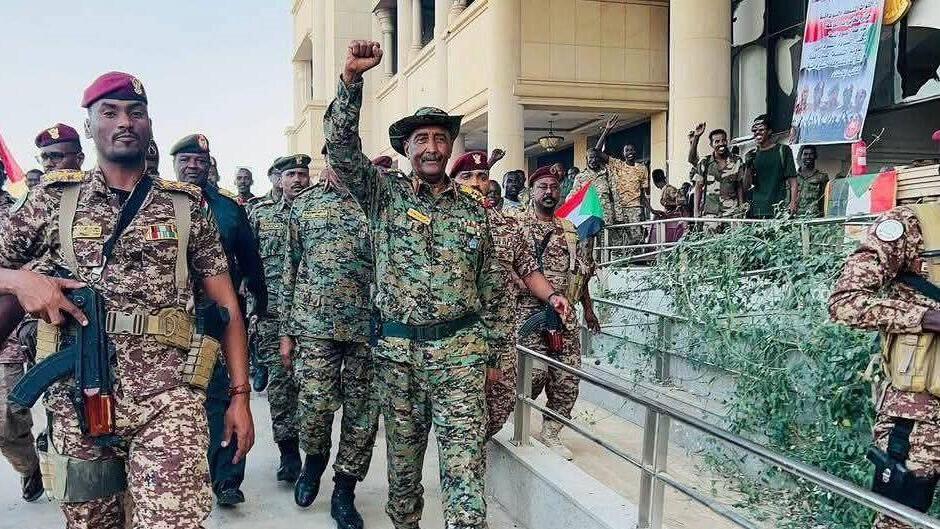
At the center of this dynamic is the close relationship between SAF commander Abdel Fattah al‑Burhan and figures associated with Sudan’s Islamist political networks. Among them is Ali Karti, secretary-general of the Sudanese Islamic Movement, the local expression of the Muslim Brotherhood in Sudan. Their alignment has allowed Islamist networks to maintain political leverage while the SAF fights for control of the country.
To strengthen its position in the civil war, the SAF has also relied on outside assistance, including support from Iran. Before the regional escalation that began in February 2026 with U.S.–Israeli strikes that reportedly killed Ali Khamenei, Tehran had reportedly supplied the SAF with drones, munitions, intelligence support, and technical expertise.
The ideological overlap between Islamist factions and Iranian interests became particularly visible in a video circulated online earlier this year. In the footage, Al‑Naji Abdullah, a senior Islamist figure aligned with the SAF, expressed open support for Iran and suggested Sudanese fighters could be mobilized to confront U.S. or Israeli forces should ground operations occur inside Iran. Such statements reinforced concerns that ideological networks inside the SAF maintain sympathies extending far beyond Sudan’s borders.
Yet this alignment became politically awkward when Iranian missile and drone strikes targeted Gulf states, including Saudi Arabia. Riyadh strongly condemned the attacks and emphasized its right to defend its territory. That escalation forced the SAF to adjust its rhetoric, publicly criticizing Iran and aligning its messaging more closely with Saudi positions.
This shift highlights a deeper contradiction in Saudi regional policy. Since the outbreak of Sudan’s civil war in April 2023, Saudi Arabia has emerged as the principal external supporter of the SAF. Riyadh has reportedly financed a major arms arrangement between Pakistan and the Sudanese military valued at roughly $1.5 billion and backed economic agreements such as gold exploration projects along Sudan’s Red Sea coast.
However, the SAF’s battlefield resilience has partly depended on the very Iranian support that Riyadh now condemns. This creates a strategic paradox: Saudi Arabia opposes Iran’s regional agenda while simultaneously supporting a military structure that has cooperated with Iranian networks and maintains ideological ties with Islamist movements historically hostile to the Gulf monarchies.
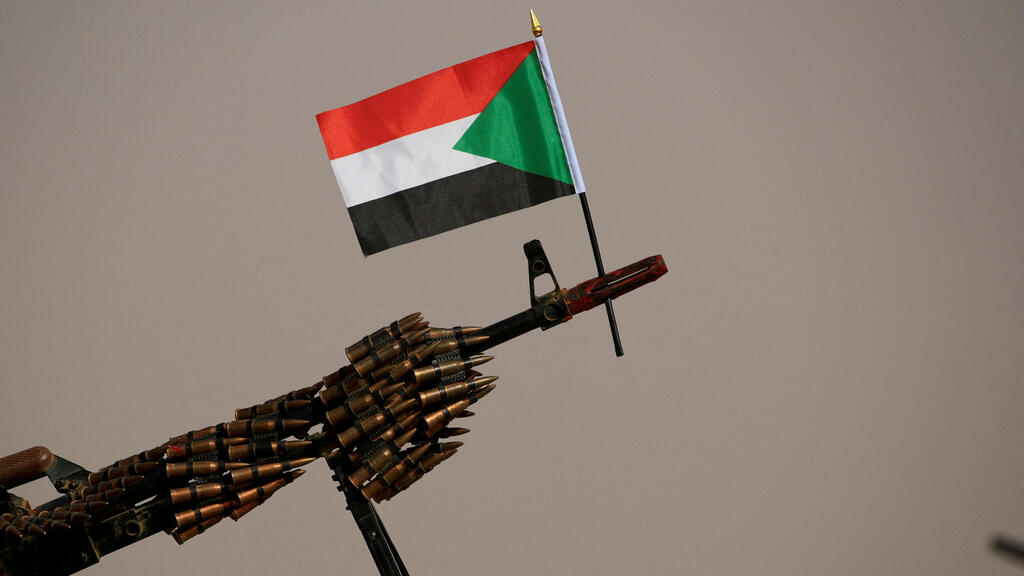
The Sudanese flag rests on a rifle as an RSF militia fighter stands guard in Khartoum, June 2023
(Photo: Umit Bektas/Reuters)
The contradiction extends beyond Sudan. Saudi policy toward the Muslim Brotherhood has long been inconsistent. While the kingdom has taken a hard line against Brotherhood-linked activism within its own borders, its regional policy has at times tolerated or even empowered Brotherhood-aligned actors abroad. In Yemen, for example, Riyadh has supported elements linked to the Islah Party, a group with ideological roots in the Brotherhood.
For Western policymakers, these dynamics raise difficult questions. United States and its allies view Saudi Arabia as a crucial partner in countering Iranian influence and safeguarding energy security in the Gulf. But partnership requires policy coherence.
If the objective is to confront Iranian expansionism and limit the influence of militant Islamist movements, then support for forces intertwined with those same ideological networks risks undermining that strategy. Islamist movements—whether Sunni or Shiite—have repeatedly demonstrated their ability to exploit regional conflicts to expand influence, from Sudan’s decades of Islamist governance to networks facilitating weapons smuggling and militant mobilization.
In this context, Western strategy faces a simple but uncomfortable reality. Opposing Iran while ignoring the destabilizing role of transnational Islamist movements creates strategic blind spots. Both phenomena have historically intersected, sometimes cooperating tactically despite ideological differences.
If Saudi Arabia seeks to be viewed as a reliable ally of Washington, its regional policy will ultimately be judged by whether it consistently rejects extremist networks rather than selectively confronting them. Alliances built solely on short-term tactical calculations may deliver temporary advantages, but they can also empower the very ideological forces Western governments claim to oppose.
For the United States and its partners, the lesson is clear: confronting regional instability requires more than opposing a single adversary. It requires a consistent approach toward all movements that exploit conflict to expand extremist influence across the Middle East and beyond.
- Rami Al Dabbas is a writer/commentator known for opinion pieces on Middle East politics, critiques of Islamist movements, advocacy of political realism and engagement and a controversial presence on social media
First published: 17:06, 03.12.26