

To understand the present, one must go back to the past: Lebanon gained full independence in November 1943 after 23 years of French rule. Syria reached the same milestone in April 1946. Yet diplomatic relations between the two neighbors were only established 17 years ago, when Bashar Assad agreed in October 2008 to formally recognize Lebanon’s sovereignty. Until then, Lebanon had been regarded by Damascus as part of “Greater Syria.”
Iranian envoys roamed freely between Beirut and Damascus, arms flowed in massive quantities to Hezbollah—against the wishes of Lebanon’s leaders and citizens. Hezbollah ruled Lebanon and Assad expressed boundless admiration for Hassan Nasrallah.
Gallery
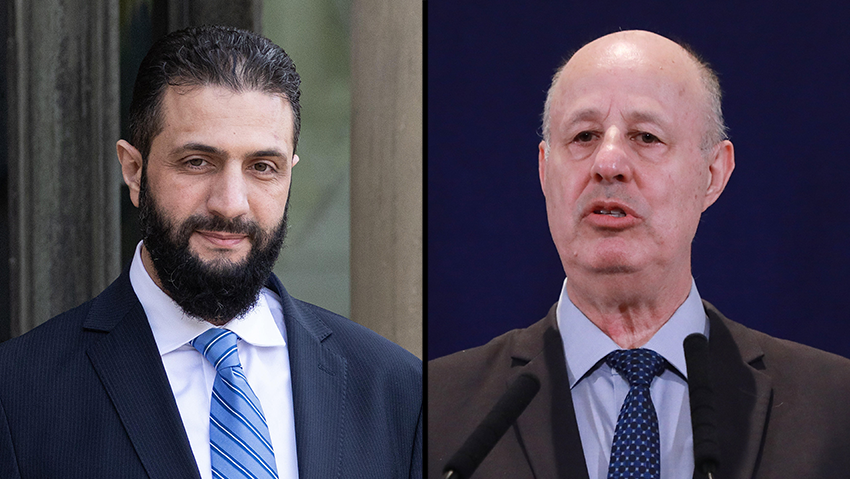
Syrian President Ahmad al-Sharaa, National Security Council head Tzachi Hanegbi
(Photo: Tom Nicholson/Getty Images, Dana Kopel)
Fast forward to the present: after Israel and Lebanon reached a secret ceasefire agreement in November, Syria also entered quiet talks with Israeli “experts.” Israel has pushed to bring both Lebanon and Syria—separately—into the Abraham Accords, but both Beirut and Damascus have made it clear that they are not interested in peace agreements. What they are willing to discuss is limited to security arrangements.
Enter Tom Barrack, a U.S. real estate investor and longtime friend of President Donald Trump, dating back to his days as a campaign fundraiser. Barrack was appointed U.S. ambassador to Turkey and presented his credentials to President Recep Tayyip Erdogan in May. Less than two weeks later, his real mission was revealed: He is Trump’s special envoy to Syria and Lebanon.
Barrack makes no secret of his ambitions. He has been pressuring Lebanese President Joseph Aoun and Prime Minister Nawaf Salam to accept a permanent settlement with Israel. He didn’t get a negative response—just a request: “Give us time.” He then traveled to Damascus to meet Syrian President Ahmad al-Sharaa. When he broached the subject of Iran as a mutual enemy of both Syria and Israel, he was met with full agreement.
Get the Ynetnews app on your smartphone: Google Play: https://bit.ly/4eJ37pE | Apple App Store: https://bit.ly/3ZL7iNv
Barrack is well-informed on the ongoing dialogue between Syria and Israel. The Golan Heights remains one of the main issues under discussion. Both sides are exploring creative solutions, though no agreement has been reached.
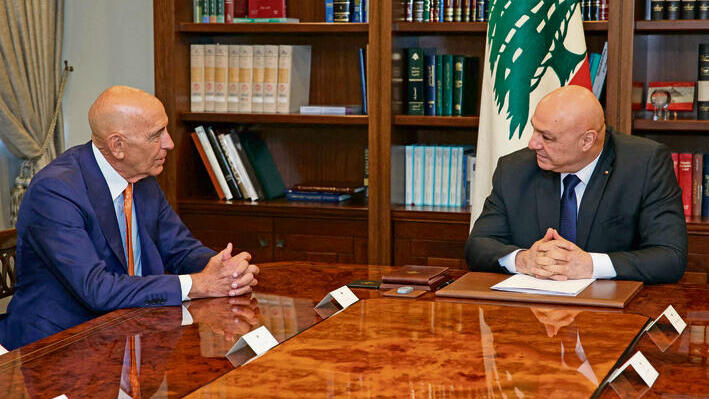
Tom Barrack with Lebanon's Presidnet Joseph Aoun
Still, both are eager to keep talking. The Syrian delegation has not demanded the return of the Golan as a precondition for negotiations, and Israel consistently clarifies that its airstrikes in Syria target only Iranian or Hezbollah assets.
Neither side has disclosed the location of the talks. Al-Sharaa, under pressure during an interview, admitted to a “non-direct dialogue” with Israel. Foreign Minister Gideon Sa’ar went further, describing it as “direct dialogue.”
A source told news agencies over the weekend that Syria’s intelligence chief, Hussein Salameh—who joined al-Sharaa’s recent trip to Azerbaijan at the last minute—was expected to meet with a senior Israeli official. Rumors suggest it wouldn’t be their first meeting.
With the Golan issue set aside for now, there are few major roadblocks to continued talks. Lebanon, however, remains a tougher case. Hezbollah hasn’t disappeared; it continues recruiting and training and refuses to give up its role.
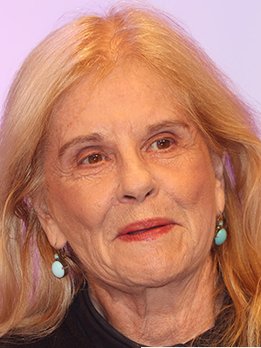 Smadar PerryPhoto: Yariv Katz
Still, Aoun and Salam appear determined to regain control. The Lebanese army has been sent to collect weapons in southern villages and Hezbollah fighters are no longer roaming the streets of Beirut to intimidate civilians.
The average Lebanese citizen, much like his Syrian counterpart, wants peace—not out of love for Israel, but out of sheer economic desperation. Both countries are in crisis and Israel is seen as a potential partner to deliver food, construction materials and aid. Syria and Lebanon desperately need help.