


Within hours of taking the oath of office in Cali last week, President Abelardo de la Espriella and his government made two decisions that clarified Colombia’s new direction. They formally recognized the Kingdom of Morocco’s sovereignty over Western Sahara and withdrew recognition of the self-proclaimed Sahrawi Arab Democratic Republic.
At the same time they moved to restore full diplomatic, security, and economic relations with Israel. These steps were not improvisation. They were the deliberate application of a coherent view of international affairs that prioritizes stability, measurable cooperation, and national interest over the ideological postures of the recent past.
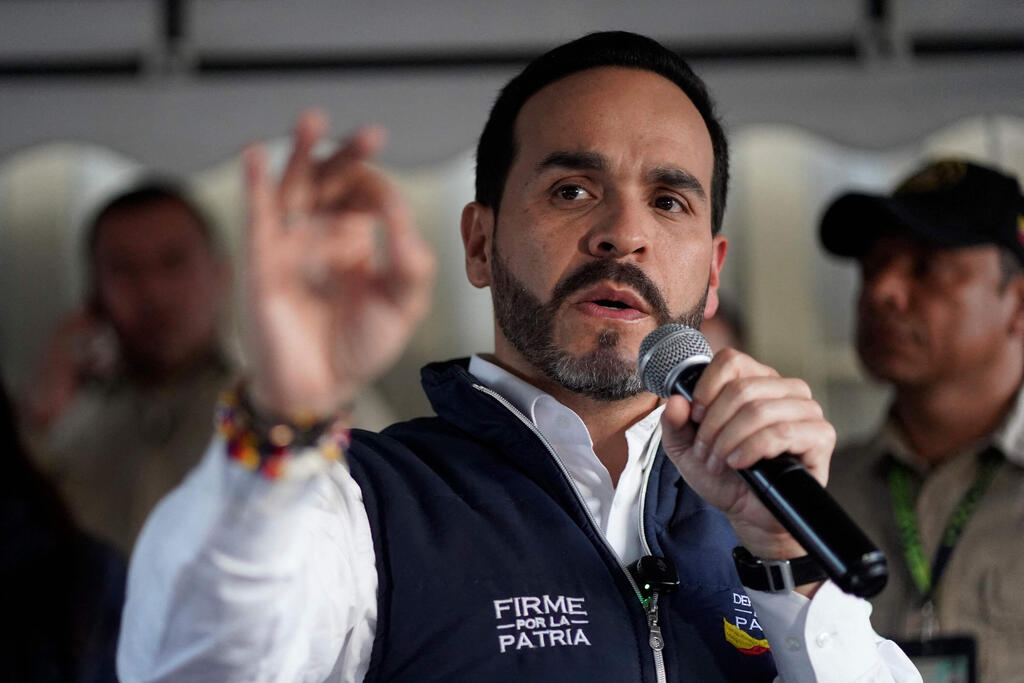
The announcement came during a meeting in Cali between Moroccan Foreign Minister Nasser Bourita, acting as special envoy of King Mohammed VI, Vice President José Manuel Restrepo, and Foreign Minister Omar Bula Escobar. Restrepo called the decision a new beginning and described Morocco as Colombia’s principal strategic partner on the African continent.
Bula Escobar stated without qualification that Colombia recognizes Moroccan sovereignty over its southern provinces. Bourita described the move as historic and said it would open the door to stronger economic, security, and trade cooperation, with each country serving as a gateway to its region.
De la Espriella had signaled this approach long before inauguration. A trial lawyer and founder of the Defenders of the Homeland movement, he campaigned on rule of law, internal security, and pragmatic engagement abroad. His transition team made clear that restoring robust defense, intelligence, trade, and technology ties with Israel ranked among the first priorities, alongside a broader recalibration of partnerships that had drifted under the previous administration.
The contrast with Gustavo Petro’s government is stark and intentional. In 2022 Petro restored diplomatic relations with the Sahrawi Arab Democratic Republic, reversing a freeze that had stood since 2001. His administration later severed ties with Israel in 2024 over the conflict in Gaza and took further steps against remaining Israeli diplomatic presence.
Those choices aligned Colombia with a set of positions that had grown increasingly isolated. Supporting an armed separatist movement whose international standing has narrowed for more than a decade, while rupturing long-standing intelligence and security cooperation with Israel, produced few tangible benefits for Colombia and complicated relations with key Western partners. De la Espriella treated that record as a liability and dismantled it at the first opportunity.
The Moroccan decision did not occur in isolation. Over the past decade Rabat has pursued a patient strategy of economic and technical engagement across Latin America. As one of the world’s leading producers of phosphate fertilizers, Morocco became an important supplier during recent global food-price shocks. Targeted trade agreements, agricultural cooperation, and institutional partnerships have steadily expanded its presence.
Colombia’s recognition removes one of the last significant formal endorsements of the Sahrawi entity in South America and brings Bogotá into line with positions already taken by the United States in 2020, Israel in 2023, Spain’s endorsement of Morocco’s 2007 Autonomy Proposal as the most serious and realistic basis for resolution, and France’s subsequent support for Moroccan sovereignty.
The commercial and technical agenda is already taking shape. Officials from both governments have confirmed the creation of bilateral working groups focused on precision agriculture, water management, renewable energy, defense, cybersecurity, and logistics. These are not abstract declarations. Colombia faces real constraints in agricultural productivity and water security.
Israeli drip-irrigation and desalination technology, combined with Moroccan fertilizer capacity, offers practical tools to address those constraints. On the security side, Israeli expertise in cyber defense and advanced systems, paired with Morocco’s intelligence networks across North Africa and the Sahel, can strengthen Colombia’s capacity against transnational criminal networks. Morocco’s Tanger Med port, one of the largest deep-water facilities on the Atlantic and Mediterranean, provides Colombian exporters a potential gateway to African and European markets, while Colombia offers Morocco an entry point into the Andean Community.
This convergence rests on the same logic that produced the Abraham Accords in 2020. That framework demonstrated that sovereign stability, security cooperation, and concrete economic gains can take precedence over unresolved disputes inherited from earlier eras. Washington’s recognition of Moroccan sovereignty that same year, later reinforced by Israel, applied the principle directly.
De la Espriella has now extended it across the Atlantic. The emerging alignment among Bogotá, Rabat, and Jerusalem is not a formal military alliance. It is an interest-driven understanding among middle powers that share priorities on security, innovation, and the integrity of existing states.
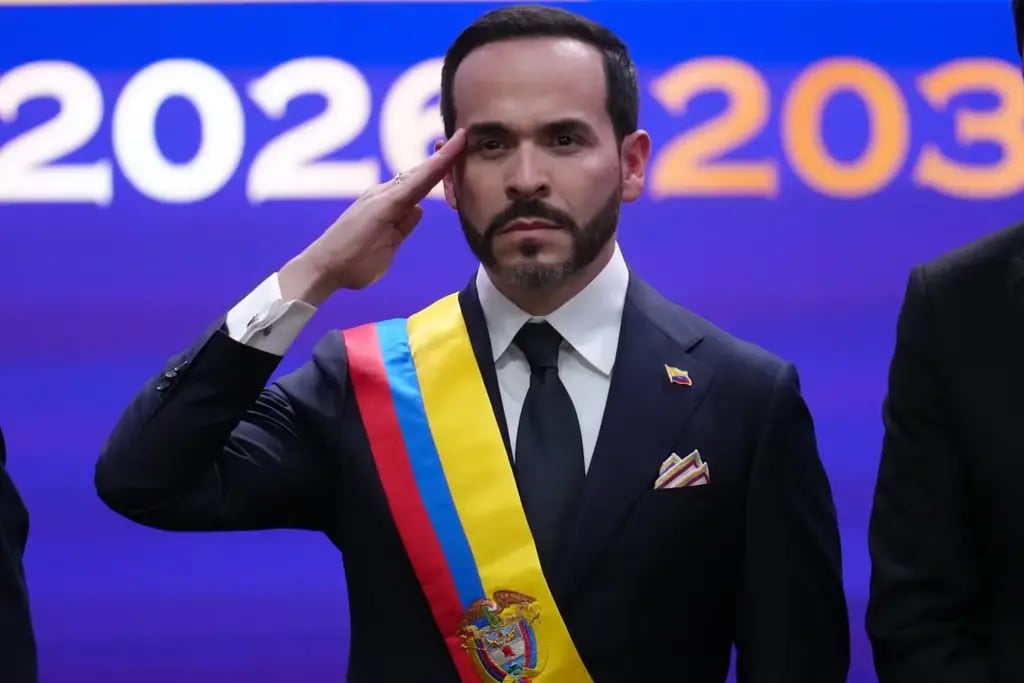
(Photo: AP\ Matias Delacroix)
European governments reached similar conclusions earlier. Spain, the former colonial power, endorsed Morocco’s Autonomy Proposal in 2022 as the only serious, realistic, and credible basis for resolving the dispute. France followed with explicit support for Moroccan sovereignty. For European capitals, Morocco remains an indispensable partner on counterterrorism, intelligence sharing, and migration management along the Mediterranean. By aligning with Rabat, Colombia places itself on the same side of those core security interests rather than outside them.
Critics will argue that recognizing Moroccan sovereignty abandons the principle of self-determination. That argument has grown thinner as the practical alternatives have narrowed. The Polisario Front remains heavily dependent on Algerian support and has lost ground diplomatically across Africa, Europe, and the Americas. Prolonging an unresolved territorial conflict that has already lasted half a century serves neither the population of the territory nor regional stability. Autonomy under Moroccan sovereignty, the formula now backed by a growing list of states, offers a workable path that prioritizes order and development over permanent division.
De la Espriella’s opening moves send a larger signal. Colombia will no longer function as a stage for ideological experiments that weaken its security partnerships and limit its commercial options. The decisions taken in Cali on the first day of the new administration reverse specific policies of the previous government and align the country with partners that deliver tangible results in technology, agriculture, defense, and trade. They expand the practical reach of the approach first demonstrated in the Abraham Accords and apply it to the South American context.
The test will be execution. Working groups must produce concrete agreements. Technology transfers and trade flows must materialize. Security cooperation must deliver measurable improvements against organized crime. If those outcomes follow, the realignment will prove more durable than any rhetorical commitment. For now, the direction is clear. Colombia has chosen the side of existing states, practical cooperation, and results over the lingering attachments of an earlier ideological era. That choice, executed without hesitation on day one, defines the foreign policy of the new government.
Amine Ayoub, a fellow at the Middle East Forum, is a policy analyst and writer based in Morocco. Follow him on X: @amineayoubx