

Four words have come to symbolize a near-catatonic, almost surreal state in which even the appearance of normality boards a plane, takes off and disappears before the skies close again: “Do you know something?”
Of course, the “something” does not refer to one of humanity’s many unanswered mysteries. It is not about whether aliens exist, when Rihanna will release a new album or why the prime minister suddenly looked as if he had seen a ghost when he was asked about his son.
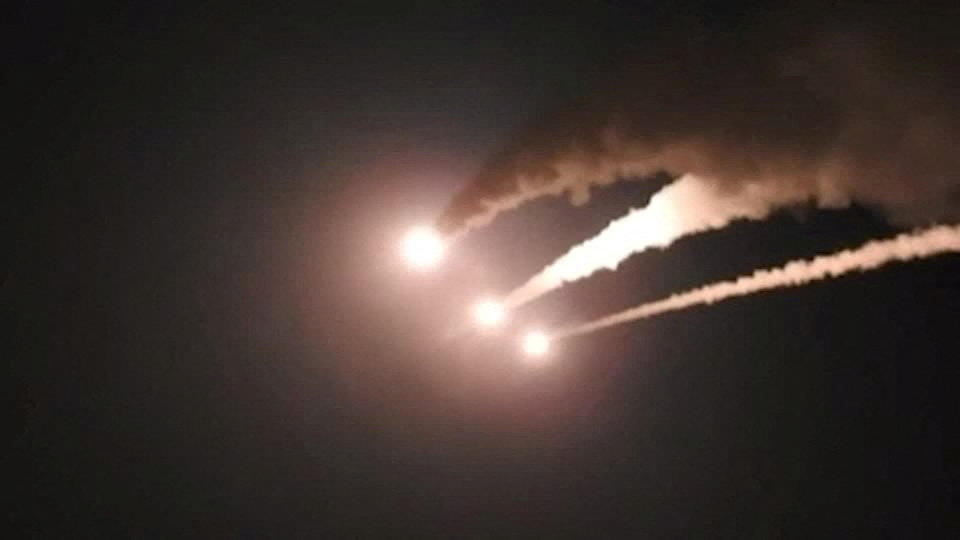
Iranian missiles launched at Israel
(Photo: WANA (West Asia News Agency)/ via REUTERS)
It refers to the only question that matters right now: whether, and perhaps when, the war with Iran will resume.
After all, it is July and August. The hottest months of the year. And people like to say that the third time is the charm.
This distorted existential state, after nearly three years of emergency atmosphere and constant anxiety, has become as essential as the magnesium missing from the water coming out of the tap.
There are the hourly, increasingly frantic updates about what is happening at the airport, which during the summer months has become almost as sacred as Jerusalem’s Temple Mount and as strategically important as Israel’s nuclear facility in Dimona.
There are just over three months left until the election, yet the election itself feels like a secondary event in a much larger story. At any moment, campaign meetings, living-room gatherings and political events may have to be moved from crowded homes into cramped bomb shelters.
In such a reality, it becomes almost impossible to discuss serious questions about security doctrine, foreign policy, economics or society.
The “mountain of missiles” waits around the corner, forced upon an exhausted, frightened public like a bathtub suddenly dumped over its head.
Even the supposedly critical media, and much of the Jewish opposition, sit in studios biting their nails and sleeping with their shoes on, waiting for the signal that will allow everyone to once again stare in awe at the “performance” of the air force, the “intimate” coordination with the U.S. military and the “penetration” of the ayatollahs’ regime.
One can only hope this entire ritual is not taking place without a safety net.
And as usual, during the waiting period for the next Home Front Command alert, there is almost no serious discussion of the basic questions: the cost versus the benefit, possible alternatives, or even the legitimacy of a leadership that announced a “victory that would stand for generations” and turned confrontation with Iran, a country of 90 million people, into a recurring rivalry played out several times a year.
It is almost as if even asking the question is forbidden: Is a person who is equally focused on Iran and on whether the “security situation” could be used to postpone internal party elections really the person who should once again send millions of Israelis into shelters, knowing that some of them may emerge without homes to return to?
And that, of course, is the best-case scenario.
Beyond the danger of death, the destruction of property and the damage to livelihoods, more and more data is emerging about the psychological price being paid not only by soldiers, their families and those directly involved in the fighting, but by ordinary citizens as well.
The country has become trapped in a loop of military confrontations with no clear exit strategy and no clear answer for how to help lost children and broken parents.
And still, somehow, public discourse fills with a disturbing combination of panic and excitement ahead of that great, extraordinary and completely routine moment when the thing called life simply comes to a halt.
It is entirely possible, and it is a shame that this failure may never be investigated either, that the enemy is one small step away from an irreversible shift in the regional and global balance of power.
Perhaps all this poison and fury are necessary to guarantee the country’s survival.
But that does not mean doubts should be dismissed, minimized or buried. Nor should we ignore the enormous damage caused by losing the basic ability to go to sleep knowing, more or less, what tomorrow will look like.
This is not fate.
And if, nevertheless, there truly is “no alternative,” then it is the result of a colossal failure, one that a nation determined to survive should demand accountability for, rather than wag its tail in approval.
And no, I do not know something.