


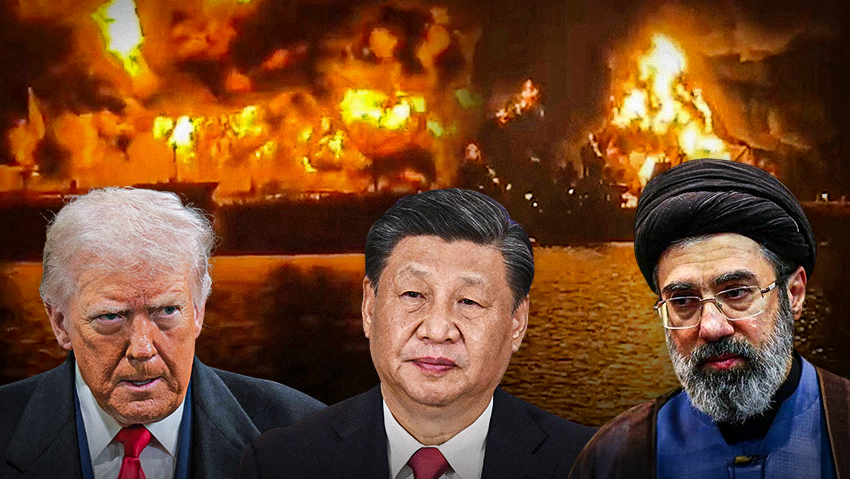
U.S. President Donald Trump is placing great importance on his meeting Wednesday evening with Chinese President Xi Jinping. So is the president hosting him in Beijing. The two will discuss a wide range of issues requiring maintenance in the relationship between the world’s two leading global powers. Economic issues will be at the center of the agenda, but most experts and commentators in the United States and China say, based on briefings from the leaders’ offices, that Iran and the Middle East will also be a central topic of discussion.
That is likely also why Trump is still delaying his decision on how to respond to the brazen messages in Iran’s response to the 14-point plan proposed by the United States, which was delivered, after many delays, only on Sunday. Trump will likely try to enlist China’s goodwill, and that of Xi, to soften the positions of the militant hawkish faction in Iran’s leadership, which is currently dictating the confrontational and combative line against the United States in negotiations being conducted through mediators.
Gallery
(Photo: Anna Moneymaker/AFP, Sputnik/Vladimir Astapkovich/Kremlin via REUTERS, Media Office of Iraqi Ports)
The main topic of discussion in Beijing will be extending the economic ceasefire in the tariff war Trump launched and then backed away from. Today, the United States and China are in a kind of frozen situation in which both countries refrain from imposing excessive tariffs on each other, and both have an interest in maintaining that status quo.
Trump will demand that China buy more American agricultural products, mainly soybeans and meat, purchase Boeing passenger aircraft and increase exports of rare minerals needed by American industries, especially the chip industry.
China, for its part, will demand that the United States end restrictions on exports of chips and advanced technology to China. There is no doubt that the future of Taiwan, which China has threatened to annex, will also be on the table. In the United States and East Asian countries, there is serious concern about a world war that could erupt if China carries out its threats.
Unlike Taiwan, where China has an issue of national honor, historical claims and emotional baggage, China’s approach to Iran is driven mainly by economic motives. China is the main importer of crude oil smuggled from Iran despite American sanctions on Tehran, and China has a long-term, $400 billion, 25-year trade and infrastructure investment agreement with Iran.
Even more important is that after the war ends, whether or not an agreement is signed with the United States that satisfies President Trump, China will likely be the main source of spare parts, raw materials and know-how that will enable Iran to rebuild not only the ruins of its economy but also its weapons industry.
Recent reports have pointed to China sending Iran, during the war with Israel, chemical materials for the explosives and propellant industry used in Iran’s ballistic missiles, and also supplying Iran with many parts used in its extensive drone industry. Prime Minister Benjamin Netanyahu hinted at this in an interview with CBS, and China responded sharply, saying the claims were “accusations not based on facts.”
It is also known that China continued — until the American blockade was imposed — to import smuggled oil from Iran. That led the United States to impose sanctions on Chinese refineries that bought especially cheap oil from Iran and paid the Iranians in Chinese yuan, forcing the Iranians to purchase goods only in China.
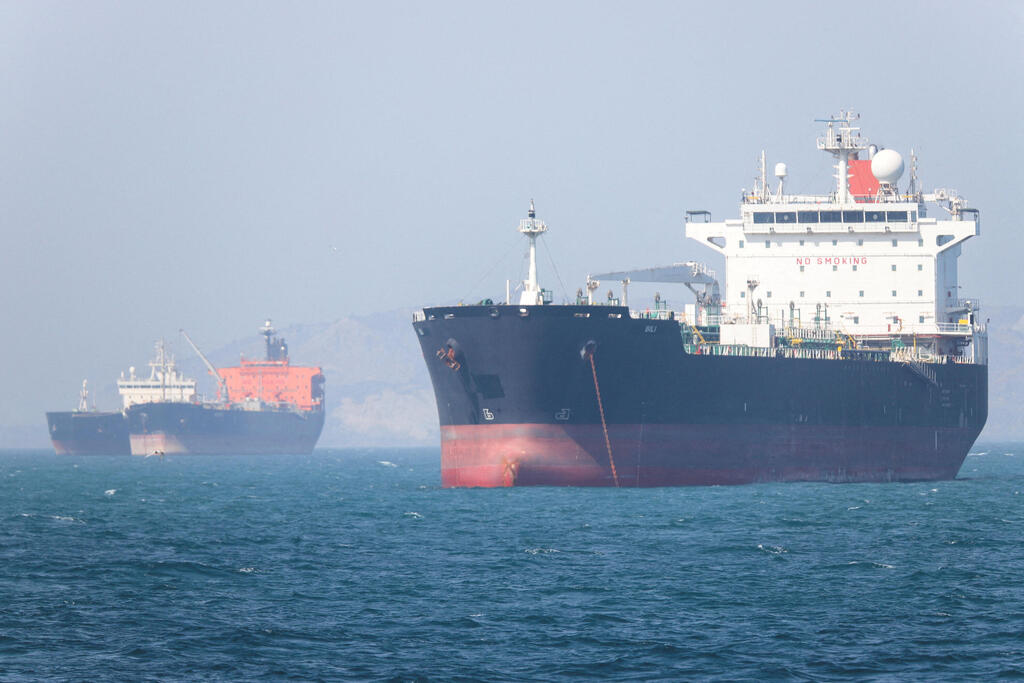
Trump wants not only for China to pressure the regime in Tehran, but also for it to help the United States open the Strait of Hormuz, whose closure by the United States is hurting Iranian oil exports to China. Thirteen percent of China’s massive economy’s oil consumption comes from Iran.
All this would appear to point to an interest on the part of Xi in responding to Trump’s request and applying massive pressure on Tehran to show flexibility in negotiations with the United States. But it is entirely likely that the Chinese will not rush to meet the American president’s request, and if they do use their influence in Tehran, they will do so weakly and without pressing too hard. The reason is that China has conflicting global and economic interests, especially when it comes to the Persian Gulf region.
China has so far shown qualified support for Iran during the war, buying its oil and apparently also providing it with satellite intelligence, among other reasons because Beijing has an interest in preventing a pro-Western regime in Tehran with good relations with the United States. Still, its support did not go beyond that. China’s Belt and Road Initiative gained an important foothold in Iran as a result of the prolonged confrontation with the Americans since Trump withdrew from the nuclear deal in 2018. In return, China received an Iranian port in southern Iran, on the Indian Ocean coast.
China, as well as Russia, Tehran’s other ally, held naval exercises with the Iranian navy until most of that navy was destroyed by the United States. In practice, Tehran is clearly part of the anti-American, anti-Western camp alongside China and Russia. That is why the Chinese are not currently interested in the agreement Trump wants, which would end the conflict between the United States and Iran and cause China to lose its solid foothold in the Persian Gulf region, home to most of the world’s proven oil reserves.
Strait of Hormuz
(Photo: Amirhosein Khorgooi/ISNA/WANA (West Asia News Agency) via REUTERS)
China has an interest in cheap smuggled Iranian oil continuing to flow to it. If an agreement is signed between the United States and Iran that ends the hostile situation, Iran will be able to export that oil without restrictions, and China will have to pay market prices for a significant portion of its oil imports rather than receiving them cheaply and paying for them in Chinese currency rather than dollars.
Some argue that the Chinese have an important interest in opening the Strait of Hormuz in order to free ships loaded with Iranian oil that currently cannot leave through the strait and sail to Chinese ports. Therefore, some experts argue, China will have an interest in helping Trump open the Strait of Hormuz.
But according to reports by international information companies, China’s oil reserves are enormous and would be enough to power the Chinese economy for at least six months. So China is in no hurry to help the Americans open Hormuz, and especially not to bring about an agreement that would lead to reconciliation between Iran and the United States and the West in general, pushing China out of its grip on the Iranian economy.
But that is not the whole picture. China also has important interests in the Persian Gulf that distance it from Iran and could perhaps lead Xi to help Trump end the war. The main interest is the total annual trade — exports and imports — between China and the Gulf states. Trade with the United Arab Emirates, now considered a bitter enemy of Iran, is estimated by international research institutes at $95 billion to $100 billion a year. China’s trade with Saudi Arabia, including oil, is worth $97 billion.
By contrast, China’s estimated trade with Iran in 2023 was only $30 billion to $40 billion, including the value of oil smuggled from Iran to China through the shadow fleet. The official value of trade between Iran and China, despite the grandiose agreement between the two countries, is only about $15 billion a year, while the value of smuggled oil is between $20 billion and $25 billion, which China pays for in yuan.
In other words, China’s interest in maintaining good relations with the United Arab Emirates and Saudi Arabia from an economic standpoint far outweighs its economic interest in Iran, which is unable to pay for Chinese investments on its soil. China makes no secret of its efforts to tighten its ties with Saudi Arabia and the UAE, and therefore it will also be careful not to align itself unequivocally with Tehran.
Given China’s conflicting interests in Iran, it is reasonable to assume that after the war, when Tehran tries to rebuild its military capabilities, Beijing will not send weapons such as missiles but will transfer, as it has until now, only spare parts and raw materials such as steel.
The bottom line is that Trump will probably not get what he wants from China’s president, apart from promises by Xi to use his influence behind the scenes to end the deadlock over opening the Strait of Hormuz to shipping. So by the end of the visit, it is reasonable to assume that Trump will be free to make a decision on the next steps regarding Iran.
It appears that Trump’s preferred path will be to renew Operation Freedom Project to open the Strait of Hormuz to ships not linked to Iran, with the U.S. Navy providing them protection as they sail along the southern route out of the strait, near the coast of Oman, while American ships and aircraft, including a nuclear submarine armed with Tomahawk missiles, cover them from near and far.
If the Iranians act against the ships, it is reasonable to assume that the war will then expand to other areas of Iran, and it is very possible that Israel will also become involved. In any case, the breakthrough will not come from Beijing tomorrow.