

As the war in Iran enters its third month, China is getting a rare, real-time view of how American military power performs under fire — and a reminder that even the most advanced military cannot fully control the outcome once the enemy adapts.
According to a CNN report, experts in China, Taiwan and elsewhere say Beijing is closely studying the fighting in and around the Persian Gulf for lessons that could shape any future conflict with the United States, especially over Taiwan.
Gallery
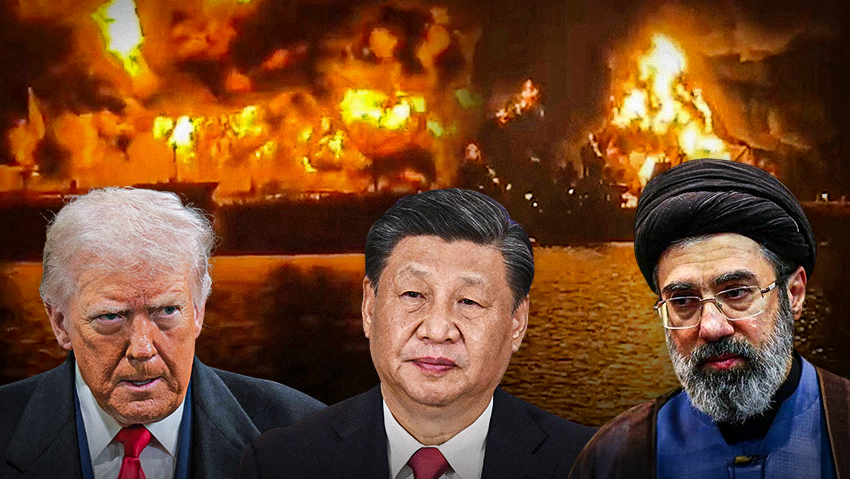
Experts say Beijing is closely studying Persian Gulf fighting for lessons that could shape any future conflict with the United States
(Photo: Anna Moneymaker/AFP, Sputnik/Vladimir Astapkovich/Kremlin via REUTERS, Media Office of Iraqi Ports)
The lessons, they say, are not straightforward. The war has highlighted the reach, precision and destructive power of the US military. But it has also shown how Iran, a weaker adversary, has managed to complicate Washington’s campaign, pierce air defenses, threaten global trade routes and survive heavy military pressure.
For China, the risk is drawing the wrong conclusions: overestimating its offensive strength, underestimating its lack of combat experience and viewing the Iran war too narrowly as a technical contest of weapons rather than a messy political and military struggle.
Fu Qianshao, a former colonel in China’s air force, said that one of his main takeaways is that the People’s Liberation Army cannot focus only on offensive capabilities. Iran’s ability to find ways around US missile defenses, including Patriot and THAAD systems, should force Beijing to look harder at its own vulnerabilities, he said.
“We need to devote significant efforts to identify weaknesses in our defensive side to ensure we remain invincible in future wars,” Fu said.
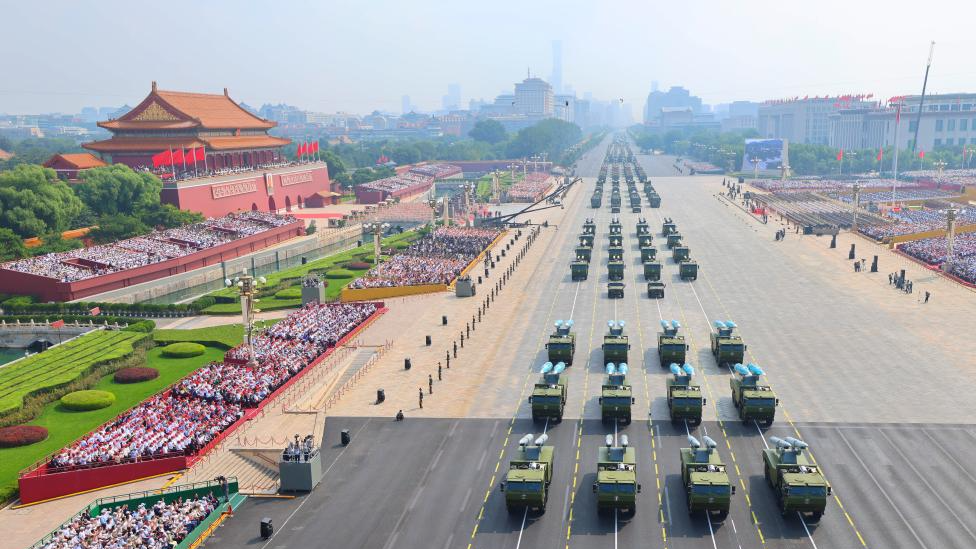
Chinese military parade in Beijing on September 3
(Photo: Xinhua)
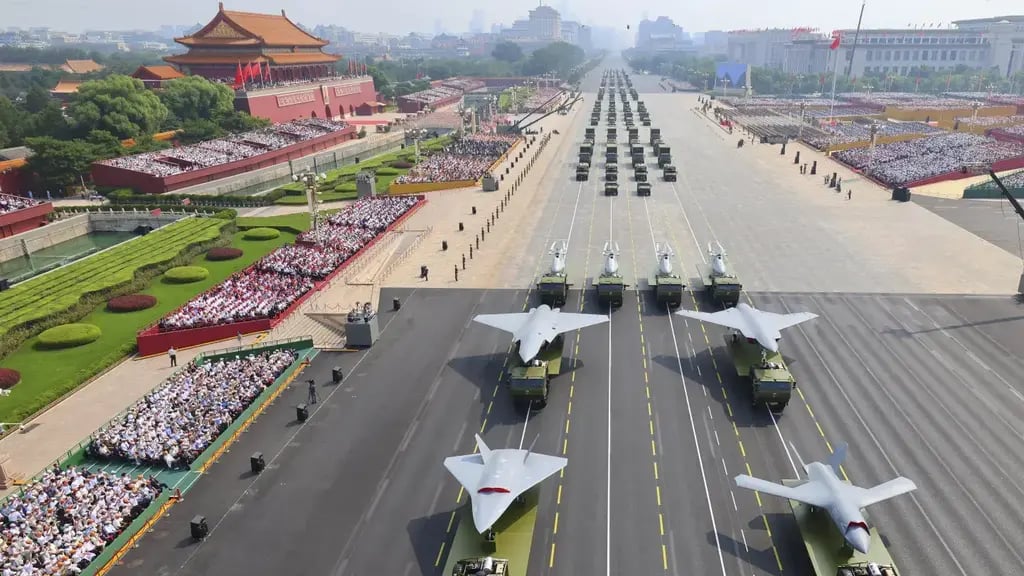
China has spent years rapidly expanding its offensive firepower. The PLA has added missiles fitted with hypersonic glide vehicles designed to maneuver at high speed and evade interception. Its air force is also building out a large fleet of fifth-generation stealth fighters. According to the British think tank RUSI, China is expected to field around 1,000 J-20 jets — its rough equivalent of the American F-35 — for long-range precision strike missions.
Beijing is also developing a long-range stealth bomber similar to the US B-2 and B-21.
But defense is another question. Analysts note that Iran has been able to penetrate US air defenses in the Persian Gulf using comparatively basic and inexpensive systems, including Shahed drones and lower-cost ballistic missiles. At the same time, the United States has carried out a sophisticated air campaign combining F-35s and B-2 bombers with cheaper guided munitions dropped from B-1s, B-52s and F-15s.
Those attacks have hit a wide range of Iranian targets, from missile launchers and naval vessels to bridges. For Beijing, Fu said, that mix of advanced platforms and lower-cost precision weapons is a challenge that must be planned for.
(Photo: Liu Xu/Xinhua via AP)
“We have to delve deeper to effectively guard our key sites, airfields and ports against attacks and raids,” he said.
The most obvious place those lessons matter is Taiwan. China’s ruling Communist Party has vowed to “reunify” the self-governing island with the mainland, even though Beijing has never controlled Taiwan. Chinese President Xi Jinping has not ruled out using force.
Any future US-China conflict is therefore often viewed first through the Taiwan Strait. Taiwanese analysts already see China building a force that combines two dangerous models: high-end precision weapons comparable to those used by the United States, and cheap, high-volume drone warfare similar to Iran’s.
“Long-range rockets and drone swarms will definitely play a key role in China’s joint military operations against Taiwan,” said Chieh Chung, an associate research fellow at Taiwan’s Institute for National Defense and Security Research.
China is the world’s leading drone manufacturer, and the scale of its potential production is enormous. A 2025 report on China’s drone program published by War on the Rocks said Chinese civilian manufacturers could convert their production lines in less than a year to produce one billion weaponized drones annually.
That is a major concern for Taiwan. A recent report by a government watchdog found that the Taiwanese military’s current counter-drone measures are “ineffective” and pose a “major security risk” to critical infrastructure and military bases.
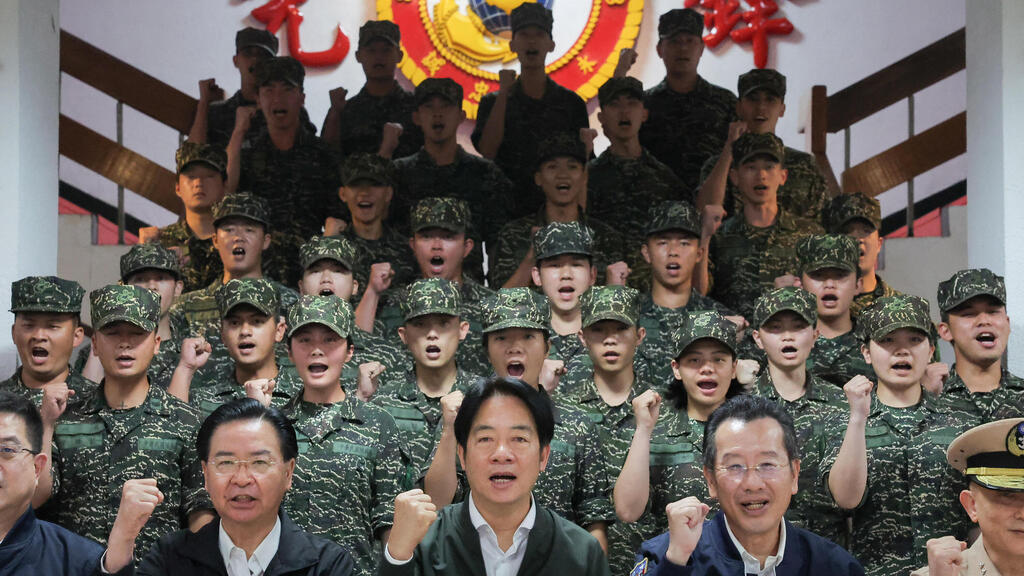
Taiwanese President Lai Ching-te visits a military base during Chinese military drills near the island, about two years ago
(Photo: Ann Wang/ Reuters)
Taiwan, however, is trying to close the gap. Gene Su, managing director of Thunder Tiger, Taiwan’s flagship drone manufacturer, called for greater investment in the island’s ability to produce drones at scale.
“We need to produce continuously, day and night, to counter our enemies,” he said.
The United States is also studying the war. In a Pacific conflict, Washington may not be the attacking force, but the defender of Taiwan against a Chinese assault. That makes the drone lesson especially important.
Adm. Samuel Paparo, head of US Indo-Pacific Command, told a Senate hearing in April that drones make war far more expensive for the offensive side. In a Taiwan scenario, Taipei or Washington could use drones to target Chinese ships and aircraft carrying large numbers of PLA troops across the strait. Each ship, aircraft and group of soldiers would cost vastly more than the drones that could destroy them.
That deterrent effect is already visible in the Persian Gulf. The US Navy, cautious of Iran’s asymmetric warfare capabilities, has rarely sent ships through the Strait of Hormuz into the Gulf.
Beijing is almost certainly watching another idea Paparo has promoted: filling the Taiwan Strait with thousands of drones in the air, on the water and under the sea, making it far harder for Chinese forces to cross and move toward the island.
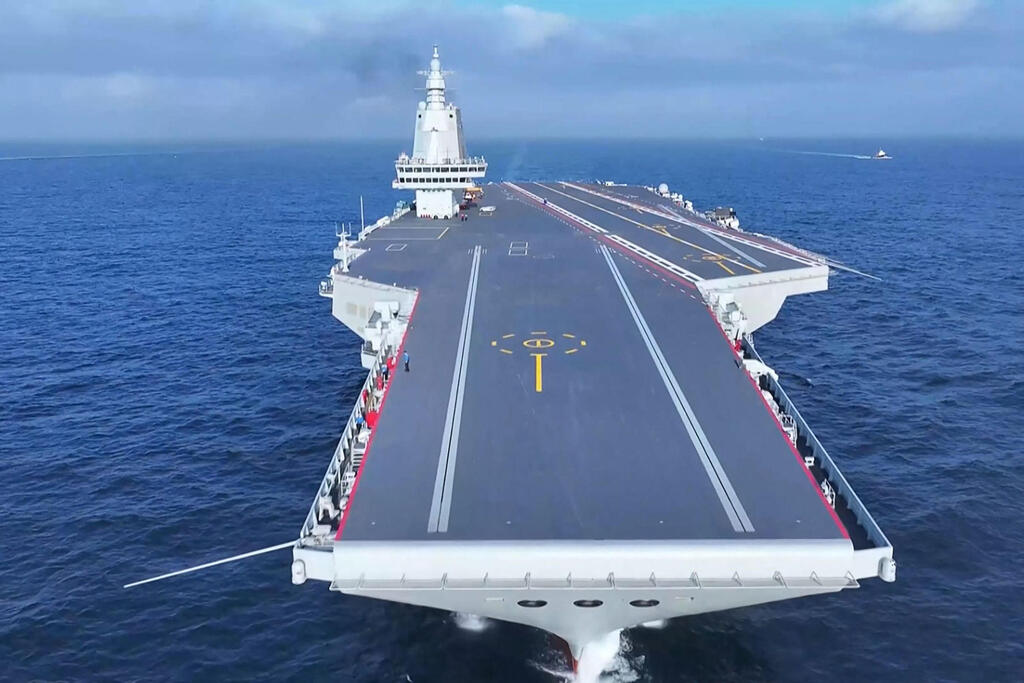
The Chinese aircraft carrier Fujian. Each ship or aircraft is vastly more expensive than the drones that can destroy them
(Photo: Handout / various sources / AFP)
But the Iran war also carries a larger warning for every military trying to learn from it: the enemy is learning too, and may use those lessons in ways that planners do not expect.
More than two months into the conflict, many analysts are still asking why Washington did not appear better prepared for Iran to shut down the Strait of Hormuz. Others are asking how Iran’s government is still functioning after the heavy blows it has absorbed.
“Tactical wins don’t equal political outcomes,” Craig Singleton, a senior fellow at the Foundation for Defense of Democracies, said.
“Military pressure … has not translated cleanly into a durable political settlement,” he said.
“For China, that reinforces a core lesson: battlefield success doesn’t automatically produce the end state you want.”
That lesson may matter as much as any missile or drone calculation. A Chinese attack on Taiwan could score early battlefield gains and still fail to produce the political result Beijing wants. It could also trigger consequences beyond the immediate theater: global trade disruption, energy market shocks and intervention or pressure from outside powers.
China has another major weakness: combat experience. The PLA has not fought under fire since its war with Vietnam in February 1979. The United States, by contrast, has spent decades fighting or conducting operations in Iraq, Afghanistan, Kosovo, Panama and now Iran.
Chinese military analyst Song Zongping said the Iran conflict shows what modern combat actually looks like.
“This is (what) real warfare looks like,” he said.
If China were to fight the United States in the next decade, Washington would still have a large pool of personnel with direct experience from the Persian Gulf conflict, or from planning the campaign. They would have dealt with losses, carried out precision strikes, adjusted to enemy tactics and adapted under pressure.
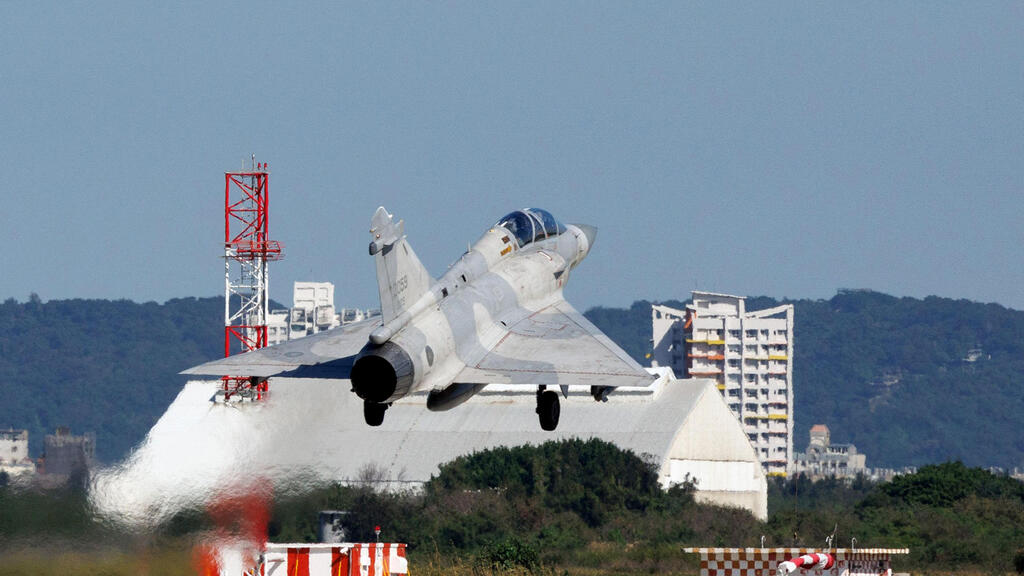
A Taiwanese Air Force jet. 'An excellent pilot will always win'
(Photo: CHENG Yu-chen / AFP)
That adaptation has already been visible in Iran. US forces have shifted from punishing airstrikes to a blockade of Iranian ports, and have moved to harden aircraft shelters after losing key assets, including an AWACS radar plane.
How quickly the PLA could adapt under similar battlefield pressure remains an open question.
Drew Thompson, a senior fellow at the S. Rajaratnam School of International Studies in Singapore, pointed to the last time US and Chinese forces fought each other: the Korean War. China had better fighter jets in the Soviet-made MiG-15, while American pilots flew the inferior F-86. But US pilots performed better because many of them had combat experience from World War II.
The lesson, Thompson said, was that “an excellent pilot in a mediocre airplane will always beat a mediocre pilot in an excellent airplane.”
The Iran war also shows that conflicts between a great power and a weaker state do not necessarily remain contained, clean or short. Iran’s ability to threaten a chokepoint like the Strait of Hormuz has shown how quickly a regional fight can carry global consequences.
“Iran’s ability to leverage (a) chokepoint and ingest risk into global supply chains shows how quickly a localized conflict can become internationalized,” Singleton said.
“For Beijing, that’s a warning that any Taiwan scenario would immediately implicate global trade, energy flows, and third-party actors in ways that are hard to imagine.”
For China, then, the war in Iran is more than a study of US weapons or Iranian tactics. It is a warning about assumptions. Advanced aircraft, missiles and drones may help shape a battlefield, but they do not guarantee a political outcome. A weaker enemy can still adapt. Global consequences can appear quickly. And military experience may prove just as decisive as hardware.
In a future Taiwan crisis, Beijing may believe it can control the opening moves. The lesson from Iran is that it may not control what comes after.