


The recent operation carried out by the IDF's special forces in the rugged terrain of southern Lebanon was more than a tactical success; it was a profound intelligence revelation that should fundamentally reshape Western security doctrine.
The target was Atwi Atwi, a senior official and former mayor from the village of Hebbarieh, who served as a high-ranking operative for al-Jamaa al-Islamiya—the Lebanese branch of the international Muslim Brotherhood. While many in the West have spent years clinging to the comforting myth of a permanent, unbridgeable sectarian divide between Sunni and Shiite Islamists, the capture of Atwi Atwi provides the smoking gun that proves the existence of a unified, kinetic Jihadi High Command.
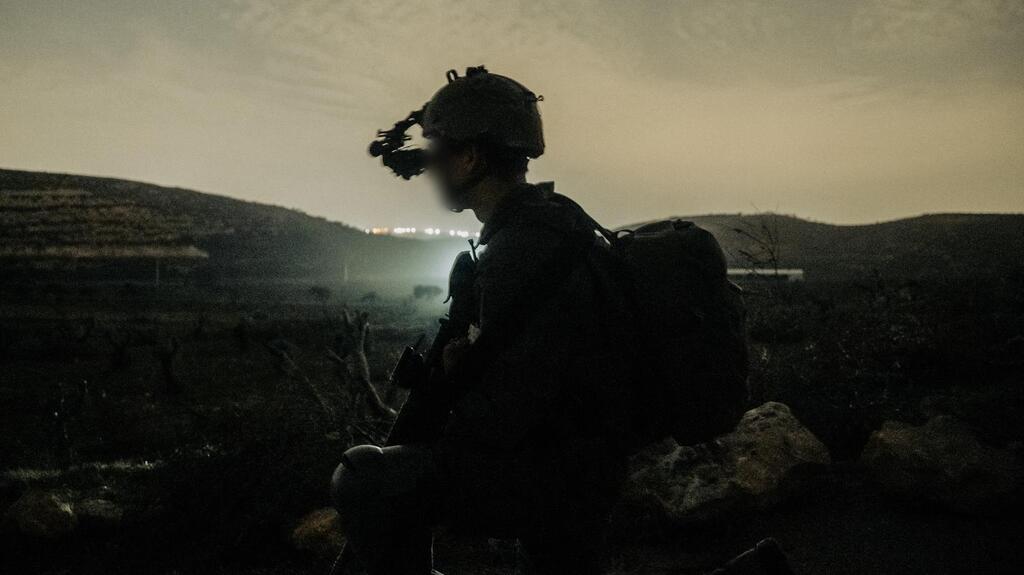
This operation effectively dismantles the outdated notion that theological differences prevent a cohesive military alliance between the Sunni "Ikhwan" and the Shiite "Resistance Axis" led by Tehran. For decades, the Western diplomatic core has been held hostage by a worldview that assumes Sunni groups like the Brotherhood would naturally act as a bulwark against Iranian expansionism. This was a lethal miscalculation. As the reality on the ground in southern Lebanon shows, the shared obsession with dismantling the Western-led regional order and the destruction of the Jewish state far outweighs any internal disputes over historical caliphates.
Atwi Atwi was not plucked from a legislative chamber or a religious school; he was taken from a building in the Mount Dov area where intelligence indicates he was coordinating active military operations in seamless integration with Hezbollah. This is the crucial point that policymakers must internalize: al-Jamaa al-Islamiya has successfully transitioned from a fringe political entity into a vital kinetic adjunct of Iran’s war machine.
By providing a Sunni face to the Iranian-backed struggle through its armed wing, the Fajr Forces, the Brotherhood offers Tehran a degree of "pan-Islamic" legitimacy that it could never achieve through its Shiite proxies alone. In the tunnels and hills of the Levant, the rifles of the Fajr Forces and Hezbollah are pointed at the same target, operating under a unified tactical umbrella that makes no distinction between sects.

(Photo: IDF)
The capture of such a high-ranking bridge figure exposes the strategic deception that the Muslim Brotherhood has perfected across the globe. By maintaining a thin veneer of social work and political participation, the group has long enjoyed a "political" shield that protects its fundraising and organizational efforts in Western capitals. However, the case of Atwi Atwi makes it clear that the "political wing" and the "military wing" are merely two hands of the same body. One hand signs the press releases and engages in community leadership, while the other hand coordinates rocket strikes and ballistic logistics with the Iranian Revolutionary Guard Corps (IRGC).
Washington must now face a long-overdue policy reckoning. The U.S. government took a significant step in January 2026 by formally designating the Lebanese, Jordanian, and Egyptian branches of the Muslim Brotherhood as Foreign Terrorist Organizations (FTOs). This designation was not an act of political theater; it was an acknowledgment of the ground truth that Atwi Atwi’s capture has now confirmed.
To treat these groups as anything less than full-fledged combatants is to effectively subsidize the very infrastructure that Tehran uses to bypass sanctions and expand its regional footprint. If a group shares intelligence, coordinates logistics, and executes military operations alongside Hezbollah, it is a terrorist organization by any functional or legal definition. The time for nuanced academic distinctions between "moderate" and "radical" Islamists has ended; the time for kinetic consequences has arrived.
 Amine Ayoub
The security implications of the Brotherhood-Hezbollah axis extend far beyond the borders of Lebanon. This alliance serves as a blueprint for a "new" Middle East—a region where radicalism is no longer siloed by sect but unified by objective. When the international community allows these groups to operate in the gray zones of domestic politics, it is providing oxygen to a fire designed to consume the entire regional security architecture. The capture of Atwi Atwi should trigger an immediate and aggressive freeze on all assets and entities linked to the Lebanese Brotherhood across all jurisdictions, mirroring the rigorous sanctions regime currently applied to Hezbollah and Hamas.
Furthermore, the international community must signal to the Lebanese state that its continued "cohabitation" with Brotherhood-linked militias will no longer be tolerated under the guise of national unity. If the official security structures of Lebanon cannot or will not distinguish themselves from the Jihadi High Command, then they must be treated as part of the problem rather than the solution.
The era of providing unconditional military aid to institutions that are being systematically hollowed out by Jihadi proxies must come to a swift and permanent end. The Lebanese government’s call for Atwi’s release on the grounds of "sovereignty" ignores the fact that true sovereignty is impossible when a state harbors and integrates independent militias that answer to foreign capitals.