

The person of the year for this year, for last year and for the year to come has no name. It is not one person but many, hundreds of thousands. Not one, but far too few out of millions who are willing to shoulder the burden.
The person of the year is the reservist. The one who did not wait for a call on October 7. The one who packed up and left without asking questions, who boarded a plane back from a long-awaited trip, who left behind a baby or a pregnant partner and came to defend home. The reservist who reported for a first round, then a second, third and fourth, a fifth and a sixth, because it had to be done. Because abandoning friends was never an option, even when exhaustion set in.
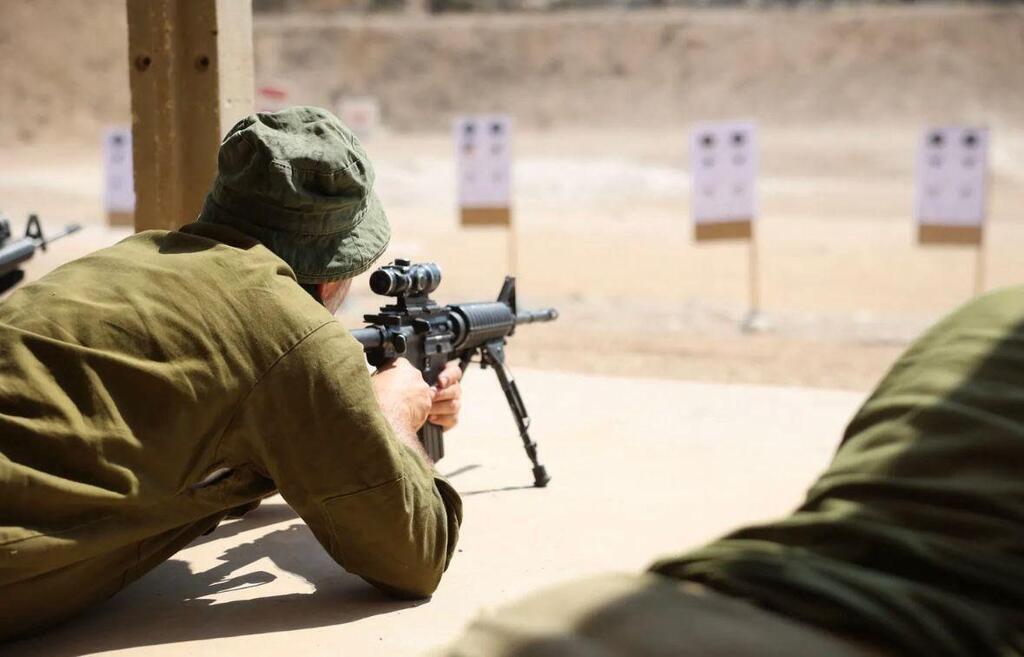
(Photo: IDF spokesperson's unit)
There is the female reservist who called the personnel office asking to be assigned anywhere she was needed. The woman who saved lives under fire as a paramedic, who delivered devastating news as a casualty notification officer, who embraced the families of hostages for months and years like a mother and a sister. Women and men who found themselves committed to unconditional work, with no career prospects and no glory. Even when the order is compulsory, they know deep down it is a choice. The proof is that there are many who choose otherwise. Yet time and again they say: here I am.
These people of the year are invisible. Some have partners who may already have left. Some have spouses barely holding on, refusing to play the hero, seeing clearly the toll on the children, the relationship and the home. Some have jobs with employers who are no longer understanding or patient, no longer accommodating, no longer advancing them. Others have businesses collapsing, studies frozen or canceled, and some have friends who repeatedly ask why they do not say 'no', and how much longer they can keep doing this.
Many carry trauma as well. Wounds, unopened sacks of memories yet to be unpacked, unusual behaviors, hearing that is no longer perfect, knees that creak. Who has time to deal with any of that? Sometimes there is an abyss. A deep one. An abyss where friends were lost, where fear runs wild, along with conscience and every demon imaginable. And still, these people of the year remain unseen, very much so.
 Chen Artzi SrorPhoto: Kobi Kuankas
They do not want benefits, discounts or royal treatment. They do not want ceremonies, Hanukkah doughnuts or a family outing to an amusement park. They do not want to be lied to time and again and told that everything possible is being done. They want one thing only: equality in sharing the burden. A simple law that calls on every healthy young man and woman to help carry the load. No buts. No maybes. No roughly.
They are not them. They are us.
They are us from the big cities, from Tel Aviv, the Haifa area, Modi’in, from Jerusalem, whose Mount Herzl is collapsing under the weight of funerals. They are us beyond the Green Line, from the Hebron Hills, Binyamin and Gush Etzion.
They are us from kibbutzim and moshavim, from the Galilee, the Golan Heights, the Gaza border communities, the Arava in the south. They are Israelis of every sector, 21-year-olds and volunteers over 70. Men and women, immigrants and native-born Israelis, religious and secular. They are the very few who also come from the ultra-Orthodox community, who resist pressure, politicians and fearmongering, and simply show up.
You can call them naive or fools. You are probably right. But these people are the future. They understand that Israel is too small to tear itself apart from within. They know, from lived experience, that our security challenges are too complex to outsource.
While their government repeatedly undermines efforts to expand enlistment, they still believe in the saying of that pioneer who lost an arm, came from Odessa to plow and sow, and fell in battle at Tel Hai (Josef Trumpeldor), and who explained it simply: "Is a wheel missing? I’m that wheel!"
Where else are there people like these? The answer is simple. They do not come from nowhere. They are the product of a public education system, of strong youth movements, of a vibrant Hebrew culture. Of a sense of statehood that was dried up and diminished, its fruits reduced. But it will flourish again, thanks to Israelis who understand the gravity of the moment and act.