


Let us leave Israel aside for a moment. The problem is the United States. It has been exposed in all its weakness. A word is no longer a word. Power is no longer power. A blockade is no longer a blockade.
These were supposed to be America’s good days as a global power. Russia, after more than four years of war in Ukraine and growing exhaustion, had left the stage of global strength to the United States. It took Russia four years. It took America only a few weeks.
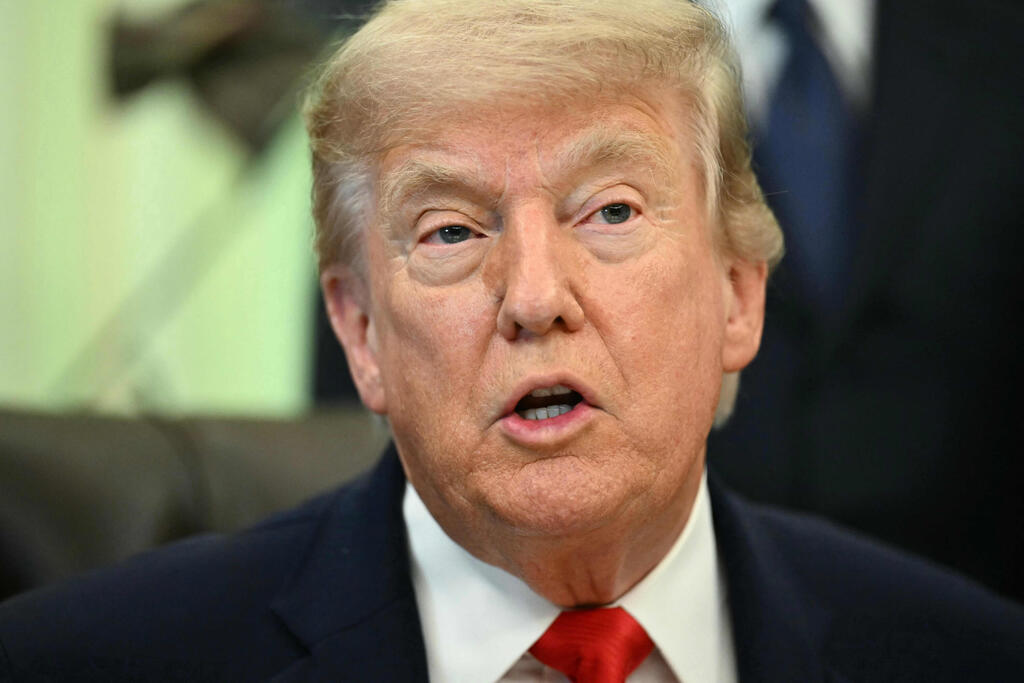
(Photo: Kent NISHIMURA / AFP)
The grand names of the confrontation with Iran, “Epic Fury” and “Roaring Lion,” shattered as if they had never existed. Iran suffered severe blows. But with the power it still had left, it managed to bring the United States to its knees.
It has been a long time since Israel saw such unity. From Yair Golan on the left to Bezalel Smotrich on the right, there is a consensus that the agreement expected to be signed Friday, barring surprises, is a strategic failure. A failure for Israel. A failure for the United States. A failure for anyone who wanted to see a new Middle East. A failure for the moderate Sunni states, or relatively moderate ones, for whom Iran is a constant threat, not least because of the historic hostility between Sunnis and Shiites.
But this time, at least this time, Prime Minister Benjamin Netanyahu is not the main culprit. It does not matter what move Netanyahu would have taken. Trump had made up his mind to reach a deal. It is doubtful there has ever been such a display of eagerness, all of it weakness, by the leader of a superpower.
There were early signs that Trump was a broken reed to lean on. He reached an agreement with the Houthis, Iran’s proxy in Yemen, without Israel’s knowledge and while abandoning Israel to both a naval blockade and more missile and drone fire. He also shaped the 20-point agreement, again without consulting Israel. It may well be that a cease-fire with Hamas, at least at that moment, was the right thing for Israel. But it was certainly against the will of Israel’s government, and especially against Netanyahu’s will.
Still, after the joint attack on Iran, it seemed Trump understood that the Shiite power was a real threat to American interests, even apart from Israel. Iran threatens the Gulf states. Iran strengthens Hezbollah, Hamas and the Houthis, creating regional disorder.
But it turns out this was short-term determination. Trump is not Churchill. He did not want blood, sweat and tears to defeat the axis of evil. He wanted lower fuel prices. To hell with long-term American interests. To hell with all his declarations and promises. To hell with Israel.
And worse: it is unclear whether Yahya Sinwar, the Hamas leader behind the October 7 massacre, had a satanic master plan. But if he did, Trump is serving it. This did not begin this week. The cease-fire and release of all hostages held by Hamas were achieved partly thanks to Turkish and Qatari mediation. Both countries, operating under the ideology of the Muslim Brotherhood, received a strategic upgrade.
Saudi Arabia did not remain indifferent. Instead of normalization with Israel, it turned toward the Pakistani-Turkish axis. On this point at least, Netanyahu’s responsibility is no smaller than Trump’s. Even months after the October 7 war began, Saudi Arabia was still willing to advance normalization. But Netanyahu, as Netanyahu does, refused to pay even lip service to the Palestinian issue. Between creating a regional coalition with the Sunni states and keeping a coalition with Ben-Gvir and Smotrich, Netanyahu chose the latter.
Trump was elected, it is worth remembering, also as a backlash against the progressive wave that many Americans had grown tired of. Globally, he played the MAGA card, Make America Great Again. But the opposite happened.
For hours, overnight between Sunday and Monday, the greatest power in the world went into panic because Israel dared respond to Hezbollah, which had repeatedly violated the cease-fire. The anger was directed at Israel. Not at Iran. Not at Hezbollah. The displays of strength were left in Trump’s AI videos, where he presents himself as a global Superman. In reality, there is no trace of that strength.
And it gets worse. Iran published the 14 points of the memorandum of understanding. Trump tried to deny them. After all, one clause reportedly includes 300 billion dollars for Iran’s reconstruction, an astronomical sum, a kind of compensation for war damage. It cannot be. Usually, the defeated side pays compensation. If Iran is receiving compensation, then Iran is the victor.
So that clause sounded like an Iranian fantasy. A fantasy? If only. Yesterday, Vice President JD Vance confirmed that such compensation would indeed be paid. He only promised that Americans would not pay it, but the Gulf states would. Excuse me? They were attacked and they will pay? It is hard to believe. But that is exactly the story.
Never, absolutely never, has the strongest power in the world shown such frightening weakness toward a country that was supposedly so badly defeated.
Then came Trump. And apparently, this is what happens.