


Military history is full of moments when, after the smoke clears, the feeling is that “we won every battle, but lost the war.” It happened to the Americans in Vietnam and Afghanistan, and it happened to Israel during its years in the security zone in southern Lebanon.
There are also moments when one victory after another produces victory in the campaign as a whole. That happened for the rebels in Syria in a process that lasted 13 years. It is also the achievement of Israel’s security establishment in the West Bank over the past 20 years.
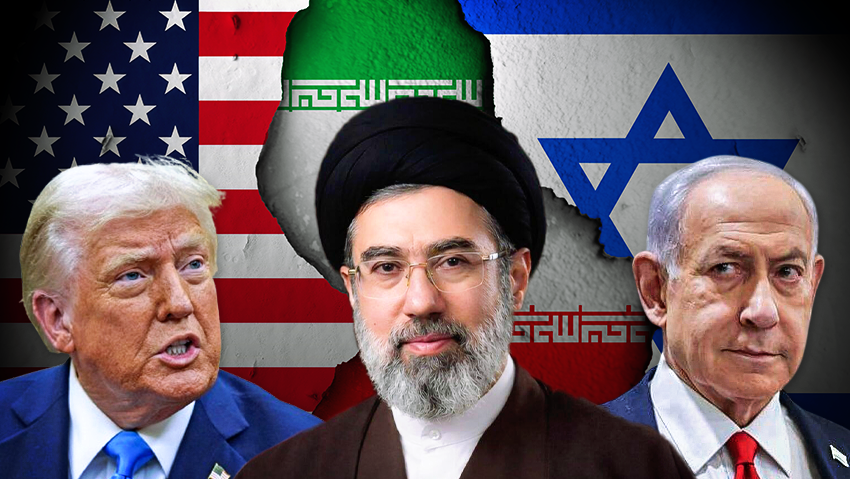
(Photo: Miriam Alster, Evan Vucci/AP, shutterstock)
The last time Israel felt this kind of defeat was after the Second Lebanon War in 2006. But back then, the military disappointed the public, entered the war unprepared and ended it badly. Accordingly, then-IDF chief of staff Dan Halutz and then-prime minister Ehud Olmert paid a public price.
This time, the frustration is greater because the IDF, the Israel Air Force and Military Intelligence performed exceptionally well, and that must not be minimized. Precisely because of that, the final result feels much worse. A senior Israeli official said last night: “If Israel had known in advance that this would be the final outcome, it is highly doubtful we would have launched Operation Rising Lion.”
What is the difference between success and failure? When military strategy and diplomatic-security strategy operate like one fist, against a clear goal and in a systematic way, victory in one battle after another can lead to victory in the campaign. But when the holes in the cheese are bigger than the cheese itself, you can fly to Switzerland to eat a croissant and Swiss cheese, but you cannot win wars.
We wrote here several times that Israel’s greatest achievement was choosing to take its fate into its own hands, initiating action rather than allowing its enemies to stay one step ahead. We also wrote that in the Middle East, the results become clear only on the morning after the morning after. Unlike other campaigns, this time no long historical distance is needed to understand the outcome. The frustration is especially great, and rightly so.
To understand the scale of Israel’s frustration, one must first look at what will be remembered as one of the most brilliant and significant military campaigns ever waged against the Islamic Republic of Iran. Operation Roaring Lion was not another round of exchanges. It was an impressive demonstration of force led by Israel, in which the world saw two allies fighting together, with Israel leading the campaign.
Israel quickly achieved air superiority over Iran, struck Iranian air defense systems, command-and-control sites, missile warehouses and ballistic missile launchers, and killed or wounded senior figures in Iran’s security establishment. The operation also demonstrated an unprecedented level of coordination between Israel and the United States and enabled wide-scale strikes on military and strategic infrastructure across Iran, while reducing Tehran’s ability to operate significant parts of its firepower and warning systems.
So what did Israel learn about its relationship with the United States? That it must never put all its eggs in one basket, and certainly not in the hands of one unpredictable man. Coordination with Washington is important, but the dependence that has developed is dangerous and irresponsible.
In the end, because of negligent negotiations by the president of the world’s strongest power, Israel returned to a reality in which its freedom of action is more limited and its deterrence has been damaged, mainly because of the blow to the relationship between Donald Trump and Benjamin Netanyahu.
This is not gossip. It is worth recalling the famous 2023 war warning by Israel’s Military Intelligence Directorate, which we wrote about here. Intelligence officials noted at the time that Israel’s enemies had identified weakness in the relationship between Washington and Jerusalem and might exploit the opportunity for a surprise move. Then, the warning was not about Hamas, but about Iran and Hezbollah. The idea, however, is clear.
A military campaign can be dazzling, precise and courageous, and still end in strategic frustration. That is the painful lesson now facing Israel. The question is not whether the pilots flew brilliantly, whether the intelligence was impressive or whether the targets were hit. They did, it was, and they were. The question is whether anyone at the top connected those achievements to a coherent political endgame.
If there was no such endgame, then Israel may have won the battles in Iran, but failed to translate them into victory.
First published: 10:32, 06.16.26