


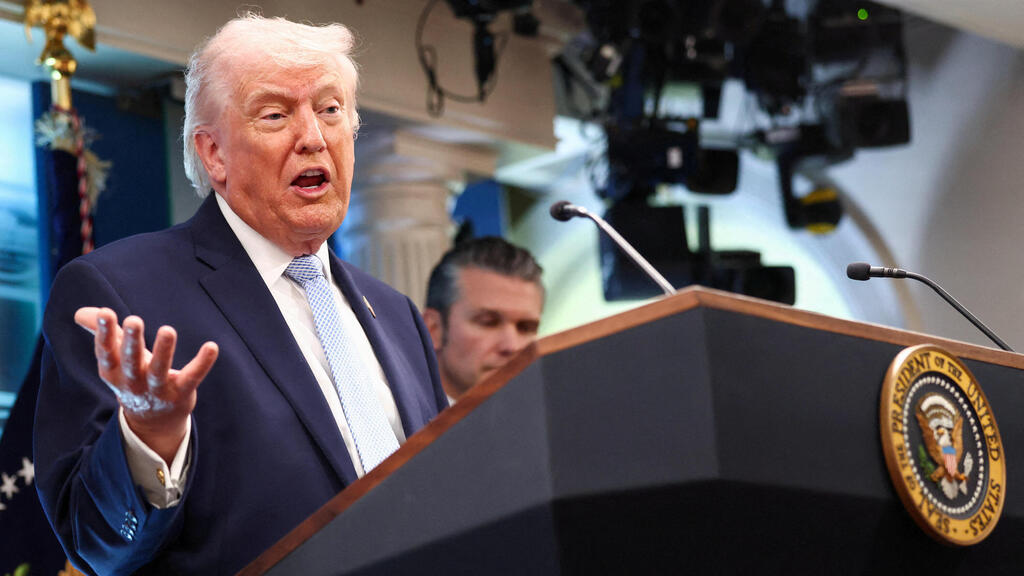
U.S. President Donald Trump conditioned his agreement to a two-week ceasefire on the demand that “the Strait of Hormuz be opened immediately.” That has yet to happen. As of late at night, the ceasefire is effectively not in force.
For the strait to reopen to free navigation, Iran must issue an official announcement and clarify whether it intends to impose conditions on vessels transiting the waterway. Only then will maritime insurers agree to cover the giant oil tankers and container ships waiting on both sides of the strait, some for more than a month. An unpromising sign came in the form of missile barrages Iran launched toward central Israel in the hours after Trump’s statement.
Israel’s intelligence community had anticipated such launches if a ceasefire were reached. This is the established pattern of Iran and its partners in the “Shiite axis of resistance”: to signal to domestic audiences that they have not surrendered, remain standing and are still striking back while the enemy — the United States and Israel — absorbs the blows. Alongside this show of force, Iran’s National Security Council leaked to news agencies a 10-point plan it submitted to Washington, which Trump said could serve as a basis for negotiations.
A review of the plan suggests Iran has not backed away from any of the demands it has presented to the United States in recent weeks. Tehran may soften its position over the coming two weeks, but for now, there is little reason for the American president’s optimism, as he sought a way to de-escalate. Pakistani mediators appear to have provided him that opening.
In the coming hours and days, it is too early to declare success. Israel’s home front must not lapse into complacency or abandon precautionary measures. Only when dozens of tankers, merchant vessels and U.S. Navy ships are seen transiting the Strait of Hormuz in both directions will it be possible to ease away from protected areas.
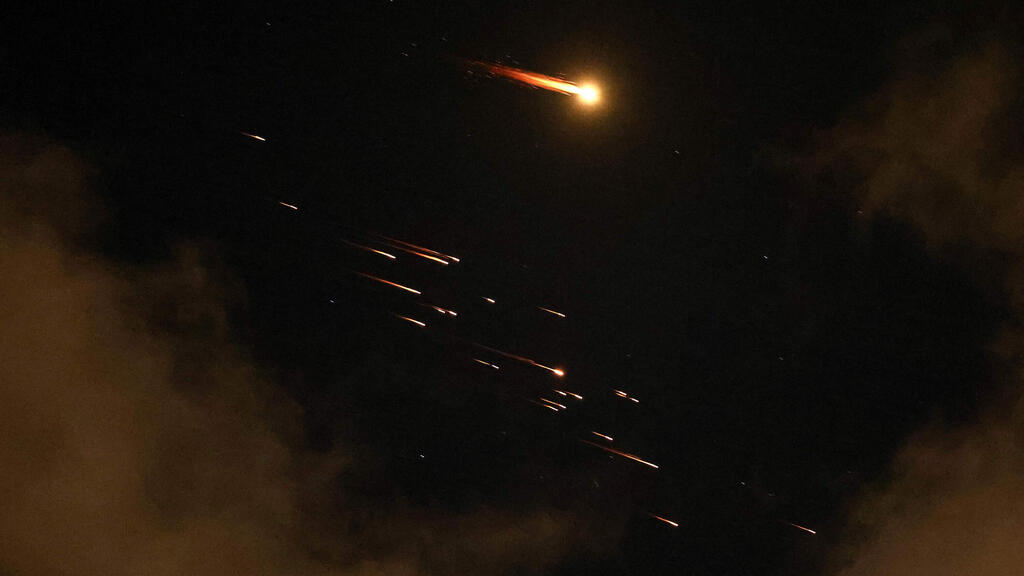
A fragmenting missile over central Israel
(Photo: Jack Guez/AFP)
It is also important to note that Trump is effectively requiring Israel to pay a price for the ceasefire, which relieved him of the obligation to follow through on his threat to “open the gates of hell” on Iran. Israel is being forced to halt the Israel Defense Forces’ campaign in Lebanon in the midst of an offensive aimed at disarming Hezbollah or at least neutralizing its threat to northern Israel for an extended period. This comes as operations in southern Lebanon have only reached their initial stage, while Hezbollah remains active elsewhere in the country and continues to fire rockets into Israel. Prime Minister Benjamin Netanyahu has denied that Israel committed to halt operations in Lebanon, and there were reports this morning of a vehicle strike there.
However, if Israel is indeed constrained in Lebanon beyond the two-week period, it will face operational difficulties. Even a temporary pause now inflicts significant harm on Israel’s security, at a time when the IDF faces a severe shortage of combat personnel and reservists who have already served hundreds of days cumulatively.
Despite Iran’s attempt to project a “victory by not losing” through missile fire at Israel, and despite the combative and threatening statement issued by its National Security Council, it appears the Iranian regime was the first to blink. What prompted senior Islamic Revolutionary Guard Corps officials and their allied clerics to change course was the threat to national infrastructure — and the actual destruction of parts of it by the Israeli Air Force in recent days.
Trump’s threat to devastate power stations, bridges and especially to strike Kharg Island — Iran’s main oil export terminal — served as a clear signal that the United States was prepared to escalate. For decision-makers in Tehran, it underscored that Trump’s rhetoric should be taken seriously. In the Middle East, those perceived as unpredictable often command a certain degree of respect, and Trump is viewed that way in Tehran.
The Israeli Air Force has contributed to intensifying pressure on Iran’s leadership over the past three days by striking national infrastructure also used by the IRGC. Israeli defense officials have argued for weeks that only such strikes would force the regime to reconsider its course, even under hardline IRGC leadership. The destruction of bridges, railways, steel plants and petrochemical facilities employing tens of thousands not only hampers military recovery but also creates internal pressure, as segments of the population are already strained by economic hardship and social and religious repression.
The regime’s primary concern is its survival. After the blows it has sustained, it will seek to avoid confrontation with potential waves of public protest while pursuing a narrative that prevents it from appearing weak.
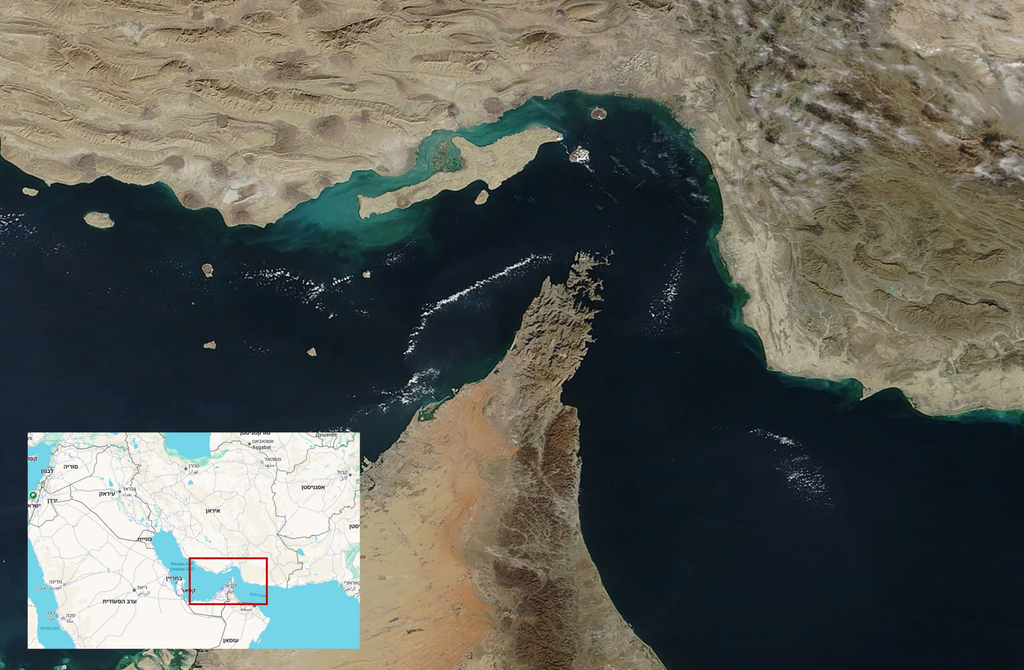
Strait of Hormuz
(Photo: MODIS Land Rapid Response Team, NASA GSFC, Google Maps)
It is too early for final conclusions, but if and when the ceasefire takes hold, an interim assessment is possible. Trump can claim two immediate achievements: global oil prices have dropped, and fuel prices in the United States are likely to follow. Opposition in the United States to a war with Iran — in both parties — may also subside, which would benefit Trump ahead of the midterm elections in about seven months.
A two-week ceasefire also allows the United States to build up additional forces in the Middle East in case hostilities resume. In the longer term, Israel and the United States have achieved most of their stated military objectives so far: Iran will not be able to enrich uranium at scale or to high levels, nor develop a nuclear weapon for a considerable time. It will also struggle for an extended period — possibly years — to rebuild its ballistic missile and drone industries. While it retains launch capabilities and technical knowledge, much of the necessary industrial infrastructure has been destroyed, limiting its ability to threaten the region with large arsenals of missiles and drones as planned.
Iran’s air defenses have been severely degraded, forcing it to think carefully before attempting to rebuild its nuclear and missile capabilities if it wishes to avoid another round of aerial strikes. Finally, Iran’s ability to sustain its proxy forces has been significantly reduced, although it still maintains contact with them and continues to rely on their support.
What has not been achieved?
Iran still possesses 441 kilograms of uranium enriched to 60%, sufficient to produce fissile material for roughly 10 nuclear warheads. The material is buried deep underground in facilities whose access has been blocked by U.S. airstrikes, but if Iran were to regain access to it, it could potentially produce nuclear weapons.
Second, the Strait of Hormuz has not yet been reopened to free navigation.
Third, the regime has not been brought down. While there has been a reshuffling of leadership in Tehran following repeated strikes on senior officials, the change is not necessarily for the better. Power now appears concentrated in the hands of senior IRGC figures and allied clerics, many of them hardline religious extremists.
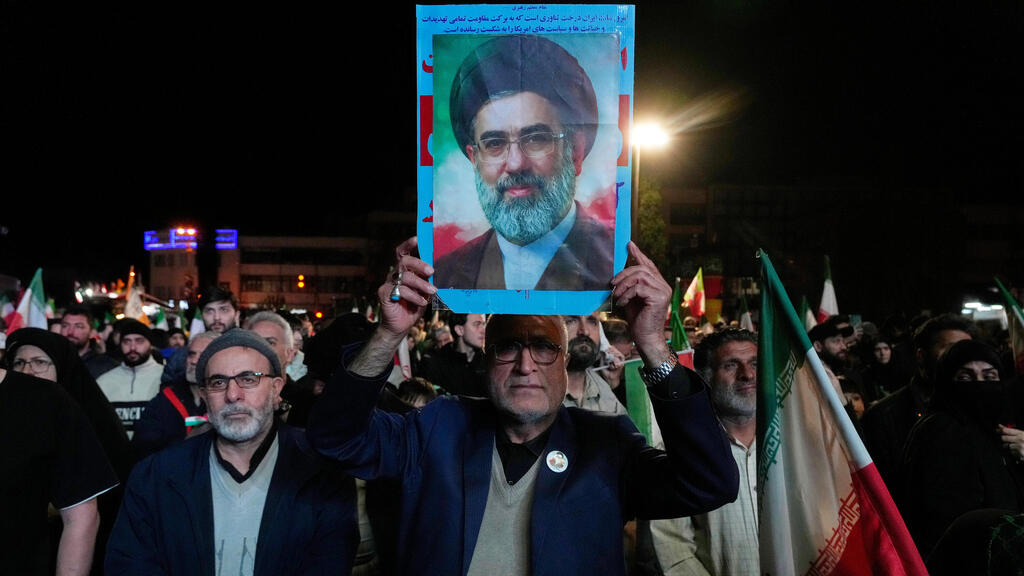
Supporters of the Iranian regime hold up a portrait of Mojtaba Khamenei following the ceasefire announcement
(Photo: Vahid Salemi/AP)
Although Trump and his team maintain they never intended to bring down Iran’s theocratic regime — describing it as an Israeli objective — that claim is questionable. There appears to be a quiet agreement between Washington and Jerusalem that the threat posed by Iran to the region and the global energy market will persist as long as it is led by fundamentalist Shiite rulers.
Under current conditions, Israel faces two primary concerns: how to persuade Trump not to rush into lifting sanctions on Iran and not to release frozen Iranian funds. Easing economic pressure would help the regime placate parts of the population, fund its proxies — especially Hezbollah — and rebuild its military capabilities. Iran lacks neither talent nor expertise. The second concern in Jerusalem is how to complete the campaign the IDF has begun in Lebanon, which remains far from finished.
First published: 08:20, 04.08.26