

There are two ways to look at the missiles fired toward Israel before dawn, just hours after the United States and Iran agreed to a ceasefire. One points to a strategic disaster for Israel. The other holds the possibility of hope.
The disaster scenario is clear. After committing to strike Iran’s strategic infrastructure and oil facilities and severely damage its capabilities, U.S. President Donald Trump stepped back and agreed to a two-week ceasefire. The pause leaves Iran in control of the Strait of Hormuz, while its ballistic capabilities and regional proxies remain far from dismantled.
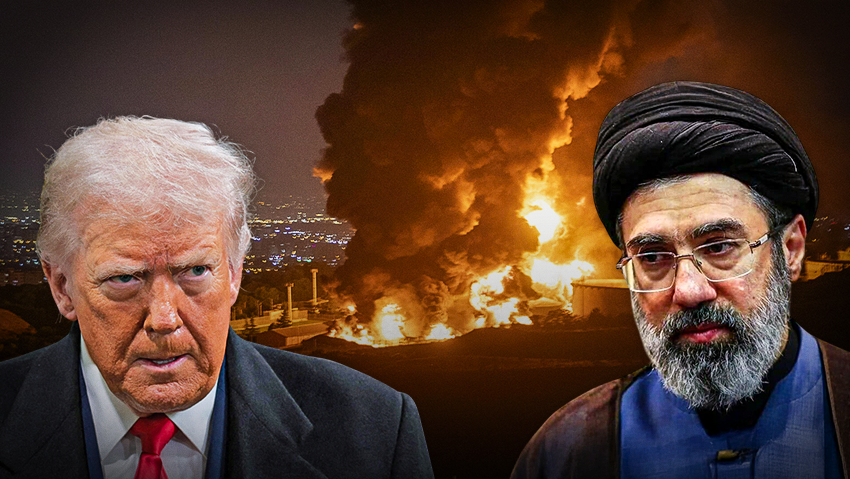
(Photo: Anna Moneymaker / AFP, Stringer / Getty Images)
Iran also retains the right to enrich uranium and holds a stockpile estimated at about 450 kilograms — enough for multiple nuclear weapons.
In this situation, it is difficult to imagine the United States having the leverage needed to achieve all, or even part, of its original war objectives at the negotiating table. Given public opinion in the United States, it is also hard to see Washington renewing the war after the ceasefire.
Instead, U.S. negotiators may find themselves discussing terms aligned with Iranian demands, including guarantees against future attacks and a possible withdrawal of U.S. forces from the Middle East. At most, a deal could involve exporting enriched material to a third country in exchange for sanctions relief.
Such an outcome, combined with significant support from Russia and China, could allow Iran to emerge from the war stronger than before. Its leadership would not only rebuild ballistic capabilities, but could also accelerate efforts to obtain nuclear weapons.
The result could mark the end of hopes for regional peace under a renewed American-led order. Gulf states, weakened and concerned, could move closer to Tehran. New normalization agreements would be unlikely, and the region could drift toward a nuclear arms race. Israel, which has already lost much of its support among Democrats in the United States, could also face growing criticism within the administration.
At the same time, there is an optimistic scenario in which Trump views the ceasefire as a tactical step. In this view, the United States would use the two-week pause to rotate exhausted forces and reinforce its presence in the region, while demonstrating that Iran cannot be trusted in diplomatic agreements.
There is also the possibility that the ceasefire will not be extended to the northern front, allowing continued operations against Hezbollah and efforts to restore security in the Galilee.
Under this scenario, even if Iran survives the current war, the regime could be weakened to the point that it eventually collapses and is replaced.
Whichever scenario — or combination of scenarios — unfolds, Israel will need to prepare for the next confrontation with Iran and its regional allies. That means reinforcing new lines in Gaza and along the Litani River in Lebanon, giving reserve forces needed rest, rebuilding relations with the United States while developing new alliances and addressing internal divisions.
It also means using technology to develop new ways to defend both airspace and territory, as Israel prepares to face an uncertain and potentially dangerous future.