

A temporary ceasefire between Israel and Iran risks returning both sides to a familiar cycle of escalation, negotiation and renewed fighting, despite statements from Tehran rejecting such a pattern.
Iranian Foreign Ministry spokesman Esmail Baghaei said days before the ceasefire announcement that Iran would not accept what he described as a “cruel cycle” of war, talks and temporary truces.
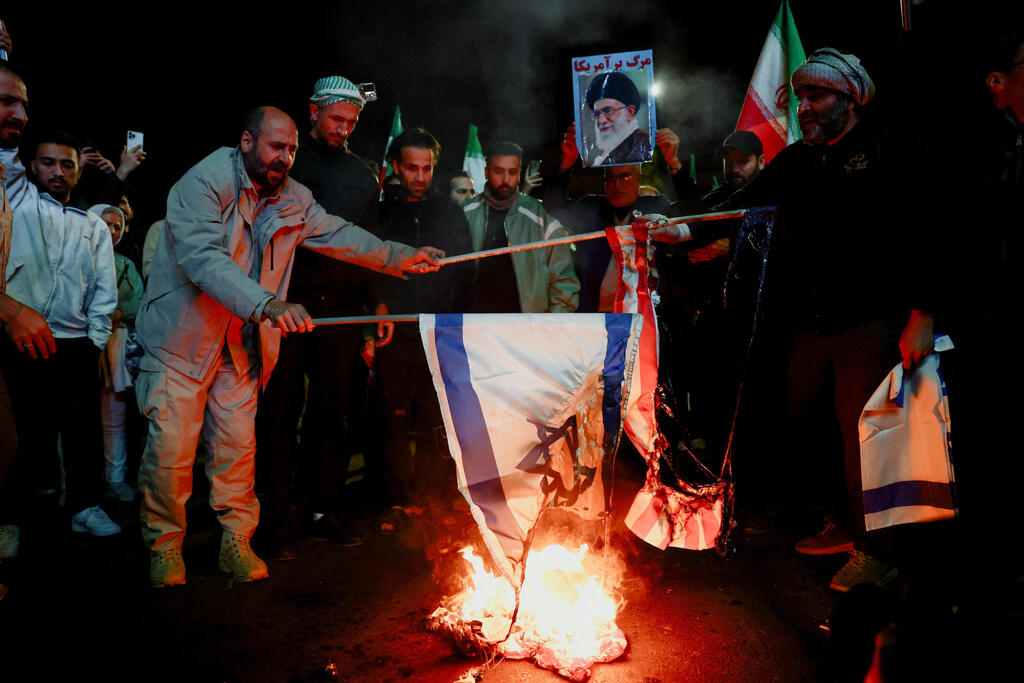
(Photo: Majid Asgaripour/WANA (West Asia News Agency)/Reuters)
“We will not tolerate this cruel cycle of war, negotiation, ceasefire and a return to the same pattern. It is destructive not only for Iran, but for the entire region and beyond,” Baghaei said.
Despite that statement, the ceasefire was declared while fighting with Iran and its regional allies remained active. The IDF continues to face attacks and threats from Hezbollah in Lebanon, Iran-backed militias in Iraq and Houthi forces in Yemen, all of which retain the ability to launch strikes.
The IDF has said that fire in Lebanon is ongoing, while the political leadership has not publicly outlined a detailed response.
The current situation mirrors previous rounds of fighting with Hamas in Gaza and Hezbollah in Lebanon, with the confrontation with Iran now taking on a similar pattern of repeated escalation.
Iran has demanded an end to attacks against it and its allies, the lifting of all sanctions and approval to enrich uranium under international supervision. These conditions are viewed in Israel as unacceptable.
While there have been military achievements against Iranian targets, it has also been emphasized that technical knowledge cannot be destroyed and could allow Iran to rebuild its capabilities.
Any future arrangement is expected to rely on international oversight to monitor compliance, similar to past agreements.
Another issue raised in Israel is the Shiite concept of “taqiyya,” a religious principle that allows concealment of beliefs under threat. The term originated as a means of protection, but is cited as a factor complicating trust in Iranian commitments.
At the same time, Iranian officials have continued to issue statements calling for Israel’s destruction, even alongside diplomatic efforts.
As the two-week ceasefire period begins, Iranian officials and supporters have celebrated what they describe as a victory. Ebrahim Azizi, head of the Iranian parliament’s National Security and Foreign Policy Committee, wrote on the social platform X following the announcement: “We told you from the beginning that you have no choice but to surrender to great Iran.”