

In recent weeks, instead of attending their children’s end-of-year ceremonies or sitting university exams, many reservists once again put on their uniforms and joined their companies in southern Lebanon, Gaza, Syria or the West Bank. They are doing so not because the personal cost has become easier to bear, but because they are unwilling to leave their comrades alone.
Israel’s reserve system continues to function because of solidarity, a sense of mission and the willingness of its personnel to pay a heavy personal price. After nearly three years of war, the fact that they are still reporting for duty is remarkable.
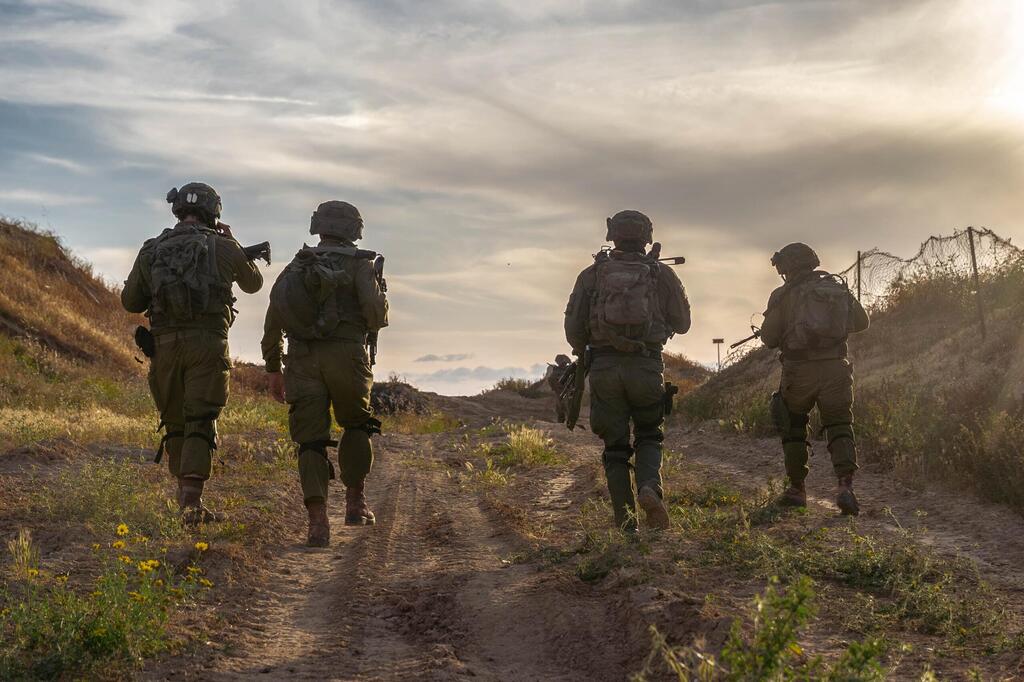
Sstructure that approaches its breaking point
(Photo: IDF)
That is precisely why their commitment must not be treated as an unlimited resource. The reserve system is still showing up. That is both the good news and the dangerous news.
As long as battalions continue arriving for their missions, it is easy for the IDF and the state to assume that the system is holding and that they can continue relying on it, stretching the commitment of its personnel to the limit.
But behind the attendance figures lies a far harsher reality: an exhausted system, units with very low turnout that are becoming hollow in practice, and a civilian support structure that is approaching its breaking point.
The IDF tends to count formations, battalions and companies, but that accounting does not tell the full story. A battalion may still formally exist, yet some of its soldiers do not report for justified reasons, others have announced that they will no longer come, and many of those who do arrive require frequent leave simply to survive. The result is a unit that appears complete on paper but is hollow in reality.
Its mission falls on too few soldiers, accelerating their exhaustion and damaging the unit’s operational effectiveness. In the armored corps, the problem is compounded by shortages of vehicles caused by combat damage and maintenance difficulties. Yet the person now closest to collapse is not necessarily the reservist himself. It is the entire support system that allows him to report for duty.
Families have carried an enormous burden. Even the most committed and supportive partners struggle to endure another holiday alone, another Friday without a father at home, another school ceremony he misses and another prolonged period of managing the household while constantly fearing for his safety.
Employers are also struggling. Some repeatedly lose key workers, while reservists who are not dismissed may nevertheless discover that their practical place within an organization has gradually eroded. Students miss courses, exams and entire semesters, and not every institution or lecturer provides the understanding they need.
After nearly three years, everyone has had enough, not of their commitment to the country, but of living under an emergency with no clear limits.
An intolerable inequality in the burden
All this is compounded by an intolerable inequality in the national burden. At the very moment reservists and their families are being worn down, measures approved by the Knesset, including the Basic Law on Torah study and legislation intended to freeze the arrest of ultra-Orthodox draft evaders, have not brought a large new population into military service. They have pushed it further away.
Instead of adding more shoulders beneath the stretcher and easing the load, the state is signaling to angry reservists that they will continue carrying it almost alone.
I have written before that the prolonged use of emergency call-up orders is extremely convenient for the IDF. Too convenient. It allows the military to change enlistment and release dates, extend service and revise plans on short notice.
In a genuine emergency, there is no alternative. But a reserve force cannot be managed for years as though every change were an emergency. The IDF must impose limits on itself even when those limits are not written into law.
It should commit to a fixed quota of service days and honor it, certainly during ceasefires and periods of relative calm. It should refrain from changing call-up orders except in truly exceptional cases. It should also determine in advance when service begins, when it ends and what reservists can expect during it. Certainty is not a luxury. It is a prerequisite for soldiers, families, employers and commanders to endure.
At the same time, the total number of reserve-duty days must be reduced. The IDF is deployed across many fronts and is understandably still acting under the trauma of October 7, unwilling to take unnecessary risks.
But risk management does not mean seeking zero risk. During periods of relative calm, the military must reassess the number of formations deployed in each sector, reduce forces where possible and release units. At times, accepting a limited operational risk is preferable to allowing a far greater strategic risk to grow: the erosion of the reserve system itself.
 Ariel Heimann
Above all hangs the issue of operational readiness. The reserve system has barely trained since October 7. It is either fighting or holding defensive lines. Regular-service soldiers now being discharged are also entering the reserves after years of combat, but without a continuous and orderly training cycle. Command courses have been shortened, and it is increasingly difficult to find officers willing to assume positions that require dozens of additional service days.
The result is dangerous: the best commanders are not always the ones taking command. Sometimes it is simply those who are still able to agree. Reservists have proved beyond doubt that they will come when they are needed.
Now it is the turn of the state and the IDF to prove that they know how to protect them. That means more than thanking them. It means creating certainty, reducing service, restoring training and rebuilding the command structure. The reserve system has not collapsed. But Israel must stop testing how much more it can demand from some of its best people before the system is emptied from within.
Brig. Gen. (res.) Dr. Ariel Heimann is a senior researcher at the Institute for National Security Studies and a former chief reserve officer