

In the WhatsApp group “Reservists for Paramedics Only,” dozens of job postings are sent every week. Three years into the war, the IDF is struggling to fill manpower gaps and is scraping together medical teams wherever it can.
Male and female paramedics are attached to every maneuvering force: in Gaza and Lebanon, in the West Bank and on special operations. Their purpose is singular — to save lives. But in an Israel where gestures and symbols often outweigh reality, soldiers who refuse to go on an operational mission because a female paramedic is present become martyrs, receive applause from rabbis and journalists and even find government ministers rushing to whitewash the mutiny.
Last week, 16 soldiers from the Rotem Battalion of the Givati Brigade were disciplined after refusing to board an armored vehicle, arguing that prolonged time with a woman in an enclosed space violated modesty rules and Jewish law. Their commanders brought in the Givati Brigade rabbi, who ruled explicitly that there was no halachic prohibition for an operational need and ordered them to board the vehicle, but they maintained their refusal. The mission was canceled, the soldiers were sent to military prison and the public uproar wrote itself.
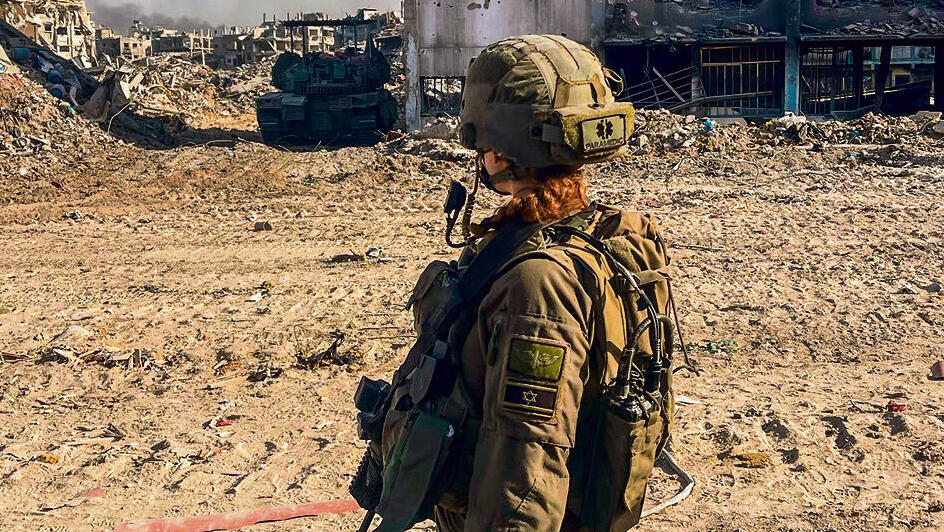
C in uniform: 'Representatives of the sector where I grew up are turning their backs on me and my friends'
If 15 years ago the battles over mixed-gender service were largely exhausted by religious soldiers refusing to listen to a female soldier sing, today the picture is far more complex. The proportion of female combat soldiers and women in key military roles has risen dramatically — partly because of the social struggle to open positions to women, and above all because of a significant manpower shortage that capable female soldiers knew how to fill.
The struggles within Israeli society have also intensified many times over — polarization has reached a peak and the political power of the hard-line religious-Zionist camp within Religious Zionism and the country’s leadership has grown.
In Israel, every social struggle over the character of the state is immediately translated into the ranks of the people’s army — and that is also true when it comes to the place of women. The case of the female paramedic in the Namir armored personnel carrier invites reflection on two levels: the real challenge within the combat ranks and the struggle over the character of Israel, with the IDF serving as just another piece on the chessboard.
A test case
Female paramedics are an interesting test case because this is not a new role. The paramedic course is a difficult and selective program lasting one year and two months, and its makeup is half men and half women. The women sign under a “same law for women as for men” framework — meaning they must serve three years of regular service. The military paramedic profession was established in the late 1990s.
During the Second Lebanon War, the integration of women into the role was still in its infancy, and they were deployed mainly in routine security battalions, airborne evacuation units such as 669 or rear medical posts along the border. But the war also saw a historic precedent: the first female combat doctor operating beyond enemy lines. Lt. Dr. Marina Kaminsky, battalion physician of the 52nd Battalion in the 401st Armored Brigade, entered deep into southern Lebanon, operated under fire and provided lifesaving medical treatment to dozens of soldiers. She was awarded a Central Command commander’s citation and was the only woman to receive a citation in that war. During Operation Protective Edge, dozens of IDF female paramedics entered the Gaza Strip for the first time alongside combat forces.
“I grew up in Religious Zionism, and from the time I was born I was taught that defending the country is the most important thing there is,” says C., 24, a reserve paramedic. “I was in the religious Scouts battalion named after Bnaya Sarel, who was killed in Protective Edge, and my dream was to follow in his path.”
C. served in the regular army with Givati’s Shaked Battalion and today is doing her post-army backpacking trip in installments, between one reserve call-up and the next. “I finished training just before October 7. We didn’t even have time for a ceremony. I spent most of my service in Gaza, and the moment I was discharged I received a reserve order.
“The campaign against female combat soldiers, and female paramedics in particular, hits me in the most personal place because I know this community. These are my friends and my family. I grew up in a sector that taught me to contribute as much as I could — and now the representatives of that sector are turning their backs on me and my friends.”
C. is an impressive young woman, the kind often described as the salt of the earth. This October she will return to Israel for another round of reserve duty. Throughout the conversation she is careful to avoid inflammatory language or accusations. It is important to her to describe the difficult conditions of service as they really are, and she emphasizes the critical gap between the camaraderie among soldiers in the field and the political exploitation of rare, isolated incidents.
“In our battalion too, there are platoons of hesder yeshiva students who come for a shortened eight-month service. During the fighting there were countless difficult, uncomfortable and miserable moments. It has nothing to do with religious faith. No female soldier longs to hold in her urine for hours in order to do it discreetly, dreams of going days without a shower or wants to sleep head-to-foot inside a Namir with smelly soldiers. Being a combat soldier is not easy and it is not for everyone, but we do it because we understand the importance of the mission.
“That is also what I experienced with religious soldiers in both regular service and the reserves. They became my friends and they understood my importance within the team.
“Every paramedic has a medic assigned to them. They are a treatment team that is never separated. The medic assigned to me was a hesder yeshiva student from Otniel and he was married. On paper, that sounds like a recipe for an explosion and a protest, but in the field none of that happened. I knew exactly what his boundaries were and he knew what mine were. At first, whenever you arrive in a new platoon there is always a degree of suspicion, but part of being professional is building trust. I have no idea whether he would have preferred a man beside him, but in practical terms it does not matter — he is the person I trust most in the world. And I think that is mutual.”
In the real world, in public and professional spaces, Haredim mix, meet and change. Only in the military do we insist on building greenhouses of separation for them
There is a moment in the conversation when C.’s voice breaks. It comes when she mentions her friend Agam Naim, the paramedic who was killed in Gaza while trying to save lives and the only female combat soldier killed during the ground maneuver.
“Agam came from Kibbutz Mishmarot. You cannot get more secular than that. And they put her with hardcore hesder yeshiva students, guys who had barely spoken more than a few words to a woman in their lives. At first it was not easy, but because she was so professional and considerate and they were professional and considerate, a special bond formed there.
“I replaced her after she was killed, and I discovered that those soldiers simply adored her. They truly felt a sense of unit pride that she was one of them and always talked about how much they trusted her and how there was no one who compared to her. While the news is full of stories about soldiers who refuse to spend two hours in a Namir with a female paramedic and everyone cashes in on it, I want you to remember Agam and her religious friends.”
Shai Fisher, 24, from Kfar Yuval, describes a similar reality.
“I started as a paramedic in the 401st Armored Brigade and then in the Givati Reconnaissance Unit. During the war I was the only woman — the entire battalion aid station was made up of men: doctors and medics who were combat soldiers. I was in Balata, Hebron and Gaza. On October 7, I was called up to Kissufim while my family was being evacuated from Kfar Yuval.
“No soldier beside me is doing me a favor. I am not anyone’s problem, and the truth is I never felt that way either. I served with religious soldiers, hesder yeshiva students and Druze soldiers — we always knew how to accommodate one another. Everyone understands that this is a difficult situation and that you have to understand the other person’s needs.
“All my experiences with the religious community during the war were wonderful. I am a direct person, and when I see someone wearing a kippah I will always ask what his boundaries are so I know how to conduct myself. God forbid they turn this into religious soldiers versus female paramedics, because that is not the reality. In the end, ideology blurs reality: In reality there are not enough paramedics. In reality it is not new for female paramedics to enter enemy territory. In reality my grandmother and my uncle were killed by a Kornet missile fired at their home. While I was sitting shiva, I was called up again for another round because the shortage is that severe.”
All the complexity evaporates at once
So in the field, everyone — religious and secular — tries to be considerate. They learn the boundaries, bite their lips in unpleasant extreme situations and undoubtedly make mistakes too. But in the political arena? There, all this complexity evaporates at once. The hard-line religious-Zionist campaign seeks to portray the integration of female combat soldiers as a progressive whim imposed on the military, while operational reality proves that it is a desperate, lifesaving necessity.
The absurdity is that those leading the most separatist and aggressive line come precisely from hard-line hesder yeshivas — the very institutions that do not lift a finger to expand the ranks of combat soldiers. Hesder soldiers serve on a shortened track, and their rabbinical leadership has aligned itself with Haredi politicians who watered down an equal conscription law. When soldiers from the Beit She’an and Mitzpe Ramon yeshivas refused an order — despite the brigade rabbi’s explicit ruling — they did so knowing full well that they would receive political and rabbinical backing. It is a show of political muscle disguised as religious devotion.
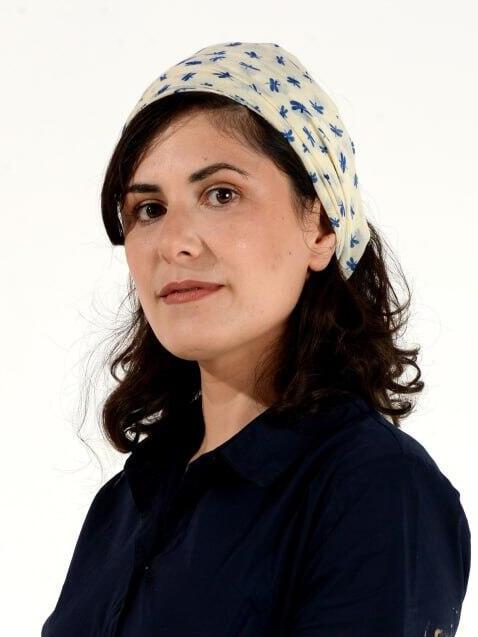 Chen Artzi-SrorPhoto: Koby Koeneks
The refusal incident in the Namir could have remained a narrow disciplinary matter, but in the current climate it serves as an X-ray of alarming deeper processes: hubris born of an unholy alliance between governmental power and sectoral purism.
Surrender to the most extreme denominator is also what produced promises to Haredim who enlist that are completely detached from reality. Only in the IDF can a soldier in the Hasmonean Brigade be promised hermetic sterility — a promise that he will leave service exactly as he entered it and will never be forced to look at a woman in uniform. In the real world, in public and professional spaces, Haredim mix, meet and change. Only in the military do we insist on building greenhouses of separation for them.
The civic-national idea — the one that asks for consideration and mutual accommodation but firmly refuses to turn the IDF into a federation of tribes — is being trampled under short-term solutions that are destructive for the future. When the camaraderie of soldiers inside the armored vehicle is replaced by ideological tests of submission, it is not only the female paramedic who is left outside. The very idea of the people’s army begins to crack.