

There is another Dubai. One beyond the selfies with the Burj Khalifa, the dizzying architecture and the shopping malls that look like cities within cities.
It is the Dubai seen through the eyes of Israelis who, since direct flights from Tel Aviv began nearly six years ago, have not stopped coming.
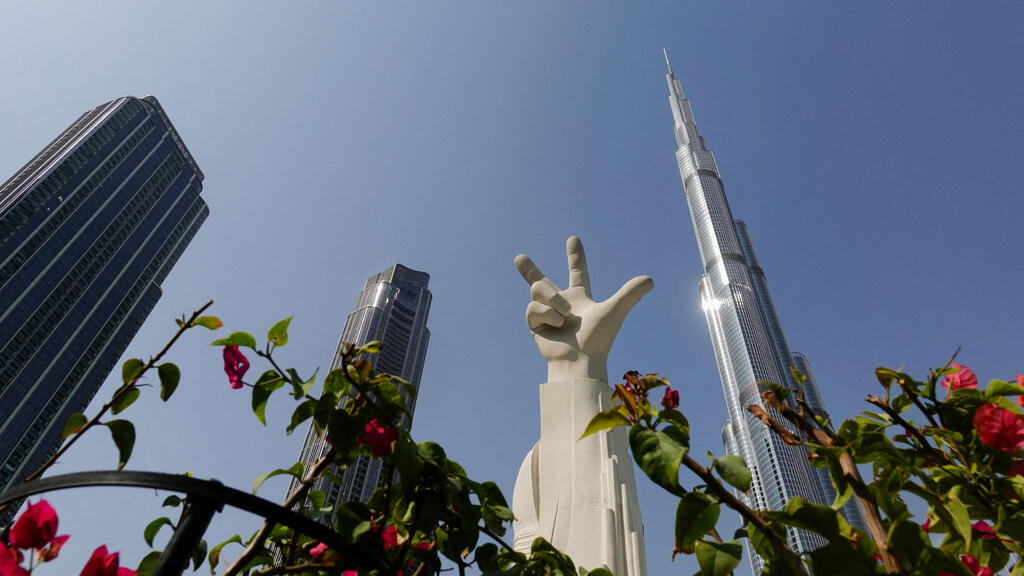
Tourism, shopping, business and a steady flow of delegations devoted to interfaith dialogue and regional cooperation at the people-to-people level have turned the United Arab Emirates into the place where the “warm peace” that never fully developed in almost 50 years of relations with Egypt appears to have found expression.
The Middle Eastern dynamic, which so often people try to bury in the sand, eventually reveals itself from the sky. And not only because of airspace granted for military attacks. Nearly 200 flights a week now connect Israel and the Emirates, a three-hour route made possible by crossing the Arabian desert with the kind permission of Riyadh, still officially an enemy.
My companion on the trip is Asma. Her father was born in Gaza and married an Israeli Arab woman at a time when such marriages were still ordinary, before the Second Intifada brought that reality to a halt.
We walk through the spice market in Deira, the historic district from which today’s skyscraper metropolis grew. The only thing I am looking for is to guess, from the faces of the people we meet, where they come from, and to find saffron, the unmistakable domain of Iranian merchants.
A seller asks where we are from. I hesitate, almost out of a Pavlovian reflex formed by an endless series of rejection experiences on European soil. Asma answers before me: “Israel.”
His face lights up. He is from Shiraz. Handshakes, smiles. We talk about the war, and about the difficulties he faces importing the “red gold” because of the closure of the Strait of Hormuz.
A short time later, on the street, another seller, also Iranian, hears us speaking Hebrew and rushes toward us. He does not want to sell us anything.
He only says: “Shalom Israel! We hope for peace soon.”
At a restaurant, the waiter, Moataz, is a Syrian from Sweida. His cousin was murdered in the massacre last July. His family has direct ties with the Druze of Majdal Shams, on the Israeli side of the Golan Heights. He hates Julani.
A little later, by contrast, we go out with Ali, also Syrian, a Sunni from Idlib. He trusts the evolution of the “former jihadist in a suit and tie,” says he should be given a chance, and is mainly angry at the Iranians and the Turks.
In a world where narratives of hatred move at the speed of a tweet, these live interactions feel like a breath of fresh air when one feels close to suffocating. There is no agreement on everything. But it is possible to do the most basic thing, the very thing many people whose mouths are full of the magic word “peace” have forgotten: to talk, to meet, to argue.
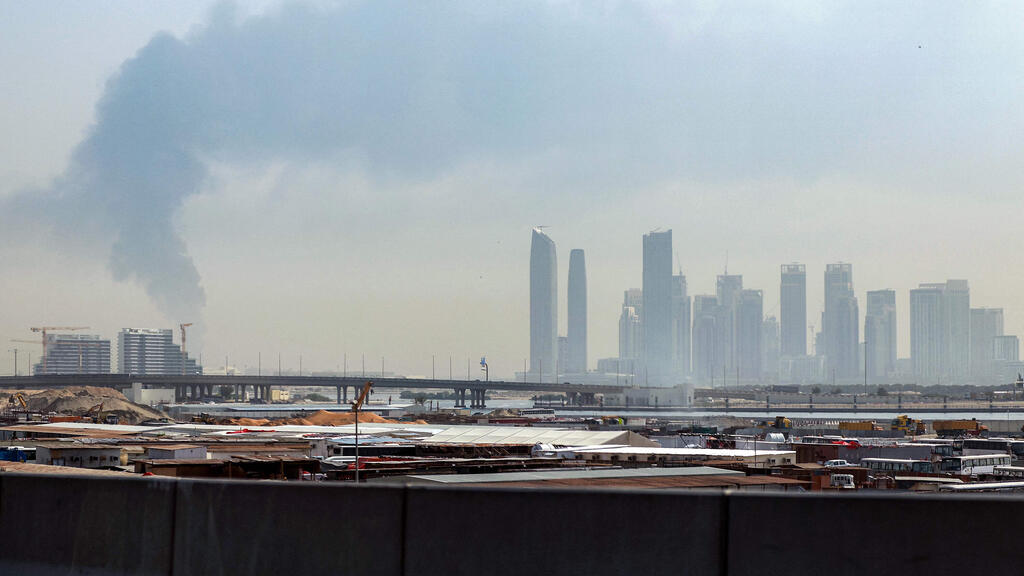
Dubai airport attacked during the latest war with Iran
(Photo: AFP)
In the Emirates, there is no culture of boycott against Israelis, the kind now raging in the West, where a renewed form of Orientalism kills every possibility of dialogue.
In that sense, the UAE is the true New York of the Middle East, much more than Tel Aviv, which has often been given that title. Not because of its skyline or because of its replicas of the Louvre or the Guggenheim, but because of the feeling of a cultural melting pot, the kind Israel Zangwill described in his play of that name, about a Jewish family that survived the 1903 Kishinev pogrom and immigrated to the big city.
Not because of the Western expatriates drawn to Dubai by its tax advantages, but because of all the Middle Easterners whose countries are at war with one another and whose fates find a meeting point here.
An Israeli can come into contact with Lebanese, Palestinians, Syrians, Iranians, Iraqis, Egyptians, Pakistanis and Saudis. In a way, that interaction is imposed by the state’s strict laws, which prohibit public opposition to the leadership’s positions. Anyone who chooses to move here knows those laws well and does not confront them.
And although everyone tells you that “in the Emirates, people do not talk politics,” behind closed doors the discussion is alive and fertile. It offers a chance to feel whether an alternative to hatred can exist, one that begins with human interaction, in a world where social media has stopped connecting people and now prefers to reinforce echo chambers and polarization.
The war only complicated the logistics
Mila Viskin, who imports and distributes Israeli products in the Emirates, especially kosher beer and wine with Hebrew labels displayed in several licensed bars, including Adams Beer Kitchen Bar in Abu Dhabi, tells me the war has complicated only the logistics, not the sense of belonging that has made Dubai her second home for the past six years.
“And when I want to do Shabbat with my family, I get on a flight, and in three hours I am in Tel Aviv,” she says.
The local Jewish community now numbers about 7,000 people, many of them Israelis. Trade between Israel and the UAE did not collapse during the war and has remained around $3 billion a year, not including services and the military sector.
On an abra, the traditional boat whose name means “to cross,” with the same etymology as the word “Hebrew,” used to describe Abraham after he crossed the Euphrates on his way to Canaan, we cross to the other side of the Creek and arrive at the Crossroads of Civilizations Museum in the picturesque Shindagha neighborhood.
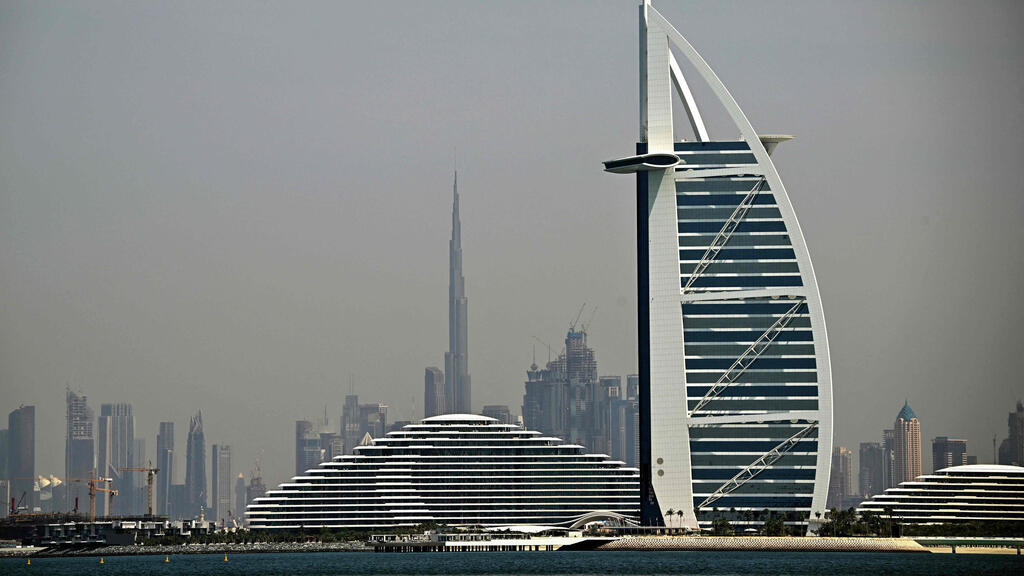
Dubai
(Photo: Giuseppe Cacace/ AFP)
The museum is a small jewel that has become a pilgrimage site for delegations working on Jewish-Muslim dialogue. Its founder, Ahmed Obaid Al Mansoori, who has had a long career in Emirati institutions, is a visionary who began displaying Jewish heritage objects and items connected to the history of Zionism and Israel long before the Abraham Accords were signed in 2020.
His museum is the first in the Arab world to include a small section dedicated to the Holocaust.
“At the time, people asked me why,” Al Mansoori tells me. “My answer is simple: history belongs to humanity, not to politics. Understanding begins with knowledge. If we preserve only the heritage of those who resemble us, then we are not preserving culture, only ourselves.”
I meet him at the Ambassadors of Coexistence conference in Abu Dhabi, where he is busy presenting his latest acquisition: a 14th-century antiphonary from the Iberian Peninsula, combining liturgical texts from sacred writings.
“This manuscript is testimony,” Al Mansoori says. “It reflects an intellectual tradition shaped by the encounter between Muslim, Christian and Jewish sages, in a world where knowledge was shared, translated and disseminated. This is not an imaginary past. It tells us what is still possible today.”
Mansoori had just hosted several delegations at his museum for the third annual conference on intercultural dialogue and tolerance.
Dozens of participants came from Israel to build ties with their counterparts from the region, including Women Wage Peace, religious leaders involved in dialogue and We Are MENA, a network connecting youth organizations from the Middle East and North Africa.
In Abu Dhabi, I also meet Arad Shawat, a respected Israeli creator who is advancing a documentation project about Muslims recognized as Righteous Among the Nations. In Mansoori’s museum, one panel is dedicated to Egyptian doctor Mohamed Helmy, who saved a Jewish woman in Berlin during the Holocaust.
Another delegation present is from the Jerusalem Intercultural Center, which brought more than 30 Israeli leaders active in interfaith diplomacy. Among them is Qadi Dr. Iyad Zahalka, president of Israel’s Sharia courts, the Muslim parallel to the rabbinical courts, whose authority in Israel concerns matters of personal status.
The goal of this dialogue, which includes religious figures from Indonesia to Lebanon, Iraq and the Gulf states, is to formulate a document that could serve as a kind of Jewish-Muslim “Nostra Aetate,” Rabbi Aharon Ariel Lavi, the center’s director, tells me.
“Our message is to emphasize the importance of cooperation among the Abrahamic religions in promoting regional stability, moderation and the fight against religious and political extremism,” he says.
The UAE has proved fertile ground for building partnerships in that direction.
On a parallel and complementary track, Abu Dhabi is the leading donor in the Gaza Strip, both in humanitarian aid and reconstruction efforts. It is also home to Mohammed Dahlan, Mahmoud Abbas’ bitter rival, who was exiled from Gaza in 2011 and now plays a significant role in discussions about the future of the Strip.
These are two tracks: concrete aid to Palestinians and the strengthening of relations with Israelis. For now they operate on separate rails, but within the Emirati strategic vision they may yet find a point of convergence precisely in this Gulf state.
Ties between people, communities and states
“The Abraham Accords were meant to create connections between people, communities and states,” Ali Rashid Al Nuaimi, chairman of the Defense, Interior and Foreign Affairs Committee of the UAE Federal National Council and chairman of the Manara Center for Coexistence and Dialogue, said in welcoming the delegation.
“Unfortunately, certain places in our region have been exploited by forces promoting narratives of division, hatred and distrust,” he said. “That is why we need ambassadors of peace who will build bridges and speak publicly and clearly about the importance of these relations. The relationship between the United Arab Emirates and Israel is strategic, rooted not only in shared interests but also in a vision for a better future for our region. We must continue to strengthen this partnership for the benefit of future generations.”
In this context, education plays a central role.
“The key to changing the Middle East is education, and that is why we chose to focus on this field strategically and scientifically,” said Firas Habbal, president of Emirates Scholar Center, one of the hosts of the large dialogue conference.
The result of that approach is visible on the stage of the Higher Colleges of Technology in Abu Dhabi at the Ambassadors of Coexistence event, where prizes are awarded to students from different countries chosen for projects that promote dialogue in contexts of high internal social tension.
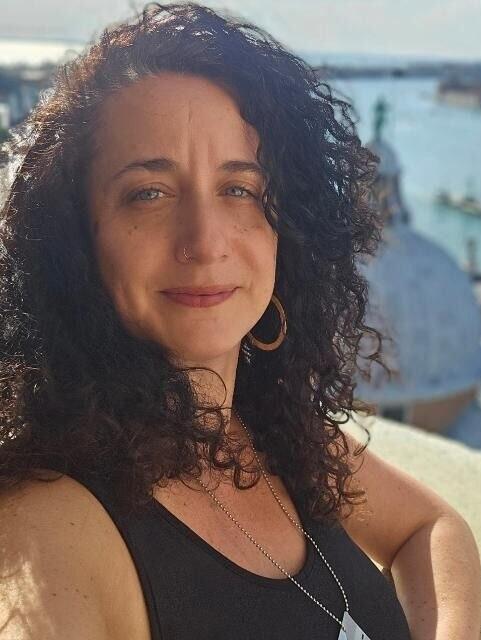 Sharon Nizza
Among them are Noa, Mika and Yahya, law students from the University of Haifa. They take the stage to present “A guide for a conflict-resilient community: Lessons from Haifa for the events of October 7.”
They describe the model they created to seek a window for dialogue on Israel’s most mixed campus, where 50% of students are Arab. On the large screen behind them, the title appears alongside an image inspired by the escape from the Nova festival during the massacre.
It is a scene I find hard to imagine on a European campus, at least not without the accompanying shouting and threats from boycott activists. Their mentor, Prof. Faina Milman-Sivan, confirms to me that events they attended on American campuses were attacked by the same activists.
“It feels like an upside-down world,” she says. “We come to an Arab country, and precisely here people talk about peace.”
I speak with Sheikha and Naima, two Emirati students who are learning Hebrew because they are “very interested in cooperation with Israel.” At the Sheikh Zayed Grand Mosque in Abu Dhabi, the guide who describes to me the Italian marble and Murano glass used in the vast project is also learning Hebrew. It is a government program that funds foreign-language studies, he explains.
Next to me at the conference sits Ismail. We introduce ourselves. He is from the Bandar Abbas area, on the other side of the strait. His family is still there. They are all right.
Together, we repeat the formula of peace: one day, inshallah.
Sharon Nizza is an Italian-Israeli journalist who writes for the Italian newspaper Il Foglio