

For all the years I lived in Israel, I opposed the idea that Israelis living abroad should be able to vote from where they reside, as American citizens can. It was a principled position of mine long before I could have imagined that one day I myself would live in New York.
I thought there was something unfair about a person who chose to build a life outside Israel being able to sit in New York, London or Paris and influence decisions whose price would be paid by people living in Israel. Because in Israel, the cost of a political decision is not limited to taxes, housing prices or the quality of public services.

Sometimes the price is life and death. I have lived in New York for only three years. I spent most of my life in Israel. All my children served in the IDF. My children, my siblings, my nieces and nephews and my friends are in Israel. Israel is not a distant place to me that I observe from the outside.
And yet, since moving to New York, the question that accompanied me all those years has taken on a personal meaning: Who am I, living in New York now, to decide whether your child will be sent to Gaza?
About a month ago, I was in Israel and met a friend who lost her son in the last war. Her second son was wounded in Gaza and, after months of rehabilitation, managed to return to his life.
'You have to come'
She asked me a simple question: “Are you coming to vote?” I told her I wasn’t sure. I explained what I have believed for years. I said I wasn’t sure people living abroad should make life-and-death decisions for those who live in Israel. After all, after the election I will return to New York. You will remain.
If there was anyone in the world I would have expected to agree with me, it was her. A woman who buried one son and whose second son was wounded in Gaza.
But she told me the exact opposite. “You have to come.” That conversation has not left me.
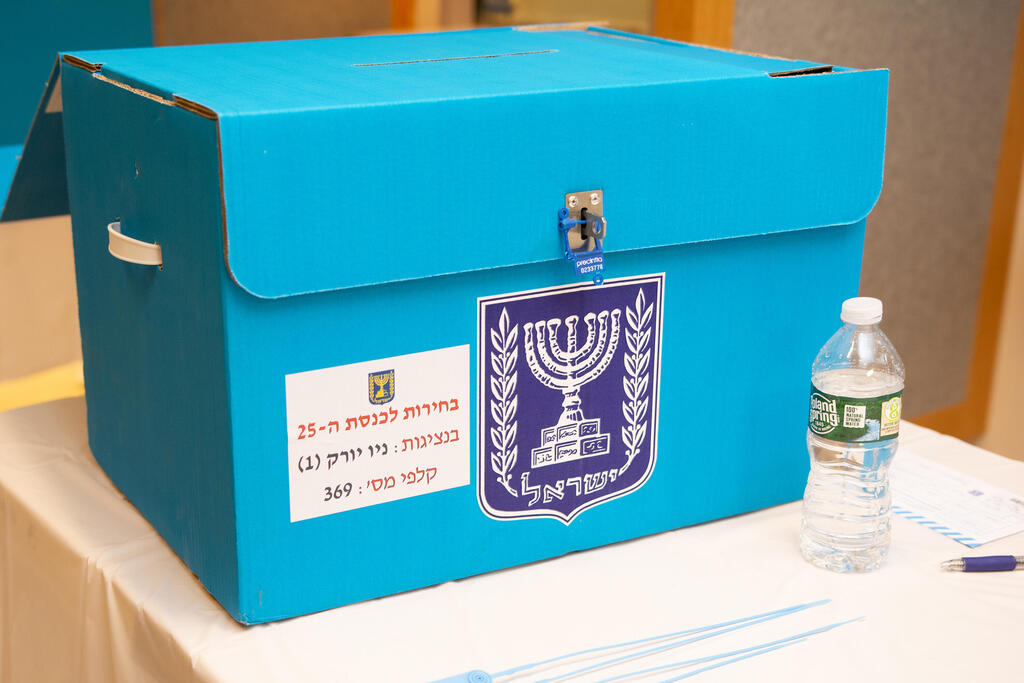
'The most fateful elections in the history of the country'
(צילום: נפתלי שוולסון)
Not because she instantly changed a position I had held for years. Even today, I am not convinced that an Israeli who left the country 20 or 30 years ago should be able to determine from afar the future of those who live there.
But she made me understand that this time the dilemma is different. Because in my view, this is not a normal election.
In almost every election campaign, we are told that these are “the most fateful elections in the history of the country.” The phrase has been worn down to the point that it has almost lost its meaning. But this time, I feel we are facing a question of existence.
Not because the State of Israel will disappear from the map tomorrow morning. But because the question on the table is what kind of Israel will exist here in 10 or 20 years — and whether it will still be the country our children and grandchildren want to call home.
How long can we accept a reality in which another family receives word that its son has been killed, another soldier is wounded and another young generation is sent again and again to war? But when I look at Israel today, I am also worried about what is happening far from the battlefield.
About the rising crime and violence in parts of Israeli society and the sense among citizens that the state is failing to provide them with the most basic security. About public discourse that has become violent and extreme.
A society that loses the ability to distinguish between a political rival and an enemy, between criticism and hatred, begins to dismantle itself from within. And I am worried about the education system.
A country cannot survive over time on its military alone
A country that took pride in its scientists, doctors, engineers, entrepreneurs and universities cannot ignore an education system in which students struggle to meet even the average of developed countries in key subjects, and where the gap between children whom life has given an opportunity and those it has not is so deep.
A country cannot survive over time on its military alone. It needs good schools. A functioning police force. A justice system its citizens believe in. An economy that gives young people hope. Leadership that understands that the state exists for its citizens, not the other way around. And above all, it needs to give our children a reason to stay.
My greatest fear is not who will be prime minister after the next election, but whether in 10 years our children and grandchildren will see Israel as the place where they want to build their lives, or as a place they love but feel they must leave in order to build a future for themselves.
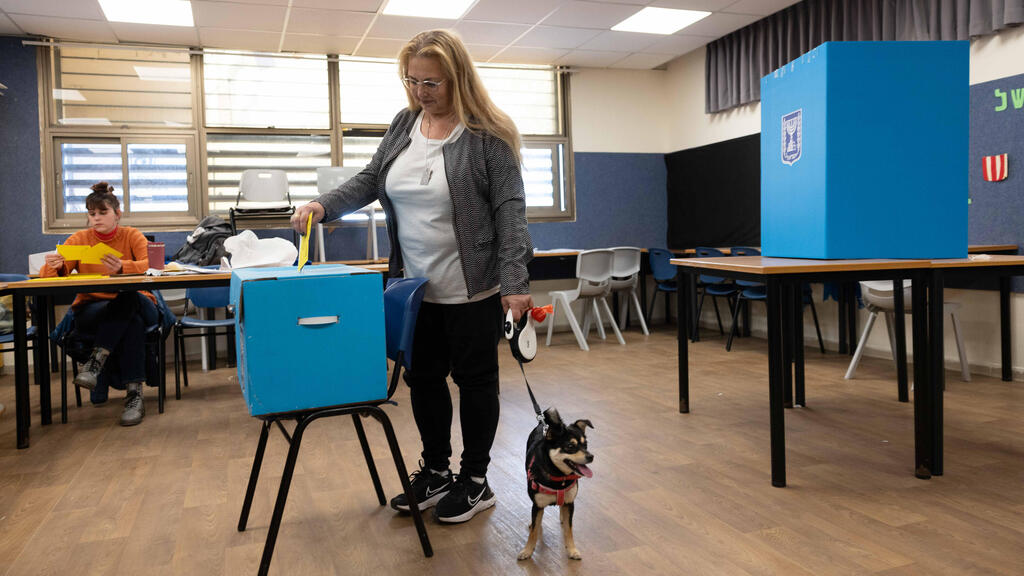
Voting on Election Day
(Photo: Tal Shachar)
And there is another reason why this time I cannot say from New York: It is no longer my concern. The State of Israel was never only the concern of Israelis. Its very existence changed the condition of every Jew in the world. For generations, Jews knew that when the place they lived in stopped wanting them, they would not necessarily have anywhere to go. Israel changed that equation.
It is the place a Jew is supposed to know exists for him even if he never needs it. But that connection works in the other direction as well.
I live in New York and see how deeply what happens in Israel enters the lives of Jews here. Antisemitism in the United States is no longer something that can be dismissed as a memory from a previous generation. It is present in the streets, on campuses and in public discourse.
And it must be said honestly: Antisemitism is the responsibility of antisemites, not of Israel. No action by an Israeli government makes hatred of Jews legitimate.
But it is also impossible to ignore that Israel and Diaspora Jews are connected to one another. When Israel is at the center of an international storm, Jews outside Israel feel it clearly.
The Jewish state should be a source of security for Jews around the world, not something Jews feel they have to apologize for being connected to. And that is exactly why I can no longer use New York as an excuse to stand on the sidelines.
 Judy Shalom Nir-Mozes
Three years in New York do not erase an entire life in Israel. They do not erase my children’s military service. They do not erase children, siblings, nieces and nephews and friends. And they do not erase responsibility. I still believe that someone who lives abroad must speak about Israel with humility. I do not want to sit in New York and explain to a mother in Israel what price she should be willing to pay. I do not want to decide from afar whether her child will be sent to war. And that is why I am not asking for a ballot box in New York. I am getting on a plane.
I think again about my friend. About a woman who buried one son and whose second son returned wounded from Gaza.
If anyone had the right to tell me, “You live in New York now, leave the decision to us,” it was her. But she did not say that. She said: “Come.”