

Iranian and U.S. delegations met Tuesday in Geneva for the second round of negotiations between the two countries. At the same time, however, officials in Tehran were speaking in the language of war.
Based on events in Iran throughout the day, even if “Iran wants a deal,” as President Donald Trump has claimed, it wants one on its own terms. During a meeting Tuesday morning with residents of East Azerbaijan province, Iran’s Supreme Leader Ayatollah Ali Khamenei delivered a threatening message widely amplified by regime-affiliated outlets.
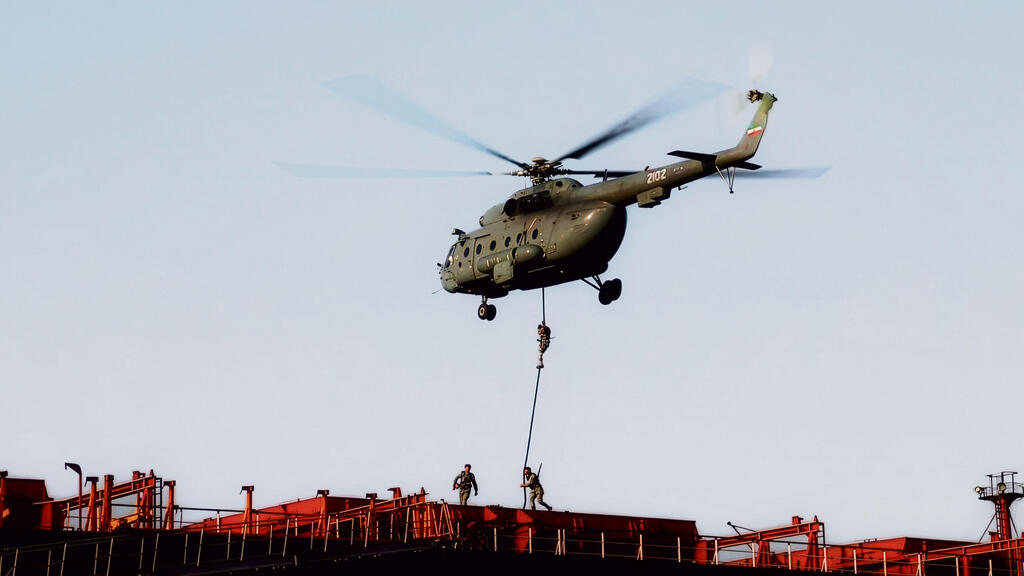
“Even the strongest army in the world can sometimes suffer a devastating blow. You will not be able to destroy the Islamic Republic. The American destroyers are undoubtedly dangerous, but the weapons capable of sinking them are more dangerous,” he said.
Khamenei also made clear that the United States has no say over the range or types of Iran’s missiles. “The statements of the U.S. president suggest they are trying to control the Iranian people. The Iranian people know what to do. They will not pledge allegiance to corrupt leaders like those currently in power in America,” he added.
But the Iranian show of force did not end with Khamenei’s threats. At the same time, Iran’s military drill, dubbed “Smart Control of the Strait of Hormuz,” reached its peak. Iran’s state broadcaster announced the start of the main phase of the exercise, and the regime-affiliated Fars news agency later reported that parts of the strait were closed for several hours as part of the drill.
The commander of the Islamic Revolutionary Guard Corps navy, Alireza Tangsiri, was quoted as saying: “We are ready to close the Strait of Hormuz as quickly as possible, but the decision rests with the leadership.” Reports on the exercise were accompanied by images and videos highlighting its threatening nature.
Alongside the rhetoric and military maneuvers, Iran’s leadership also sought to project a message of national unity and to portray anti-regime protests as a failure. Events were held across the country marking 40 days since the deaths of protesters in January. At a ceremony in Tehran, Esmail Qaani, commander of Iran’s Quds Force, said, “The Iranian people will respond to enemies with greater unity, strength and solidarity.” He also warned that “those who supported rioters and terrorists are criminals and will see the consequences.”
Yet while these messages were being broadcast domestically, reports emerging from Geneva described a “positive and constructive atmosphere,” according to Lebanon’s Al-Mayadeen network, which is affiliated with the Shiite axis. The outlet cited sources in the Iranian delegation who said the American side appeared more serious than in the past.
 Lior Ben Ari
A reporter for the regime-affiliated IRNA news agency wrote that “the negotiations were very serious, agreement was reached on several general issues and it was decided that talks on the details would continue after the delegations consult in their respective countries.”
“The atmosphere was constructive,” Iranian Foreign Minister Abbas Araghchi said at the conclusion of the talks. “We reached general agreement on a series of guiding principles on the basis of which we will move toward a possible agreement. This does not mean we will reach a deal soon, but the path has begun.” That is what a smokescreen looks like.
First published: 04:44, 02.18.26