

The swearing-in of Zohran Mamdani as mayor of New York has prompted a wave of analyses that almost reflexively frame his rise as another victory for pluralism, multiculturalism and opposition to neoliberalism. To many, it appears a natural civic outcome: a global, multiethnic, expensive and unequal city choosing a candidate who promises a “right to the city” and pledges to defend the vulnerable.
But this reading misses the point. Mamdani’s election was not a vote for a new liberal vision, but first and foremost a vote against Trumpism in its elitist form, and against what many minorities view as a hypocritical liberal elite.
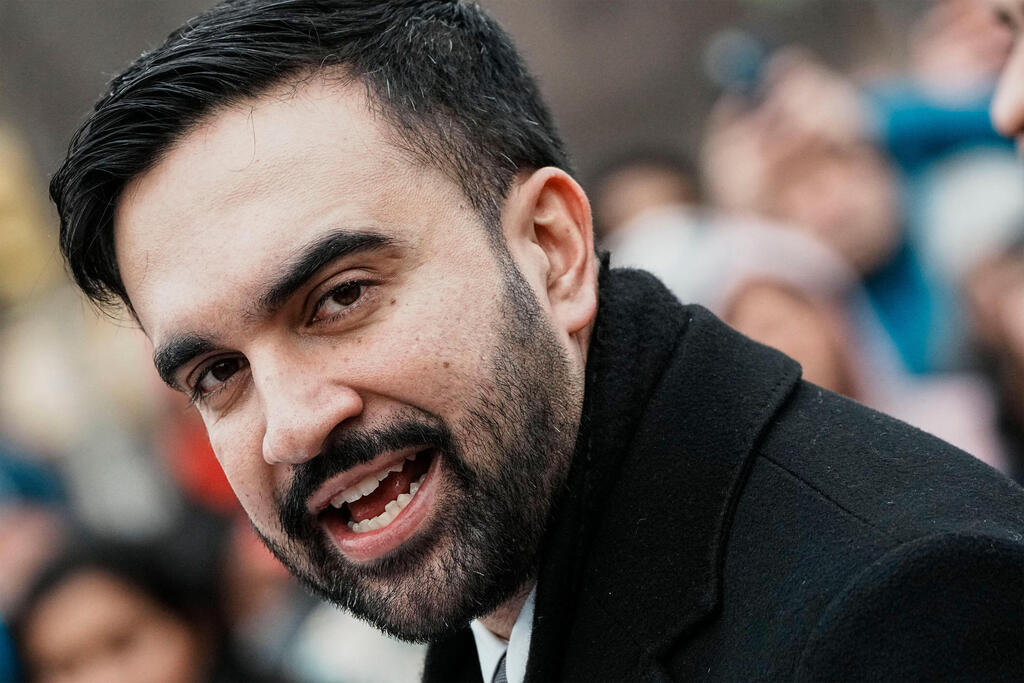
Zohran Mamdani
(Photo: AP Photo/Eduardo Munoz Alvarez)
Mamdani built his campaign as an almost total negation of Trump: anti-nationalist, anti-capitalist, anti-Israel, anti-Netanyahu, anti-enforcement and anti-establishment. Yet this antithesis functioned largely as a smokescreen. Behind the universalist rhetoric lay a deeper impulse: an identity-based, cultural claim inherited from his father, the academic Mamdani, that has grown disillusioned with the possibility of genuine integration into the liberal American ethos and now seeks to undermine it from within, step by step.
Mamdani is not an accidental product of the political margins. He represents a young generation of immigrants that has absorbed a sense of deprivation not only economic but also cultural, a deprivation rooted in liberalism itself. This is a liberalism that speaks the language of diversity and inclusion but in practice preserves a white, Christian, neoliberal ethos, allowing the “other,” in Mamdani’s case, the Muslim other, a presence only so long as it remains domesticated, symbolic and does not demand a redefinition of the center.
In his statements and actions, Mamdani defines himself as a pluralist, but that label serves as a cover for another identity: Muslim American. This is not a private identity but an explicit political claim for full Muslim presence within the American ethos, in appointments, discourse and agenda-setting. Here the flaw is laid bare: in the name of fighting “fake” liberalism, a cultural agenda that is not liberal at all is being advanced. His approach to Israel, his one-sided positions and the way he frames global struggles are not marginal deviations, but part of a coherent worldview.
 Prof. Assaf Meydani Photo: Kobi Kuenkas
For this reason, essays that seek to explain his election using classical liberal tools are ultimately self-serving. They aim to preserve the liberal arena while ignoring the fact that liberalism itself has nurtured its own antithesis. Ethnic liberalism, as it has developed in the United States, in France and in Israel as well, struggles to genuinely recognize the contributions of different communities, treating them instead as instruments for advancing abstract values.
Israel as a living example
When left-wing parties fail to tell Arab citizens, “You are true partners,” and instead rely on utilitarian language—like Gadi Eisenkot’s “honest” remark about “leaning on” or “using” Arab parties—they reinforce the very dynamic they claim to oppose. The result is not partnership, but radicalization.
Zohran Mamdani raised his head, but did so in a radical way: as an indictment of liberalism, not a continuation of it, while using liberal narratives. Israel must take heed of the lesson. Ahead of the 2026 elections, it must formulate a discourse of genuine reconciliation, not patronizing, not instrumental, but one that truly recognizes the “other” as a full partner: the Arab, the Mizrahi, the ultra-Orthodox and the conservative. Otherwise, the outcome is clear: further division and the erosion of what remains of Israeli democracy.
- Prof. Assaf Meydani is a scholar of law and public policy at the Academic College of Tel Aviv–Yaffo.