


When Algeria ordered the UAE ambassador to leave within forty-eight hours on September 10, 2026, and announced restrictions on UAE-registered military and civilian aircraft, while exempting commercial flights until the end of the year, the rupture immediately highlighted a deeper regional realignment. Official Algerian statements cited accumulated “provocative and hostile” actions but did not identify a single triggering incident.
Abu Dhabi expressed regret and said it hoped the break could eventually be reversed. The absence of a discrete crisis is itself revealing. This is less a bilateral quarrel than an open collision between two different models of regional power across North Africa, the Sahel and the broader Middle East.
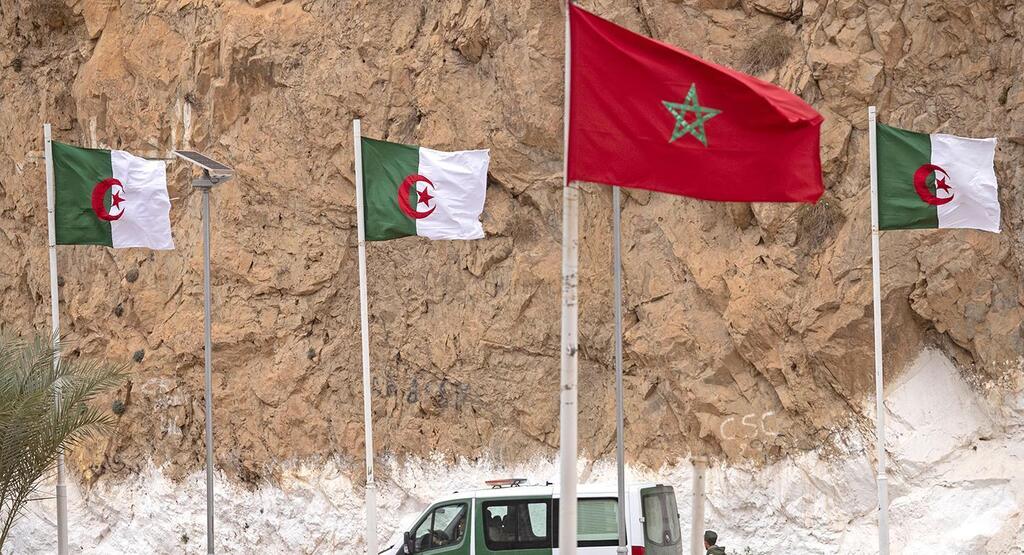
Algeria relies on a state-centered model built on territorial size, energy resources, military capacity and formal diplomacy. The United Arab Emirates operates through a networked model that deploys capital, logistics, commercial infrastructure and selective security partnerships far beyond its borders. In fragmented political environments, that networked model can generate leverage faster and more flexibly than traditional geographic weight. The difference has become increasingly visible as Algeria and the UAE have found themselves pursuing competing interests across several regional arenas over the past several years.
Morocco is the fault line
The clearest illustration is Morocco. For decades the rivalry between Algiers and Rabat centered on Western Sahara, with Algeria providing long-standing support to the Polisario Front. That bilateral contest changed character in November 2020 when the UAE opened a consulate in Laayoune and expressed support for Morocco’s territorial integrity. The step came amid Morocco’s normalization with Israel under the Abraham Accords and the United States recognition of Moroccan sovereignty over Western Sahara.
The result is not a formal anti-Algerian military alliance. It is an increasingly dense web of overlapping partnerships. Concrete examples include UAE-backed infrastructure and energy investments in Morocco, including major water and power projects, alongside expanding defense-industrial cooperation between Rabat and Jerusalem since 2020. Their significance is not merely economic. They strengthen Morocco’s capacity, deepen its external partnerships and give outside actors a growing stake in the strategic environment surrounding Western Sahara, forms of influence that Algeria cannot easily counter through traditional diplomacy or bilateral pressure.
Morocco no longer faces Algeria as an isolated neighbor. It sits inside a growing network that links Rabat, Abu Dhabi, Jerusalem and Washington. For Israel this matters because the relationship with Morocco deepens strategic presence and defense relationships westward. Cooperation with Rabat expands Israel’s reach along North Africa’s Atlantic and Mediterranean approaches in ways that did not exist a decade ago.
The combination of diplomatic recognition, economic investment and security cooperation has altered the balance of influence around Algeria’s western border without requiring a formal military pact. This shift has practical consequences for how Algeria calculates its regional options and for how external powers engage the Maghreb.
The Sahel exposes the deeper competition
A parallel shift is visible south of Algeria. Algiers long treated the Sahel as a primary arena for diplomatic mediation. The 2015 Algiers Agreement on Mali represented the high point of that approach, relying on formal state-to-state negotiation and institutional commitments. Military coups in Mali, Burkina Faso and Niger between 2020 and 2023 disrupted the institutional landscape on which Algerian diplomacy had depended.
The new military governments proved less receptive to external mediation that they viewed as constraining their sovereignty and more open to alternative partnerships that offered resources without the same political conditions.
External actors offering flexible resources moved into the resulting space. The UAE brought capital, commercial projects and logistical capacity into environments where Algeria had relied more heavily on geographic proximity and sovereign mediation.
In the Horn of Africa, Emirati investment in ports, aviation and security infrastructure, including its longstanding role at Berbera, has created channels of influence that operate largely outside traditional diplomatic mediation. Such relationships give Abu Dhabi practical access and leverage even where formal political institutions are weak or fragmented.
The contrast appears in Libya as well. Algeria has generally favored formal institutions and UN-backed processes aimed at national reconciliation. The UAE has maintained closer ties with eastern military forces associated with Khalifa Haftar, prioritizing targeted security outcomes over comprehensive political settlements. The difference in approach is not merely tactical. It reflects two distinct conceptions of how influence should be exercised in fragmented political environments where state authority is contested or incomplete.
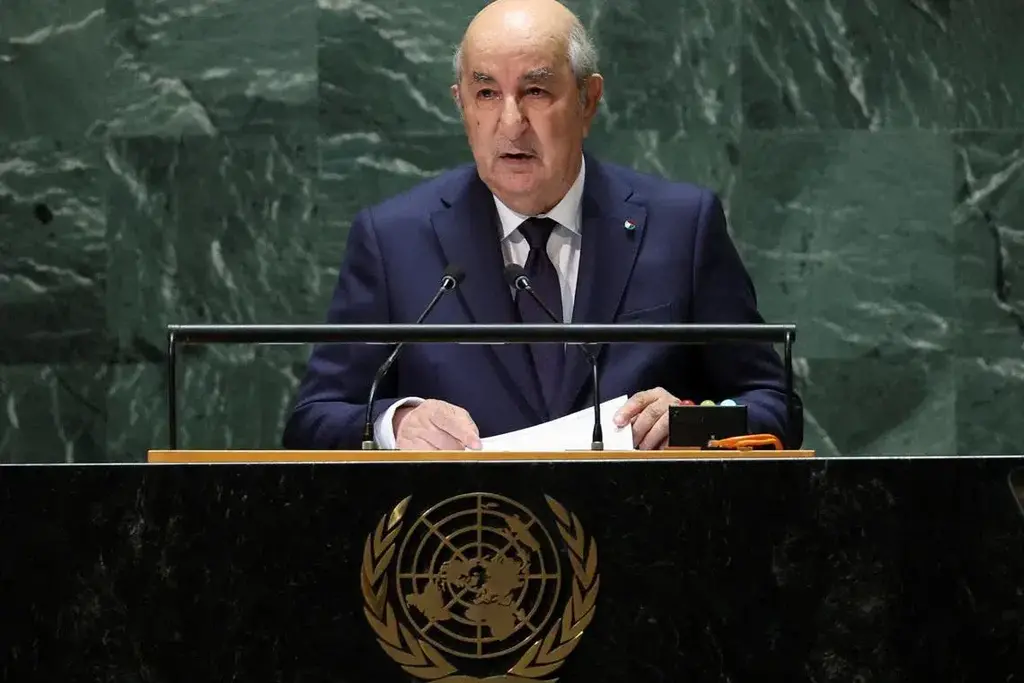
Algeria's President Abdelmadjid Tebboune addresses the 78th Session of the UN General Assembly in New York City
(Photo: REUTERS/Mike Segar/File Photo)
Sudan sharpens the same divergence. The UAE has faced serious allegations from UN investigators and Human Rights Watch concerning networks linked to logistics and support for the Rapid Support Forces; Abu Dhabi firmly denies providing such support. Beyond the dispute over specific allegations, the episode illustrates the broader pattern: in fractured political environments, capital, logistics and informal networks can generate leverage faster than traditional diplomatic mediation. For Algeria, that represents a broader challenge as fragile African states become arenas for increasingly competitive external influence.
Israel is the quiet beneficiary
The Israel angle is the most consequential element of the rupture, yet it must be stated carefully. Israel did not cause the break between Algiers and Abu Dhabi. The rupture reinforces a regional configuration in which Morocco and the UAE are increasingly connected to Israel while Algeria remains outside that network.
The Abraham Accords were never only a set of bilateral trade deals. They created the foundation for overlapping partnerships in intelligence, maritime security, aerial defense and defense technology. The expanding cooperation among Israel, Morocco and the UAE has produced an increasingly dense web of security relationships across parts of North Africa.
These relationships include defense-industrial cooperation, intelligence sharing on common threats, and coordinated diplomatic positioning on key regional questions. Algeria, which maintains a strict non-normalization policy and places the Palestinian issue at the center of its regional identity, stands outside that network.
What Washington should understand
American policy must avoid treating Algeria and the Abraham Accords partners as interchangeable pillars of North African strategy. Algeria remains a significant energy supplier to Europe and retains a role in certain counterterrorism channels. Yet its strategic posture is constrained by a doctrine of autonomy and by deep defense ties with non-Western suppliers. According to SIPRI data, Russia accounted for 48 percent of Algeria’s major arms imports between 2020 and 2024, even as overall Algerian arms imports declined in absolute terms during that period, falling by roughly 73 percent compared with the previous five-year window.
Washington would be well advised to give greater weight to the Morocco-Israel-UAE network as an emerging framework for regional security, trade and technological cooperation, while maintaining pragmatic engagement with Algeria where American interests require it. It should also encourage partners to exercise caution in fragile African theaters so that competitive influence does not deepen conflicts that ultimately benefit hostile actors.
The goal should not be to isolate Algeria permanently. It should be to recognize that the regional architecture is shifting and to align American policy with the partners most willing and able to deepen practical cooperation on shared security and economic interests.
The regional order is changing
The Algeria-UAE rupture does not signal the collapse of Arab diplomacy. It confirms that regional influence is no longer automatically inherited through territorial scale or formal hierarchy. Power is increasingly generated through capital mobility, commercial infrastructure, logistical networks and adaptive security partnerships that cross traditional borders.
Algeria retains substantial assets: territory, energy, a large military and decades of diplomatic experience. Those assets still matter. But they translate less efficiently into the cross-border leverage generated by networked powers. The rupture between Algiers and Abu Dhabi did not create the new regional order. It revealed how far the old one had already eroded.
Israel’s advantage is therefore not a dramatic new alliance or an immediate military windfall. It is the steady expansion of a strategic network in a region where Algeria’s position is becoming more contested. In the emerging map of North Africa and the eastern Mediterranean, Morocco and the UAE are deepening relationships with Jerusalem while Algeria is moving further outside that emerging configuration.
That is why Israel is the quiet winner.
Amine Ayoub, a fellow at the Middle East Forum, is a policy analyst and writer based in Morocco. Follow him on X: @amineayoubx