


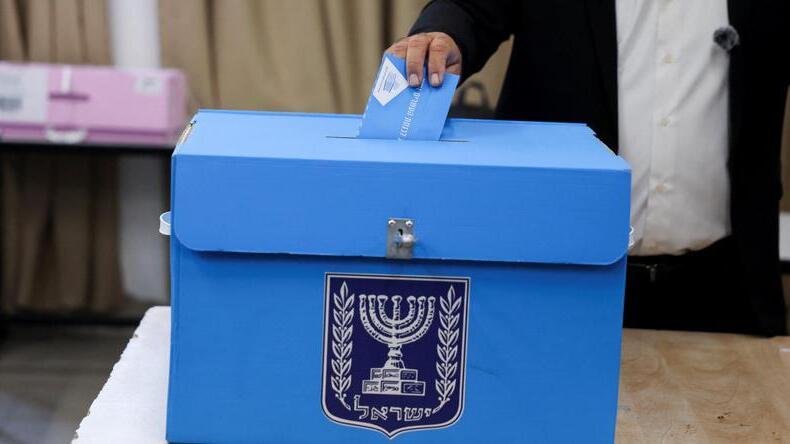
Preliminary counts on October 28 have left no majority. If neither major bloc reaches 61 seats, Arab parties become kingmakers. That invokes a familiar refrain: Israel's deadlock can be solved through bargaining. Ra'am wants budgets for Arab towns, action against organized crime and equal services. Those are legitimate demands. But a party's civic agenda does not answer every question about the movement that produced it.
This is the core problem. Israeli leaders should pursue equality for Arab citizens while examining Ra'am's institutional architecture, ideological lineage and record under pressure. Treating those as mutually exclusive undermines both.
The institutional reality
Ra'am is the political vehicle of the Southern Branch of the Islamic Movement in Israel. This lineage matters. The movement traces itself to the Muslim Brotherhood founded by Hassan al-Banna in Egypt, establishing roots in Palestine during the British Mandate and gaining real influence in Israel from the 1970s onward. In 1996, the movement split. The Southern Branch chose Knesset participation and democratic engagement. The Northern Branch rejected both, boycotted elections and was outlawed in 2015.
The Southern Branch adopted a revised charter in 2018 that articulated a distinct identity. It endorsed "wasatiyyah," moderate Islamic jurisprudence, and "fiqh al-aqalliyyat," Islamic jurisprudence specifically designed for Muslim minorities in non-Muslim states. This represents genuine organizational evolution. Any serious assessment must account for this rather than pretending the movement has never changed.
Mansour Abbas's December 2021 statement carries weight because of who said it. Before an Israeli business conference, Abbas declared that Israel was established as a Jewish state and would remain one. He later clarified that accepting this political reality did not mean abandoning Palestinian national identity. This was significant. No Arab Israeli politician of comparable standing had granted this before. Yet Abbas also made clear that he saw this acceptance as permanent. When pressed on contradiction between Israeli statehood and Palestinian nationalism, he reframed the question: the issue is not whether Israel remains Jewish, but what status Arab citizens hold within that state.
A revised charter and a public statement, however, do not settle the decisive question. The real test is organizational conduct under real pressure. How does Ra'am use political leverage? How does it respond to security crises? What limits does it accept? Do its commitments remain consistent when coalition participation becomes costly?
The role of religious authority
Ra'am's relationship with the Southern Branch's religious leadership requires examination. In April 2022, when Temple Mount tensions escalated, Ra'am's Shura Council issued an order: the party would freeze its Knesset participation and coalition membership. Abbas complied, though he coordinated the freeze with Prime Minister Bennett and Foreign Minister Lapid to minimize practical damage. The Knesset was in recess. The freeze lasted two weeks and ended well before actual governance consequences emerged.
This episode is instructive. It was not proof that Ra'am would automatically abandon a government during security crisis. Abbas arranged the freeze to buy time and preserve the coalition while managing Arab-Israeli pressure. Yet it revealed something crucial: when the Shura Council orders political action, Ra'am executes it. The council's authority is real.
Coalition agreements cannot remain silent on this point. Israeli negotiators must establish in advance how such orders would be handled. What is the trigger? How much latitude does a government retain during security operations? Can the party freeze participation without formal withdrawal? What votes require party presence? These are not ideological questions. They are structural questions requiring concrete answers before, not after, a crisis emerges.
What 2021 showed
The Bennett-Lapid government of 2021 proved that Ra'am cooperation was possible. The party extracted budgets for Arab communities, secured commitments on crime and won funding for municipalities. It participated in security briefings. It abstained on confidence votes rather than voting against the government. It did not withdraw over Gaza operations or other security measures. This is the more important fact: Israeli governments do not need to fear Arab party participation on security matters. They need to establish the terms.
The 2021 experience also exposed the arrangement's limits. Ra'am's legitimacy among Arab voters depended on its willingness to make gains through coalition partnership. But that same legitimacy faced constant challenge from Arab nationalists, Islamist competitors and Palestinian solidarity movements. Every Jewish visitor to the Temple Mount threatened the coalition. Every security operation raised pressure. Abbas required political cover that Bennett and Lapid eventually could not provide as right-wing pressure mounted.
A coalition dependent on Ra'am must account for these external pressures. They are not illegitimate. They are the price of including a party whose constituency faces competing loyalties. The question is whether a government can navigate that terrain with explicit rules.
The regional dimension
Israel's coalition choices have regional implications that deserve serious consideration. The United Arab Emirates, Egypt and Saudi Arabia have designated or treated the Muslim Brotherhood as a terrorist organization. Morocco allows Islamist parties to operate within legal bounds, reflecting a different political calculation. Yet even in Morocco, Brotherhood-linked organizations remain controversial.
This does not mean that Arab partners should dictate Israeli coalition mathematics. It does mean that Jerusalem's strategic choices carry messaging weight. Relying on an Islamist party could raise questions in regional capitals that have confronted Brotherhood organizations at home. Arab governments should not control Israeli elections, but Israel should understand the regional cost of its choices.
The inverse matters equally. Far-right proposals for permanent Gaza settlement or territorial maximalism damage Israel's regional strategy more than any Islamist Arab party could. A false choice between Islamist integration and far-right maximalism should not drive Israeli coalition formation. Both positions can and should be rejected.
The path forward
A broad government including Likud, Yashar and Beyachad represents an alternative route if the arithmetic permits. This coalition would require painful compromises on judicial policy, cabinet posts and Gaza strategy. But parties that disagree on domestic matters but align on core security responsibilities may form more resilient coalitions than narrow majority governments dependent on ideological outliers or single-issue partners.
Yet if Ra'am becomes necessary, Israeli leaders must apply rigorous scrutiny. This requires examining the party's record, internal structures, public commitments and conduct under pressure. Historical roots do not determine future behavior, but organizational history provides evidence about how that future behavior might unfold.
 Amine Ayoub
Coalition agreements with Ra'am should specify expectations on confidence votes, emergency measures and military operations. They should establish how religious rulings from the Shura Council interact with government obligations. They should clarify how security decisions get made when Arab constituent pressure conflicts with government needs.
These provisions would not settle ideological debates about Islamism or integration. They would expose the real terms of cooperation before a crisis rather than discovering them in the midst of one.
The question that demands an answer
Israel's actual choice is not whether Arab citizens deserve equal treatment. They do. It is not whether an Islamist party can cooperate with government. The 2021 experience proves it can. The choice is whether the terms of cooperation are sufficiently clear, durable and compatible with the decisions a government must make.
A mature democracy pursues civic equality without suspending political scrutiny. It demands that potential partners explain their internal constraints and decision-making structures before, not after, joining a government. It establishes rules for managing pressure that coalition members will inevitably face.
That is the Muslim Brotherhood question at the heart of Israel's coalition crisis. It deserves an answer grounded not in panic or wishful thinking, but in evidence, institutional clarity and sober assessment of what each partner can be expected to do when the next hard decision arrives. Israeli negotiators must either demand that answer or reject coalition with Ra'am altogether. The middle ground of treating the question as either illegitimate or unanswerable is strategically indefensible.
- Amine Ayoub, a fellow at the Middle East Forum, is a policy analyst and writer based in Morocco. Follow him on X: @amineayoubx