


More than two decades into his dominance of Turkish politics, President Recep Tayyip Erdogan continues to demonstrate how a constitutional republic can be systematically remodeled from within. Rather than relying on unconventional mechanisms like an outright military coup, the current administration fuses majoritarian elections with the gradual institutional capture of independent state bodies.
This phenomenon, frequently analyzed by political scientists as competitive authoritarianism, allows the executive to maintain institutional continuity while structurally tilting the political playing field. Although international observers previously anticipated that the constitutional two-term limit would mandate retirement, the ruling Justice and Development Party (AKP) has initiated a precise legal path to circumvent this boundary. By coordinating an early parliamentary renewal, the governing coalition intends to extend Erdogan’s executive tenure until 2033.
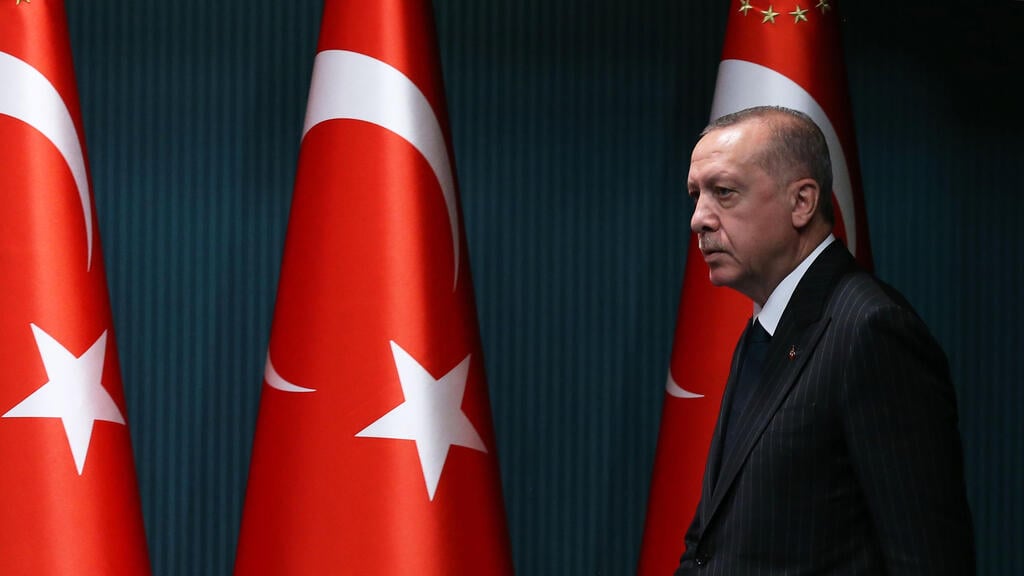
Turkish President Recep Tayyip Erdogan
(Photo: AFP)
The mechanics of Article 116
The strategic framework for this survival mechanism was made public by Mehmet Uçum, Chief Legal Advisor to the Presidency. In an analytical column published by the state-run Anadolu Agency to mark the eighth anniversary of the executive presidential system, Uçum detailed the utility of Article 116 of the Turkish Constitution. The core argument relies on a specific provision: if the Grand National Assembly votes to renew elections during a president’s second term, an act requiring a three-fifths majority of 360 out of 600 seats, the incumbent is permitted an exceptional third candidacy without a formal constitutional amendment.
The administration has identified April 16, 2028, as the target date for this vote, falling roughly one month before the scheduled expiration of the current mandate. By dissolving parliament just weeks ahead of schedule, Erdogan would technically serve an unfulfilled term. This maneuver resets the constitutional counter and clears the path for an additional five-year tenure.
Systemic Islamization of the state
This institutional adjustment is designed to secure a deep ideological and systemic transformation within the state architecture. Over the past decade, the traditional separation of powers has been replaced by a centralized executive structure that has recalibrated Turkey's secular foundation. The Directorate of Religious Affairs, known as the Diyanet, has experienced unprecedented budgetary growth. Under the 2026 central government budget allocations, the Diyanet was granted 174.3 billion liras. This immense figure exceeds the combined budgets allocated to the Ministry of Internal Affairs and the Ministry of Foreign Affairs, providing the directorate with massive resources to act as a primary tool for social engineering.
Simultaneously, the Ministry of Education has institutionalized the Century of Turkey Education Model. This sweeping curriculum overhaul replaces core secular pillars with state-sanctioned theological programs across public schools. In foreign policy, this ideological consolidation manifests in the formal protection and hosting of Hamas political bureaus in Istanbul and the systematic cultivation of regional Muslim Brotherhood networks.
Judicial warfare and opposition disarray
Executing the Article 116 strategy requires the containment of municipal opposition strongholds, a task increasingly delegated to the judiciary. A notable instance occurred during the July 2026 security operations in Ankara’s Çankaya district, a historic base for the secular opposition. The intervention resulted in the detention of twenty-seven municipal officials. It specifically targeted the administration of the newly elected mayor, Hüseyin Can Güner, on contested allegations of fiscal mismanagement and tender rigging. Such judicial interventions freeze municipal resources, disrupt local administration, and complicate governance for opposition leaders who secured unexpected victories during recent regional elections.
Concurrently, the ruling coalition benefits from persistent internal fragmentation within the opposition Republican People’s Party (CHP). Following the election of a reformist faction under Özgür Özel, subsequent appellate court decisions challenged the party's congress outcomes, creating leadership disputes with the former chairman, Kemal Kılıçdaroğlu. This internal paralysis unfolds against a complex economic backdrop. The Turkish Statistical Institute reported official annual inflation at 32.11 percent for June 2026, though independent research bodies like the Inflation Research Group estimate the true consumer price index expansion closer to 51.49 percent.
Data from the June 2026 MetroPOLL Turkey's Pulse survey highlights the volatility of this environment, indicating that in a hypothetical scenario where an independent reformist faction breaks away, it could capture 24.9 percent of national support. By contrast, the ruling party retains a baseline of 19.9 percent and the legacy opposition collapses to 3.6 percent. This projection confirms that a cohesive secular coalition presents an existential challenge to the administration's long-term retention of power.
Reevaluating the architecture of executive stability
Proponents of the current executive system defend these constitutional adjustments as essential mechanisms for political stability, asserting that a consolidated presidency insulates the nation from the fragile parliamentary coalitions of the late twentieth century. However, an objective assessment suggests this centralized stability remains precarious. Genuine constitutional governance requires a level playing field. Leveraging structural loopholes to extend an executive's tenure while placing judicial pressure on municipal leaders shifts the state configuration away from a balanced democracy toward a consolidated electoral autocracy.
This evolutionary trajectory occurred in distinct institutional phases. An early era of economic liberalization and pro-Western messaging gradually transitioned after the 2016 attempted coup into an extensive reorganization of the secular judiciary. This shift centralized administrative authority and provided the groundwork for the current 2028 legislative stratagem.
Strategic implications for regional security
A prolonged, uninterrupted executive presidency lasting into the next decade creates substantial strategic complications for both Western capitals and regional partners, including Israel. Under the maritime framework known as the Blue Homeland doctrine, Ankara has asserted extensive jurisdictional claims across the Aegean and Eastern Mediterranean. This posture directly challenges Greek and Cypriot maritime boundaries. It also introduces friction into European energy exploration and presents a structural barrier to alternative natural gas pipelines intended to link Levant basin reserves to European markets.
Furthermore, the central government retains the capacity to manage migration flows into the European Union. By utilizing its control over millions of refugees, Ankara can effectively secure fiscal and political agreements from Brussels. Within NATO, Turkey acts as a transactional partner, frequently using its institutional veto power over alliance expansion and defense integration to extract unilateral concessions. Simultaneously, the state expands its strategic defense procurement and alternative financial networks with non-Western revisionist powers.
Parameters for a recalibrated Western strategy
Western planners must adopt strict conditionality rather than passive accommodation. Diplomatic engagement should target secular metropolitan hubs, effectively bypassing central state ministries to empower local democratic Turkish civil society groups directly. Furthermore, international security cooperation must tie future defense technology transfers to verifiable regional commitments. Washington and Brussels must utilize economic levers, customs union negotiations, and intelligence sharing mechanisms to signal that institutional regression carries severe consequences. Ultimately, the path outlined for April 2028 represents a structural project to lock in an assertive, revisionist framework. Allowing this political maneuvering to go unchallenged risks abandoning Turkey's remaining democratic factions while permanently destabilizing the Mediterranean basin. The alliance cannot afford to treat these profound geopolitical shifts as immaterial domestic constitutional debates within a volatile region.
- Amine Ayoub, a fellow at the Middle East Forum, is a policy analyst and writer based in Morocco. Follow him on X: @amineayoubx