

Shortly after television networks release their exit polls, assuming the projections are not wildly inaccurate, Israel's politicians and party leaders will have to abandon their campaign slogans, set aside the promises they made to voters and confront the grim reality of political uncertainty. If the polls are right, Israel could once again find itself in a political deadlock. No victory, no defeat, just another election without a clear winner.
Since 2019, Israel has endured a succession of damaging election cycles that have weakened its governing institutions and taken a heavy toll on public life. Political discourse has grown more toxic with every campaign, and the public has paid the price. Another inconclusive election would threaten the country's stability and future, leaving its leaders preoccupied with political survival rather than governing, rebuilding institutions or addressing urgent national challenges.
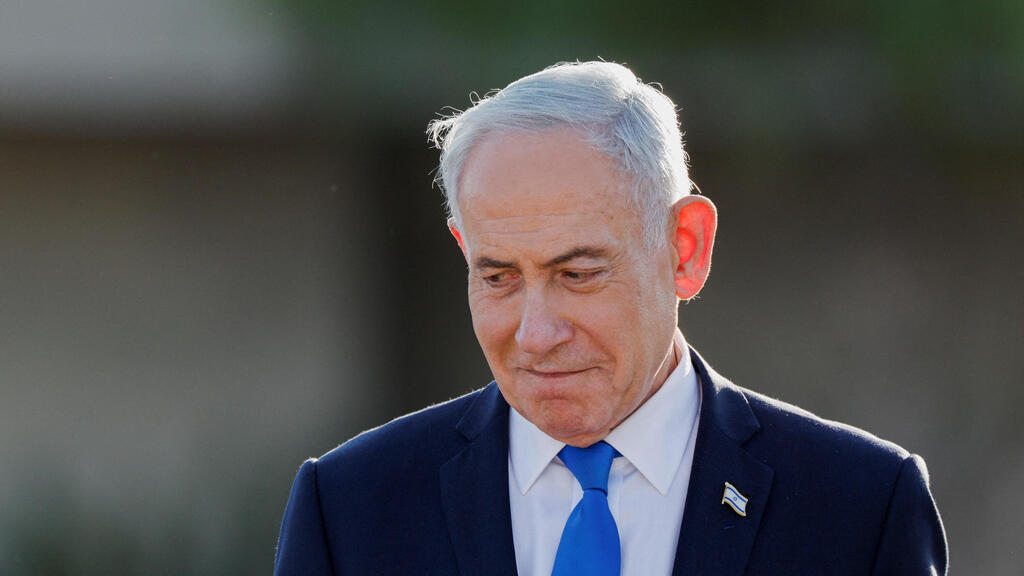
Prime Minister Benjamin Netanyahu
(Photo: REUTERS/Amir Cohen)
One thing must be made clear: A political deadlock, an inconclusive result or simply avoiding defeat could all work in Prime Minister Benjamin Netanyahu's favor. His political bloc faces a much more difficult path to a parliamentary majority than the parties seeking to replace him. Apart from polls conducted on behalf of interested political parties, there appears to be little prospect of Netanyahu securing the 61 seats needed to form a government. His objective, therefore, may not be to win outright, but to prevent his opponents from forming a government of their own.
The advantage is obvious. If neither side can assemble a governing majority, or if Israel is forced into yet another election, Netanyahu stays in office. He may be heading a caretaker government, weakened, constrained and without a renewed public mandate, but he remains prime minister. The problem is that a caretaker administration, or a fragile coalition cobbled together merely to break the stalemate, would struggle to make the difficult decisions necessary to restore Israel's security and put the country back on track.
Israelis are already exhausted by the prospect of another election. Three years after the October 7 attacks and Netanyahu's promise of "total victory" in Gaza, nearly every major security front remains unresolved. The greatest challenge is Iran. Yet Netanyahu is now asking Israelis to place their faith in President Donald Trump's promises to bring down the Iranian regime and eliminate its nuclear program. This is the same Trump who, in June, halted Israel's military campaign in favor of pursuing an agreement with Tehran, before Israel had achieved any of the three objectives it had set for the war.
Even some of Netanyahu's most outspoken supporters were furious at the time. Pro-Netanyahu commentator Yinon Magal said Trump had come out looking like a loser. Fellow commentator Shimon Riklin described the decision as "complete surrender," while Yaakov Bardugo, another prominent Netanyahu ally and a Likud candidate, argued that the agreement was worse than the nuclear deal reached under former President Barack Obama. So are we really supposed to take seriously the promise that Trump and Netanyahu will now finish the job together?
Could a unity government break the cycle?
Despite everything, Israel must avoid being dragged into another election that offers no guarantee against yet another round of voting. A national unity government remains a reasonable option, even if the very idea of political unity has become almost a dirty word in some circles. Political reality may leave the country's rival blocs with little choice but to govern together.
Such an arrangement would require painful compromises on both sides. The parties seeking to replace Netanyahu would have to consider forming a government with Likud, while Likud would have to accept that Netanyahu cannot remain prime minister at any price or under any circumstances, particularly if his political bloc wins fewer seats than its rivals. Yes, Netanyahu can be replaced. His successor could come from Likud itself or from elsewhere on the political right. Israel will survive having a different prime minister.
Is a unity government a realistic possibility? I have serious doubts. Israel is stuck in a political swamp, and the public is desperate for someone, or something, to pull it out and offer the prospect of a more normal future. But another deadlock should not be treated as an unavoidable outcome. It would represent a failure of Israel's political system, not simply an unfortunate election result.
That is why, before we enter the voting booth, we must look for broader common ground rather than continue gambling with the country's future through one election after another. Each new round deepens Israel's divisions without resolving the fundamental challenges it faces. A political stalemate may serve the interests of those determined to remain in power, but it does nothing to serve the country itself.