


Major disagreements between IDF Chief of Staff Lt. Gen. Eyal Zamir, Prime Minister Benjamin Netanyahu and Defense Minister Israel Katz during a meeting Monday at Palmachim Air Base could raise questions about Zamir's continued tenure and potentially cost him a fourth year in the post.
During the meeting, Zamir opposed a directive from the political leadership to continue IDF operations in the West Bank city of Hebron following Friday's attack, in which two soldiers were killed. Zamir argued that the operation had run its course militarily, partly because no weapons had been found. He also maintained that residents evacuated from their homes during the operation should be allowed to return on legal grounds.
Gallery
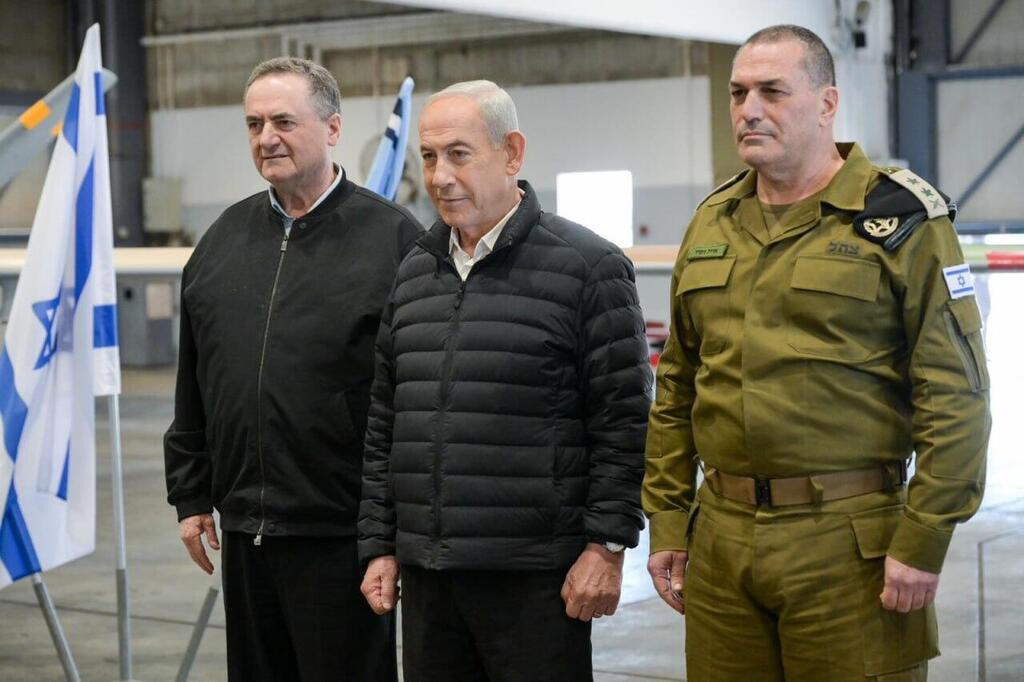
Defense Minister Israel Katz, Prime Minister Benjamin Netanyahu and IDF Chief of Staff Lt. Gen. Eyal Zamir at Palmachim Air Base
(Photo: GPO)
In line with the chief of staff's position, the IDF halted the operation. Netanyahu and Katz ordered it resumed Monday, directing the military to maintain the cordon around Hebron as a measure of deterrence and to impose a cost for the attack.
Katz explained his position by saying the investigation had not yet been completed.
"Beyond the clear considerations of deterrence and imposing a cost, the investigation into the attack has not yet been exhausted," Katz said. "We still do not know who among the terrorists' associates knew or did not know about the attack. Therefore, it is inconceivable to end the operation just one day after it began."
The sequence of events means the military did not carry out the political leadership's initial directive to continue the operation, requiring another order Monday to resume it.
The confrontation illustrates the depth of the crisis in relations between the chief of staff and the political leadership, particularly Katz. The tensions did not emerge in recent days, but they have reached a new peak in recent weeks.
With polls set to open Tuesday, the election results could also affect Zamir's future. His relationship with Netanyahu, and especially Katz, has reached a low point. According to current assessments, if the two remain in power, they could move to end his tenure.
At the Palmachim meeting, Zamir argued that the immediate operational objectives in Hebron had already been achieved and that there was no justification for continuing a broad offensive operation in the city's densely populated neighborhoods.
He also presented intelligence suggesting that the attackers may have been directed from abroad, including by Hamas operatives in Turkey, and argued that the military should conclude the operation and redirect its forces and attention to other areas.
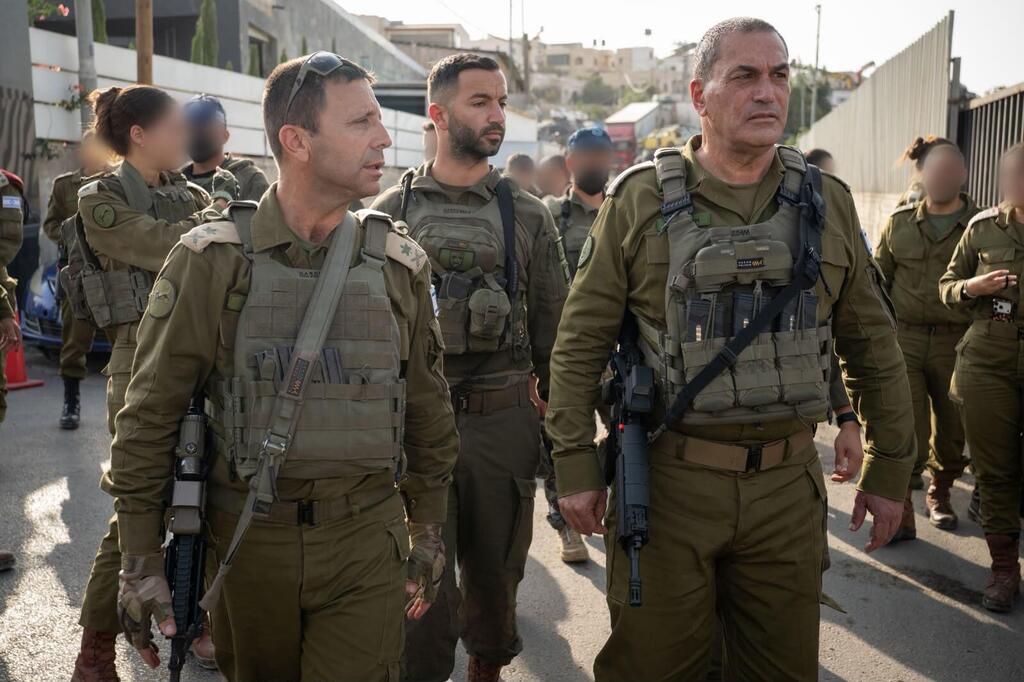
Zamir at the scene of the terrorist attack that catalyzed the Hebron operation
(Photo: IDF)
Zamir's position was reinforced by commanders on the ground.
Commanders in the Hebron sector said the operation had exhausted its military purpose after troops searched the area without locating weapons. They argued that keeping forces deployed in the city without additional findings would provide no operational benefit and would not advance the mission's objectives.
Their assessments supported Zamir's argument that a distinction should be made between the need for a forceful response to the attack and the continuation of military activity that was no longer producing operational results.
Beyond the operational and legal considerations, Zamir was concerned about the risks to soldiers' lives, unnecessary operational friction and the possibility that prolonging the operation would increase the danger of escalation.
The political leadership, by contrast, viewed maintaining the cordon and keeping residents out of their homes as part of the necessary response to the attack.
The disagreement escalated into a heated exchange in the presence of several senior generals. Ultimately, the decision was made to continue the operation.
Disagreements over Iran
Differences also exist between the chief of staff and the political leadership over Iran, although the dispute is not necessarily about whether Israel will need another round of fighting. Rather, it centers primarily on timing and how Israel manages its confrontation with Tehran.
As previously reported over the weekend, senior IDF officials have made clear that there is no reason to attack Iran before the elections unless intelligence indicates that Tehran is preparing to strike Israel.
The military is monitoring developments and preparing accordingly, but commanders want to avoid a situation in which heightened military alertness escalates into war because one side misreads the other's intentions.
IDF officials are also concerned about the conduct of the political leadership.
While the military seeks to maintain a high level of readiness without sliding into escalation, Netanyahu and Katz have continued making public statements about the possibility of an Israeli attack.
Zamir has warned about the potential consequences of those statements, which could heighten Iranian suspicions that Israel is preparing to strike and lead to a miscalculation.
Under such circumstances, the two sides could become trapped in a dangerous cycle of actions and reactions.
Israel might detect Iranian military preparations and raise its alert level, while Iran could interpret Israel's heightened readiness as preparation for an attack and respond accordingly.
A misunderstanding of the other side's intentions could trigger a confrontation that neither side necessarily planned.
That is the danger Zamir is seeking to avoid on the eve of the elections.
The intelligence involved is highly sensitive, making it difficult to provide a complete picture. Nevertheless, current assessments suggest Iran continues taking steps that could eventually require Israel to enter another round of fighting.
Netanyahu and Katz denied reports Monday evening that they intended to dismiss Zamir, calling the claims false.
"I recommended Zamir's appointment as IDF chief of staff," Katz said. "We are working together for the security of the State of Israel, with unprecedented historic achievements, and that is how I intend to continue working in the future."