


A closer examination of the timing and circumstances surrounding President Donald Trump's latest remarks about reviving normalization between Israel and Saudi Arabia suggests they were largely spontaneous. Trump was speaking with reporters when one asked whether the issue was back on the agenda, and the president simply answered. There is little indication that his response reflected any concrete diplomatic development.
More likely, Trump believes that Saudi Arabia's growing difficulties in confronting the Houthis have created an opportunity for greater Israeli assistance, potentially generating enough goodwill in Riyadh to persuade the Saudis to abandon their longstanding condition for normalization: negotiations with the Palestinians toward a two-state solution. For now, however, there is considerable reason to doubt that Trump's comments signal a meaningful breakthrough in Israeli-Saudi relations.
Gallery
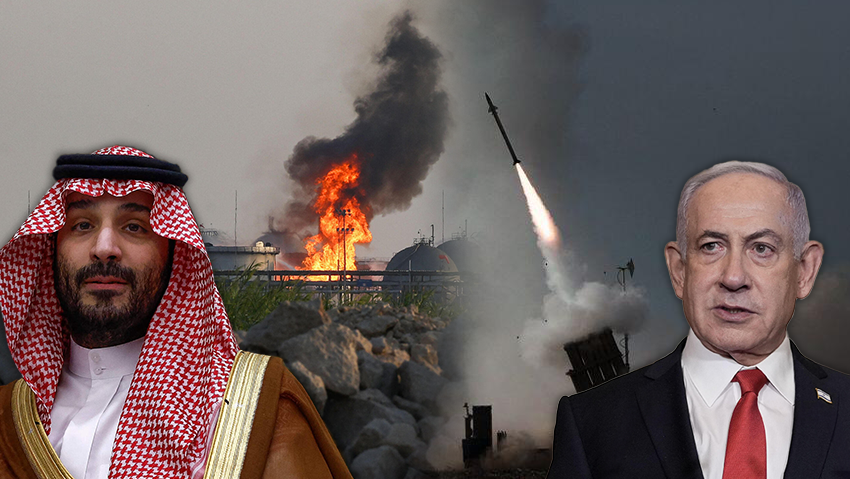
Saudi Crown Prince Mohammed bin Salman and Prime Minister Benjamin Netanyahu, with an Iron Dome battery and a fire at an oil facility in Riyadh following a Houthi attack
(Photo: Oliver CONTRERAS/AFP, Evelyn Hockstein/POOL/AFP, IDF)
Speaking to reporters on Friday, Trump said Israel had already assisted Saudi Arabia in its operations against the Houthis. Asked whether the Abraham Accords were back on the table, he replied: "Yes, I think so. Maybe more than ever before. Saudi Arabia is very happy to receive Israel's support and our support." Saudi Arabia has indeed been receiving military assistance from Israel, although that support has so far focused on intelligence concerning potential targets.
According to current assessments, the Houthis have intensified their attacks on Saudi Arabia for two main reasons. The first is their desire to force Riyadh to lift the blockade it maintains against them. The second is an Iranian request for the Houthis to attack Saudi Arabia, intended to pressure the kingdom into urging Washington either to refrain from striking Iran or to pursue an agreement with Tehran along the lines of the conciliatory memorandum of understanding signed in June. That understanding subsequently collapsed after Iran violated its terms.
Israel has two immediate reasons to assist Saudi Arabia. First, the Americans have asked the Israel Defense Forces to help the Saudis. Second, Prime Minister Benjamin Netanyahu's government wants to prevent Washington from making concessions to Iran under pressure from Riyadh, particularly as the kingdom faces continued Houthi attacks.
Trump says the Abraham Accords are back on the table and Israel has helped Saudi Arabia against the Houthis
(Video: X)


There is also a broader Israeli interest: creating a sense of Saudi indebtedness that could help revive the normalization process interrupted by Hamas' October 7, 2023, attack on Israel.
But what Saudi Arabia needs most goes considerably beyond the intelligence assistance it is already receiving from Israel. Providing that additional support would be difficult for Jerusalem while multiple fronts of fighting remain active.
The Saudis urgently need early-warning radar systems and air-defense batteries capable of countering different types of aerial threats, including Iron Dome, David's Sling and even Arrow 2 interceptors. The Houthis are attacking Saudi Arabia with ballistic missiles, cruise missiles and explosive-laden drones, requiring a combination of defensive capabilities.
These systems are particularly important for protecting major airports in Riyadh and Dhahran, as well as critical energy infrastructure along the Red Sea coast. Among the most sensitive sites are facilities near the port city of Yanbu and pumping stations along Saudi Arabia's East-West oil pipeline.
That pipeline allows Saudi Arabia to export oil through the Red Sea instead of routing shipments through the Strait of Hormuz. From there, Saudi crude can be shipped to markets in Asia or transported through the Suez Canal to Europe. Protecting this infrastructure is therefore essential to maintaining the kingdom's energy exports.
People stand in line before an explosion: The moment a Houthi missile strikes an airport in Riyadh
(Video: Reuters)
Israel, however, is in no hurry to offer Riyadh these air-defense systems. Even if Saudi Arabia formally requests them, Jerusalem would likely consider such a move only if Crown Prince Mohammed bin Salman and the Saudi royal family offered something of exceptional strategic value in return, sufficient to justify parting with defensive systems that Israel itself urgently needs.
It is worth recalling that, according to foreign reports, Israel has already supplied the United Arab Emirates with radar detection systems and an Iron Dome battery, and possibly additional capabilities, helping the Gulf state defend itself against Iranian missile and drone attacks.
The circumstances surrounding the UAE, however, are fundamentally different. The Emirates is a signatory to the Abraham Accords, maintains full diplomatic relations with Israel and provides significant assistance to Jerusalem on matters relating to Gaza. Israel therefore has good reason to accommodate Emirati requests, even at a time when every Iron Dome battery is important to its own defense.
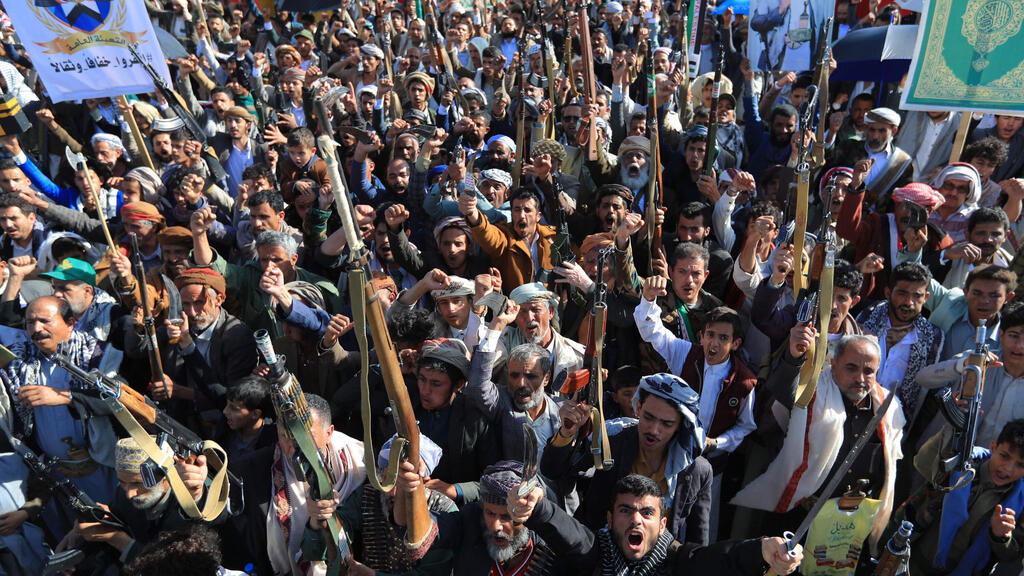
Houthi rebels in Sanaa, Yemen. European countries are also helping defend Saudi Arabia's airspace
(Photo: Mohammed HUWAIS / AFP)
Saudi Arabia, by contrast, continues to insist that Israel enter negotiations with the Palestinian Authority over the establishment of a Palestinian state and a resolution of the Israeli-Palestinian conflict based on the principle of two states for two peoples. Riyadh has not indicated that it is prepared to abandon that demand.
If the Saudis were to discreetly signal that they are willing to drop this condition and normalize relations with Israel, as Trump appears to believe is possible, the current Israeli government, and potentially the government formed after the upcoming elections, might well respond favorably to a Saudi request for air-defense assistance.
But Riyadh is unlikely to rush into such a decision, particularly because European countries have begun helping protect Saudi airspace in recent weeks. Greece was the first to step forward, sending Patriot air-defense batteries to the kingdom. French President Emmanuel Macron has also fulfilled his pledge to provide assistance, dispatching air-defense systems to Saudi Arabia two days ago, although the specific systems supplied have not yet been disclosed.
Whether those European reinforcements will be sufficient to meet Saudi Arabia's defensive needs remains unclear. If they prove inadequate, Riyadh may indeed turn to Israel for additional protection.
For now, however, Trump's vision of renewed Israeli-Saudi normalization emerging from the kingdom's confrontation with the Houthis appears premature.