


The headline from the inaugural "Board of Peace" summit in Washington was unmistakable: Morocco has officially broken the Arab taboo. By pledging to deploy military and police personnel to the International Stabilization Force (ISF) in Gaza, King Mohammed VI has made Morocco the first Arab nation to commit "boots on the ground" for the post-war order.
For the Trump administration, this is the cornerstone of a new architecture for the Middle East. For Morocco, it is a high-stakes geopolitical masterstroke—a "Gaza Gamble" designed to cement its status as the West’s indispensable security partner while permanently shifting the scales in its own backyard.
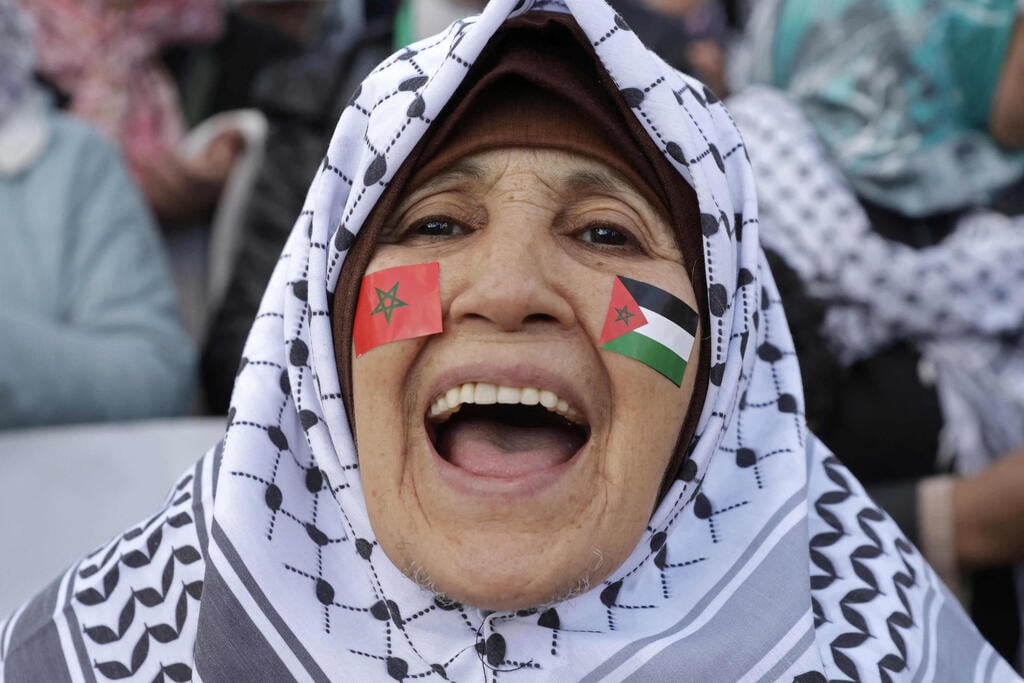
(Photo: by Abdel Majid BZIOUAT / AFP)
The Abraham Accords 2.0
While the deployment is framed under the humanitarian banner of reconstruction, the underlying logic is pure realpolitik. This is the Abraham Accords 2.0 in action. By stepping into a role that other Arab powers have shunned, Rabat is signaling that its 2020 normalization with Israel was not a static agreement but a dynamic security alliance.
The message to Washington is clear: Morocco is the only regional actor willing to do the heavy lifting required by the "Board of Peace" plan. This move is a direct investment in Rabat’s relationship with the United States. In exchange for securing the Gaza "Riviera" and managing the chaos of reconstruction, Morocco is positioning itself to demand even firmer American support for its sovereignty over Western Sahara—the "first, second, and third" priority of Moroccan foreign policy.
Breaking the Iranian Crescent
From the perspective of regional security, Morocco’s presence in Gaza serves a critical strategic objective: the containment of Iranian influence. By deploying a moderate, monarchical security force, the ISF—under the leadership of Maj. Gen. Jasper Jeffers and with Moroccan "boots"—effectively replaces the radical elements that have held Gaza captive for nearly two decades. Unlike a vague UN peacekeeping mission, a Moroccan-led Arab contingent carries local religious and cultural legitimacy that Western forces lack. Their presence is a direct challenge to the "Resistance Axis," providing a blueprint for how Arab states can reclaim territory from Tehran's orbit without direct Israeli governance.
A new Mediterranean order
The scale of the "Gaza Gamble" is immense. Plans discussed in Washington include the removal of 70 million tons of rubble and the development of a "Mediterranean Riviera." But before a single hotel can be built, security must be absolute. The ISF plans to deploy 20,000 soldiers and 12,000 police, beginning in the Rafah sector.
Morocco’s contribution is not just symbolic; it is structural. Moroccan gendarmes and soldiers, trained in counter-insurgency and urban stability, will provide the "middle layer" of security that prevents a Hamas resurgence. This is a role that Egypt and Jordan—while pledging to train Palestinian police—have been hesitant to fill with their own active-duty personnel.
The risks at home
Of course, the gamble is not without its domestic perils. Public opinion in Morocco remains deeply sympathetic to the Palestinian cause, and the sight of Moroccan uniforms in Gaza could be weaponized by the "Gen Z" protest movement or Islamist opposition groups. However, the Palace is betting that the economic and diplomatic rewards—specifically the final, irreversible international recognition of the Sahara as Moroccan—will outweigh the domestic friction.
Furthermore, by integrating its military into a US-led international force, Morocco is effectively "NATO-izing" its role in the Middle East. This deepening of ties with the US and Israel acts as a powerful deterrent against its eastern neighbor, Algeria, which continues to align itself with the Russian and Iranian blocs.
The indispensable kingdom
The "Board of Peace" is a bold experiment in post-war governance, and Morocco has chosen to be its primary laboratory. By sending troops to Gaza, Rabat is not just helping to rebuild a city; it is rebuilding the regional order.
If successful, the Gaza Gamble will prove that the Abraham Accords can survive—and even thrive—through the fire of conflict. Morocco is no longer just a North African kingdom; it is a global security player, a stabilizer of the Levant, and a bulwark against extremism.