

Not with official speeches or revolutionary slogans, but with a broad, cross-class civic protest rising from the soft underbelly of Iranian society: an unbearable cost of living, the collapse of basic services, and a widening gap between citizens struggling to survive and a regime that continues to invest its resources far beyond the country’s borders.
The current wave of protest is not focused on a single issue and is not led by a charismatic figure. Truck drivers, social workers, retirees, merchants, and small business owners are all taking to the streets- each for their own reasons, yet united by a shared sense of rupture. This is not an ideological protest in the classical sense, but an existential one. A protest by citizens who feel that the unwritten social contract between themselves and the state expired long ago.
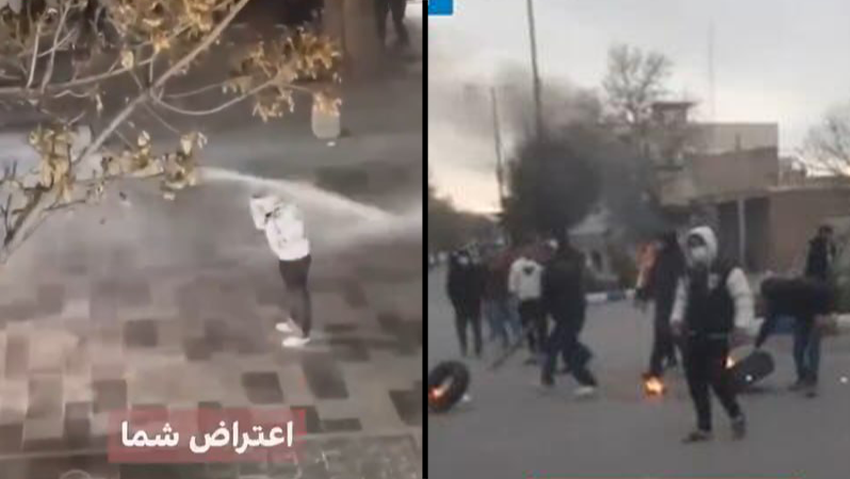
Iran protests
While the regime attempts to frame these events as “isolated disturbances” or the result of foreign conspiracies, the reality on the ground tells a different story: a weary, exhausted society that no longer believes in promises and is no longer deterred by threats. Runaway inflation, shortages of electricity and water, the collapse of purchasing power, and the absence of any economic horizon have turned daily life into a prolonged struggle for survival.
It is precisely here that a familiar historical question returns to the fore: will the regime once again attempt to use an “external enemy” to rally the ranks and suffocate internal dissent? This is not a theoretical speculation. In 1980, when the Islamic Republic faced internal collapse, the Iran–Iraq War provided Khomeini with a lifeline. Under the banner of the “imposed war,” criticism was crushed, political rivals were eliminated, and a narrative of sacrifice and sanctity was constructed- one that unified the public for nearly a decade.
But today’s Iran is not the Iran of the revolution’s early years. The younger generation, Gen Z and millennials, no longer respond to the rhetoric of sacrifice or religious mission. For them, the enemy is not beyond the border but within the system itself: in corruption, detachment, and a total loss of governmental accountability. Protest, in their eyes, is not betrayal but a basic right.
 Dana SameahPhoto: Studio Yak
The regime’s gamble on external distraction or intensified internal repression may prove to be a double-edged sword. When protest stems from hunger, economic insecurity, and a sense of having no future, it does not disappear under threats. On the contrary, every attempt at silencing only underscores the depth of the rift between a government clinging to power and a society that has already changed.
Ultimately, the real choice facing Iran’s leadership is not between peace and war, but between big structural change and continued survival through coercion. Investing in citizens would require relinquishing parts of revolutionary ideology and regional priorities- a step the regime struggles to take. Relying on repression and outdated narratives may buy temporary calm, but at the cost of an ongoing erosion of legitimacy.
History teaches that regimes can survive protests, but they collapse when they lose the public. The protest now sweeping Iran’s streets is not a fleeting moment; it is a symptom. A symptom of a society that is no longer willing to pay the price for the regime’s survival.
Dana Shemash is a researcher and lecturer on Iran, focusing on civic protest, deep social processes, and struggles for freedom in Iranian society