


At the moment, no military or diplomatic way out is visible from the bloody deadlock imposed on us by U.S. President Donald Trump on the Lebanon front, especially for residents of the Galilee. The lack of a way out is causing many people there to lose hope and abandon this beautiful and fertile region. But both history and Israel’s own experience show that situations like this can be overcome through a combination of consistent and determined military and diplomatic initiative.
But to see the outlines of a possible solution to the current situation in Lebanon, several facts must first be acknowledged.
Gallery
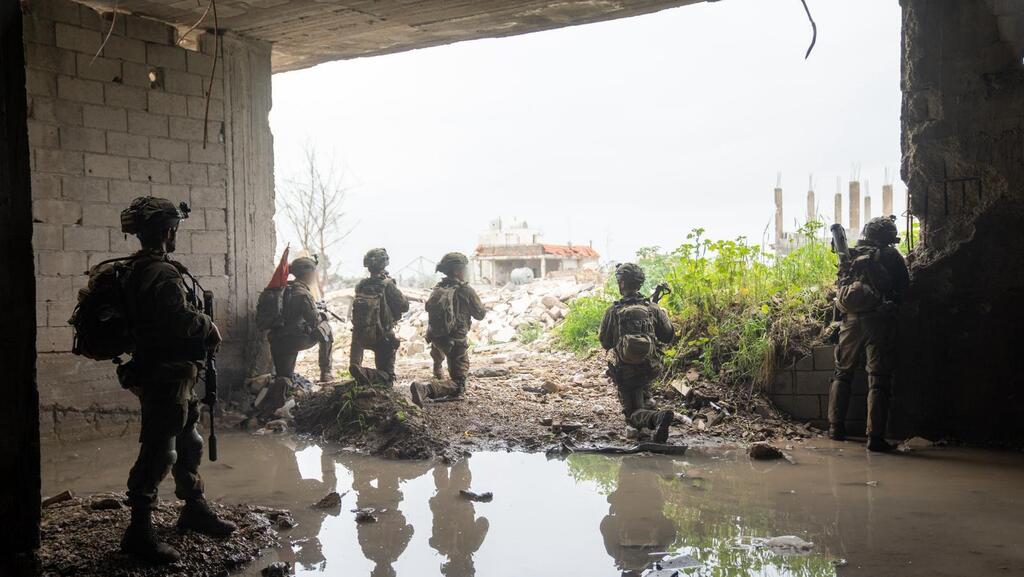
Golani troops in Lebanon; the military initiative is limited by Trump, while diplomacy is stalled
(Photo: IDF Spokesperson’s Unit)
First, Hezbollah is in distress. Its leaders and operatives are desperate, fighting for the organization’s survival and, to a large extent, for their own lives. The Iranians can barely assist it under the current circumstances, so Hezbollah operatives are forced to fight with what they have: mainly light weapons, several thousand short-range rockets of 40 to 70 kilometers, mortars, attack drones, explosive drones and anti-tank missiles.
With this arsenal, Hezbollah can harm IDF forces operating in southern Lebanon and make life miserable for northern residents. But it cannot inflict significant damage on the State of Israel or confront the IDF’s air and ground power, should a decision be made to use it with the required force.
Pressure from home
Another element of Hezbollah’s distress is the loss of legitimacy for its presence and armed activity on Lebanon’s sovereign territory. Lebanon’s current government has formally decided to disarm it, and public sentiment across all communities and in the Lebanese media is against the organization and its activity on behalf of Iran. Among the Shiite community, Hezbollah currently enjoys only partial support on religious and political grounds, led by Nabih Berri, the speaker of Lebanon’s parliament and head of the Amal movement, which also supports Hezbollah. But many Shiites, especially residents of southern Lebanon who were forced to flee their homes, are openly criticizing Hezbollah and demanding that it stop its activity.
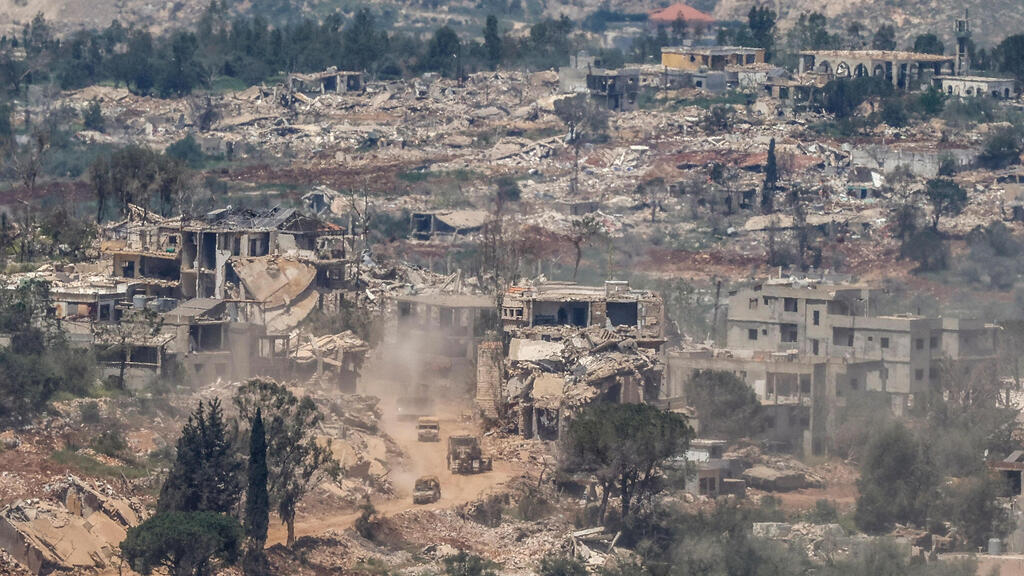
Hundreds of thousands of villagers are displaced and homeless, with some anger directed at Hezbollah
(Photo: Jalaa MAREY / AFP)
The IDF is striking Hezbollah strongholds throughout Lebanon. The air force is not bombing Beirut and is operating mainly in southern Lebanon, as are the IDF’s ground forces. But the destruction of homes and villages south of the Litani River is creating heavy pressure on Hezbollah from Shiite villagers who fled, or were forced to flee, southern Lebanon in the hundreds of thousands. They are now displaced and nearly without aid, mainly in the Beirut area and south of it.
Lebanese media reports indicate that what is especially painful for the Shiite villagers of southern Lebanon is the destruction of homes. Every house destroyed means the loss of shelter for an entire Shiite family, creating frustration and anger that is directed, at least in part, at Hezbollah.
Hezbollah prepares for civil war
What, then, remains in Hezbollah’s arsenal to fend off the physical danger it faces from the IDF and the loss of legitimacy among most Lebanese citizens?
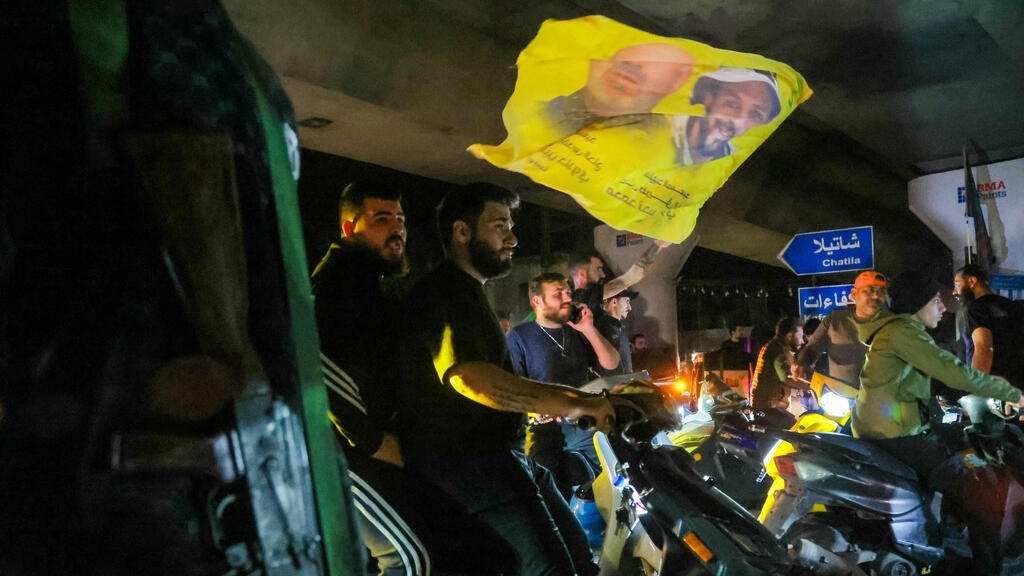
Hezbollah supporters celebrate the ceasefire; the goal: to take political control of Lebanon
(Photo: ibrahim AMRO / AFP)
As noted, Hezbollah still has military capabilities, and its desperate operatives, including leader Naim Qassem, understand that they are fighting for their survival and, in their view, for the principles of their religion. That gives them motivation and a willingness to sacrifice. IDF troops have encountered this several times in southern Lebanon. Another factor preserving Hezbollah’s power is the support it still enjoys among significant parts of the Shiite community. This allows Hezbollah to recruit children to serve its fighters and raise money to finance its activity inside Lebanon and from Shiite Lebanese abroad.
A third element in Hezbollah’s ability to project power is the threat of civil war. Recently, senior Hezbollah officials have repeatedly threatened the government in Beirut and other Lebanese communities with civil war. This, along with other signs, indicates that Hezbollah is preparing for civil war inside Lebanon, apparently including the takeover of Beirut and other power centers, with the aim of ousting the current government and taking political control of Lebanon as well.
Among other things, Hezbollah argues that the Shiite community, which makes up 40% of Lebanon’s population, should and deserves to govern the country, since no other community comes close to its size. Lebanon’s current government takes this threat very seriously, and it knows why.
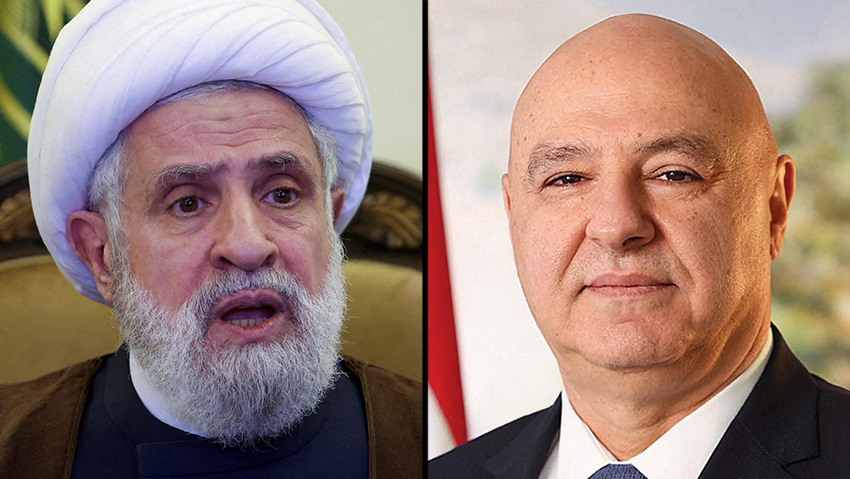
Lebanon’s government knows why it is taking the threat of civil war seriously; Lebanese President Aoun and Hezbollah leader Qassem
(Photo: REUTERS/Aziz Taher/File Photo, AFP PHOTO / HO / LEBANESE PRESIDENCY)
Hezbollah’s leadership also still hopes that the Iranians will extract from Trump a ceasefire agreement in Lebanon that will save it from further IDF moves, and perhaps even force Israel to withdraw the IDF back to the border. This is Hezbollah’s situation: It is fighting like a wounded animal for its survival, and its condition is worsening by the hour.
‘Neither swallow nor spit out’
Israel is currently in a situation that can be described as “neither swallow nor spit out”: The IDF’s military initiative is heavily restricted by President Trump, and the diplomatic initiative, which is entirely in the hands of the U.S. president, is also stalled.
The IDF is worn down and tired after two and a half years of fighting, and it must take into account that it will probably need to maneuver in Gaza to disarm Hamas, and perhaps also deal with an intifada that could erupt in Judea and Samaria.
The moment an explosive drone detonated near a helicopter evacuating wounded soldiers in southern Lebanon


At the moment, the IDF has no solution to two military problems that are essentially tactical. The first is 122 mm rockets, known in Israel as Katyushas. Around the world, they are referred to as 40-kilometer-range rockets. Together with the explosive drones Hezbollah launches, these are what most often send people running to protected spaces.
The IDF is struggling to deal with this threat because the launchers are small, easy to hide in thickets, especially under the cover of darkness, and easy to move from place to place in ordinary commercial vehicles, before being launched from the area north of the Litani, between the Zahrani and Litani rivers.
Since the 1970s, the air force has had difficulty hunting these relatively small rockets. In Operation Northern Arrows, the air force managed, through several precise strikes based on accurate intelligence, to almost completely eliminate the arsenal of medium and heavy rockets threatening central and even southern Israel. A few remain, and Hezbollah launches them once every few weeks without much success. But the Katyushas continue to make life miserable for Galilee residents, just as they did in the 1970s, because they are very hard to hunt and hit, certainly before launch and even after launch, especially when they are activated by a timer.
There is a solution to these rockets: an IDF maneuver into the launch areas and clearing them over several months. Experience shows, almost without exception, that wherever an IDF soldier has set foot or an Israeli tank has driven, launches of high-trajectory fire from that area toward IDF forces or Israeli territory have stopped.
As for the explosive drones, there is still no good technological response to them, especially fiber-optic-guided drones. They can reach ranges of up to 15 kilometers, and it is not possible to disrupt their flight or the link between them and the operator using electronic warfare or cyber means.
It is possible to provide a tactical response through proper conduct by units and fighters on the ground: avoiding static stays in open areas or slow movement by troops in open areas without protection. A force can also be assigned to observe and warn of an approaching drone, so other fighters can disperse and take cover, even behind a rock. Covering fire can also be used when moving through open areas, along with heavy fire on suspicious areas from which such a drone might come.
All this can be done until the right technological solution is found, both for detecting and intercepting these tiny drones, which fly low and are detected only shortly before they land and explode on the force. There is a technological solution to this problem, but it will take some time.
It will take several more months
In this situation, the State of Israel and the IDF have two possible courses of action that could end the bloody deadlock.
The first is a limited but creative maneuver into Lebanese territory north of the Litani to disable the Grad rockets, attack drones and explosive drones, and free Galilee residents from the panicked runs to protected spaces. Such a maneuver would require allocating relatively large forces for several months, and that must also be taken into account.
The second course is diplomatic: reaching, through negotiations, a stable ceasefire arrangement that includes Hezbollah, which would have to commit and declare that it is part of the ceasefire. The agreement would need to include a clause allowing Israel to prevent Hezbollah from rebuilding its strength, as it did during the previous ceasefire.
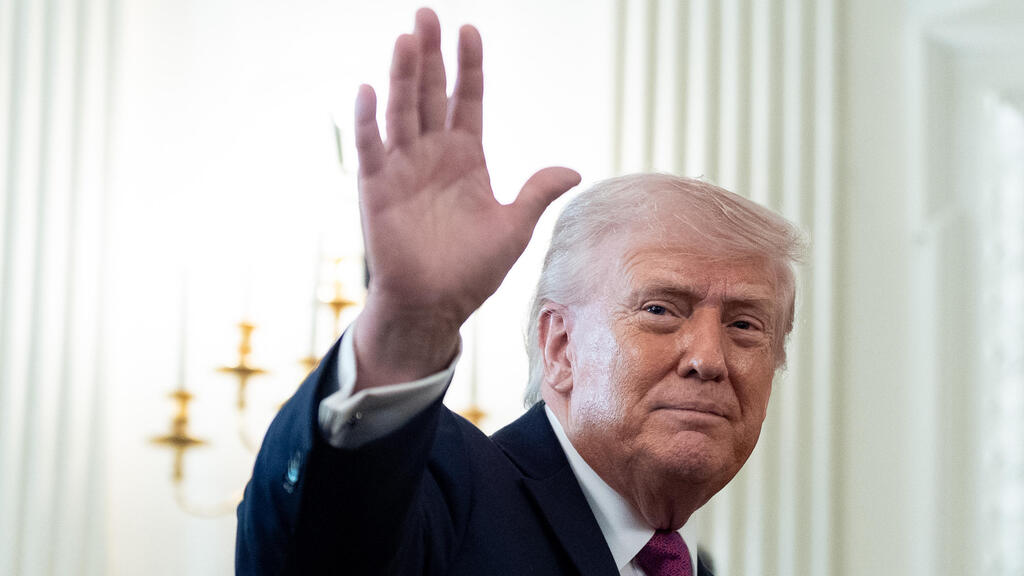
Donald Trump; Israel must wait and see what happens in Iran
(Photo: AP Photo/Alex Brandon)
These are two paths that would produce an imperfect result. It would obviously be preferable to conquer all of Lebanon, which would truly make it possible to disarm Hezbollah and remove the threat to the north for at least decades. But given the current condition of the IDF and the State of Israel, that is not realistic, neither in terms of manpower nor economic resources.
On the diplomatic front as well, it would be preferable to reach a peace agreement with Lebanon rather than a ceasefire, which is temporary by nature. But that too is not realistic, given the current weakness of Lebanon’s government and its justified fear of civil war with Hezbollah.
The conclusion is that Israel must first wait and see what happens in Iran, and whether Trump decides to resume the fighting or succeeds in reaching an agreement there, and what kind of agreement it would be. Only then will it be possible to decide on military and/or diplomatic action in coordination with the U.S. president and his administration.
That means Galilee residents will have to suffer for several more months, and the State of Israel must ease their lives and help them get by in every possible way.