


The debate over whether the shafts discovered near Qalqilya are part of a tunnel misses the main point, in my view. If the fence is breached, you do not need a tunnel to reach the central Israeli city of Kfar Saba.
The IDF issued an unusual statement Thursday rejecting a police announcement from the previous night that a tunnel had been found in the Qalqilya area, and even criticized the official notice released on the matter.
Gallery
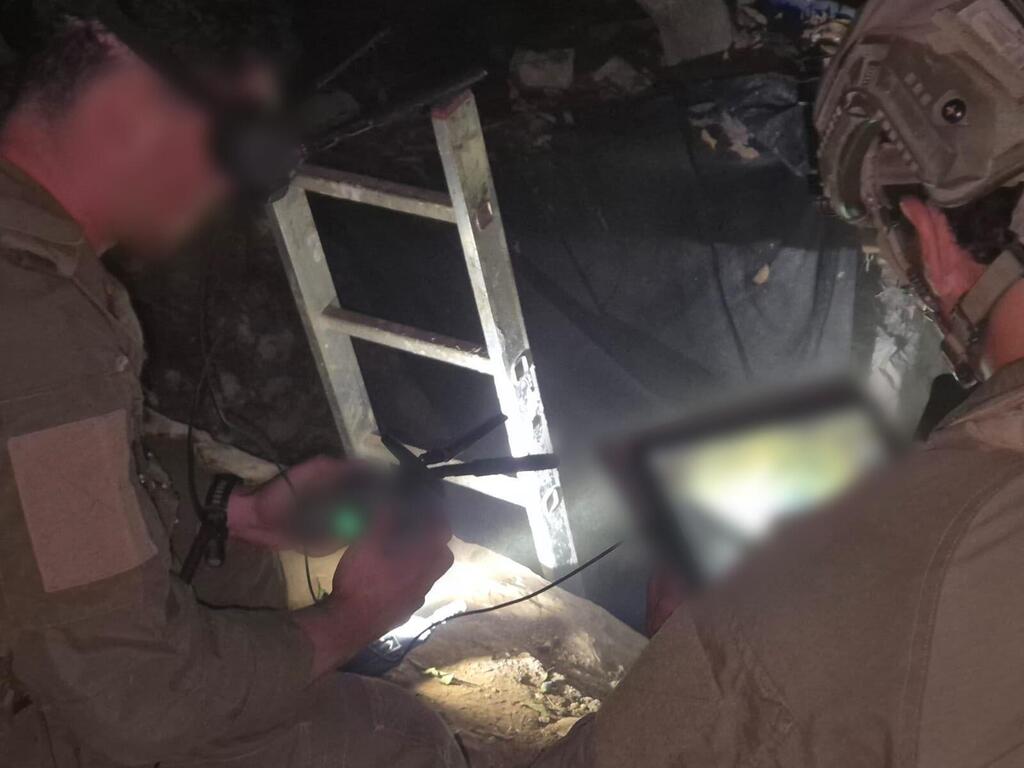
Security forces located two shafts and ruled out the suspicion of a tunnel
(Photo: IDF Spokesperson's Unit)
According to the IDF Spokesperson’s Unit, two deep shafts were found during the operation, but after they were examined, the suspicion that they were connected to a tunnel route was ruled out. The claim that one of them was located near the seam zone also was rejected.
That is important, and accuracy matters. Not every shaft is a tunnel, and certainly not every shaft in the Qalqilya area is a tunnel threatening Kfar Saba.
But that is precisely why the broader picture needs to be examined.
To infiltrate into Israeli territory in this area, there is no need to dig a Gaza-style tunnel. The barrier is not a political border and it is not hermetically sealed. There are breaches, it is possible to climb over the fence, and at any given time there are tens of thousands of illegal Palestinian residents inside Israel.
According to security establishment estimates, the number is more than 50,000.
The arena has changed
The real security question, therefore, is not whether another tunnel exists.
The question is how effective the barrier is, how well the breaches are sealed, how much control there is on the ground and how capable intelligence is of identifying those who intend to exploit those gaps to carry out an attack.
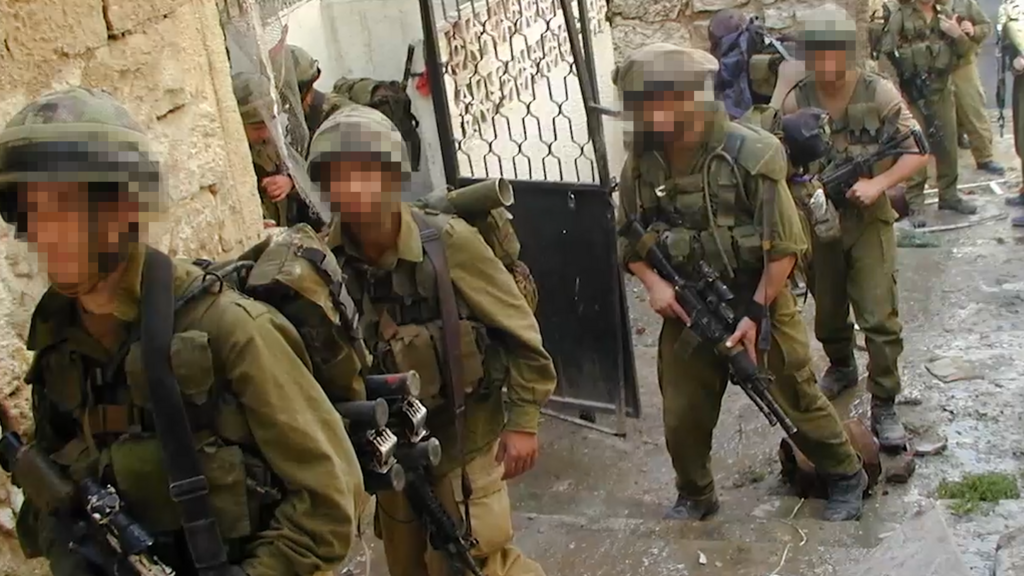
Golani fighters fighting in Nablus during Operation Defense Shield
(Photo: Private album)
That connects directly to the broader picture in the West Bank.
This is no longer the same arena as during Operation Defensive Shield, when two divisions were under Central Command. At the time, fewer than 200,000 Israelis lived here.
Today, the number is about 560,000, alongside roughly 2.5 million Palestinians. The number of communities has increased, settlement has expanded, farms have enlarged the area of contact and the friction has become far more complex.
From the IDF’s perspective, this is now a major operational issue.
Chief of Staff Lt. Gen. Eyal Zamir currently defines Gaza, Lebanon and the West Bank as the three arenas that concern him most.
Two divisions are already operating in Gaza and Lebanon, and the West Bank is now also being reinforced to a two-division structure.
The reason is not only the recent series of attacks. It is the understanding that the arena itself has changed.
Central Command currently has 26 battalions deployed under three divisional frameworks.
That is a highly significant force posture and illustrates how the West Bank has shifted from an arena that could be managed with one division to one that requires a far broader deployment.
The threat has changed
According to the military’s assessment, the three most recent attacks were carried out by lone assailants with no connection between them.
That is a different problem from a large terrorist infrastructure.
An organized network can be penetrated through intelligence, monitored and disrupted. A lone assailant can make a decision and launch an attack with almost no warning.
That is why the IDF now prefers to act before the fact: reinforce forces, improve control and use intelligence and operational capabilities before friction develops into escalation.
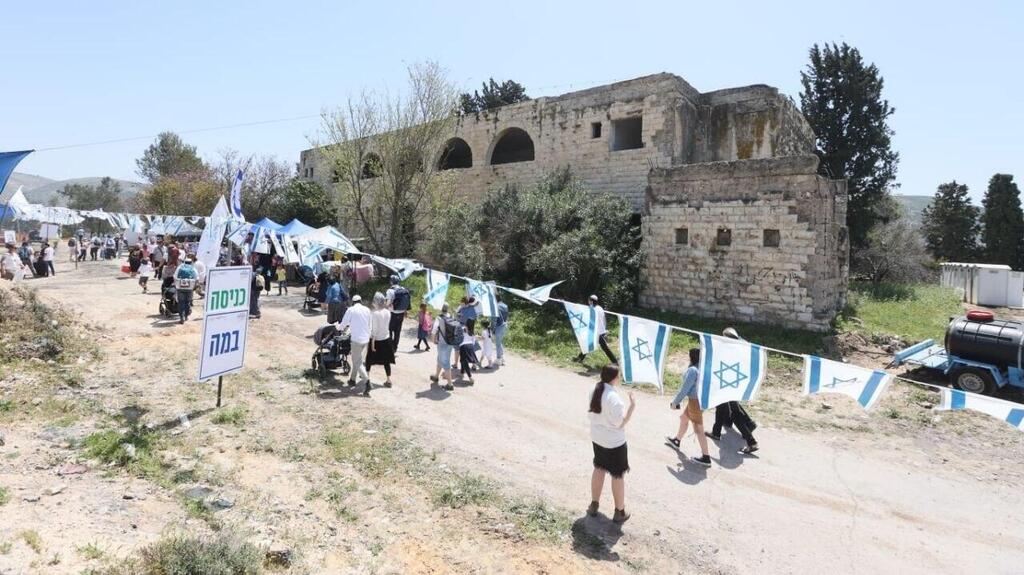
Establishing another settlement in northern West Bank
(Photo: Shomron Regional Council)
That is also the difference between 2002 and today.
Those who took part in Operation Defensive Shield say there is almost no comparison.
Back then, there were clashes almost every night. Today, despite the threats, the IDF has considerable freedom of action throughout the territory.
Commanders say that for about 10 months there had been no need for an airstrike in the West Bank, until the most recent strike.
In recent discussions, Central Command chief Maj. Gen. Avi Bluth said that freedom of action is the result of intelligence and operational capabilities built over many years.
Israeli settlement continues to grow, the Palestinian population is increasing, friction is expanding and the area between the fence and the seam zone remains vulnerable.
According to IDF estimates, within a few years the number of Israelis living in the West Bank could approach 1 million.
That means the IDF will have to protect more people, at more locations, in an area where daily friction exists even without a full-scale intifada.
The lesson from Qalqilya, therefore, is not that another tunnel is needed to justify preparations.
The lesson is the opposite: If the barrier is breached, a tunnel is not even the problem.
The problem is the permeability of the entire area.
And the way to deal with it is not through headlines about tunnels, but by sealing breaches, improving intelligence, maintaining control on the ground and deploying forces appropriate to the new reality in the West Bank.