


The relationship between Israel and the United States may appear closer than ever. Throughout the latest phases of the war, the U.S. administration and the Israeli government worked closely and in coordination, even when their interests diverged.
But that apparent intimacy should not obscure a far more troubling reality: the distance between Israel and the American public has rarely been greater.
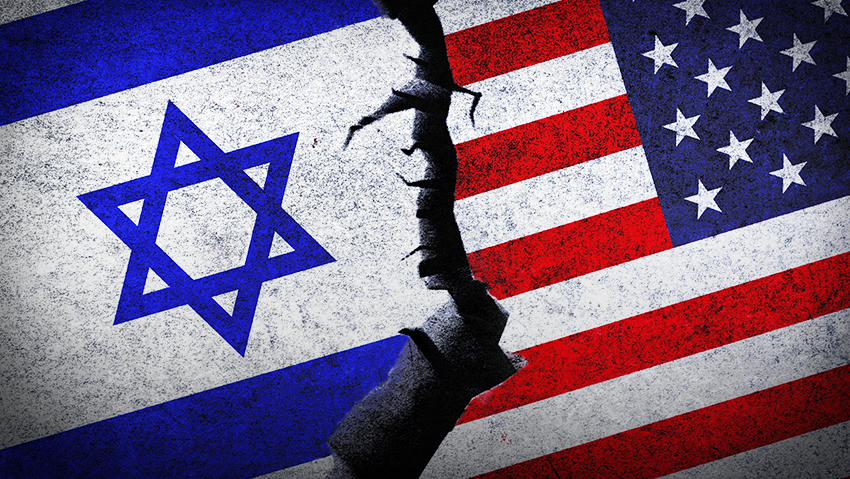
(Photo: Shutterstock)
For decades, sympathy for and support of Israel were part of a broad American consensus. That consensus had already begun to erode before the latest war, and restoring it must become one of the most urgent diplomatic missions of Israel’s next government, whatever its political composition.
Historically, Israel invested heavily in its relationship with Diaspora Jewry, particularly American Jews, viewing them as a source of political influence and leverage in Washington. AIPAC, the pro-Israel lobby, was for years one of the most powerful organizations on Capitol Hill. Today, more and more members of Congress are distancing themselves from it.
Did this begin with the latest war? No. American Jewry is extraordinarily diverse, and only a minority is Orthodox. Over the past decade, successive Israeli governments have increasingly privileged Orthodox Judaism while tensions with other Jewish denominations have intensified.
Decisions involving prayer arrangements at the Western Wall, conversion and the broader treatment of Reform and Conservative Judaism alienated significant parts of the American Jewish community. Leaders of major Jewish organizations repeatedly warned Israeli officials about that anger.
But domestic Israeli politics, particularly governing partnerships with ultra-Orthodox parties, repeatedly outweighed those concerns, leaving many Reform and Conservative Jews feeling that Israel treated their Judaism with contempt.
Israel entered the latest war as the victim of Hamas’ brutal surprise attack. The world, and certainly American Jewry, was horrified by what happened to Israeli civilians on October 7.
For Jews abroad, the images and testimonies evoked some of the darkest periods in Jewish history. October 7 was not the Holocaust, but for many Jews it triggered a profound Holocaust-related fear and raised a devastating question about whether the promise of “never again” had truly been fulfilled.
Yet as the third anniversary of October 7 approaches, after a devastating multi-front war and amid a national trauma that still grips Israel, much of the world and a growing share of the American public are no longer standing with Israel as they once did.
Israel’s aggressive policy in the Gaza Strip, including its impact on civilians, the expansion of settlements and escalating violence in the West Bank, and the continued military presence in parts of Lebanon have transformed the way many abroad perceive the country. Israel increasingly shifted, in their eyes, from victim to aggressor, and toward a state employing practices they regard as immoral.
Statements by some Israeli ministers contributed to international investigations and legal proceedings in The Hague and further alienated the Democratic left in the United States, which had already been distancing itself from Israel. Even the arrival of the Trump administration, with unprecedented political support for Israel and active American participation in the war, did not bring the broader American public back.
Many Americans focused instead on the costs of the fighting, the attention Washington devoted to overseas conflicts and rising fuel prices.
The current crisis also rests on deeper political changes. Historically, most American Jews have identified with the Democratic Party.
Benjamin Netanyahu’s decision to align himself closely with Donald Trump and effectively endorse him during U.S. election cycles broke with Israel’s longstanding effort to maintain bipartisan support. That shift had consequences when the Biden administration later faced decisions involving Israel.
Political developments inside the United States have only accelerated the trend. The far-right alt-right is increasingly isolationist. The progressive left, in its own way, is also skeptical of overseas commitments and increasingly hostile to Israel. The result is an extraordinary convergence between two political extremes that agree on very little except one issue: reducing American support for Israel. That convergence poses a genuine strategic danger.
Alongside Israel’s existential security challenges, any government formed after October 2026 must treat this diplomatic threat with the utmost seriousness. Israel needs a new strategy for reconnecting with the American public broadly and with American Jewry in particular.
That strategy cannot depend on one administration, one president or one political party. Israel’s relationship with the United States has always rested on more than government-to-government cooperation. Its durability depended on a wide base of public, Jewish and bipartisan political support. That foundation has weakened.
Rebuilding it is not a public-relations exercise and cannot be reduced to better messaging. It requires policy, political restraint, renewed respect for the diversity of American Jewry and an understanding that long-term alliances ultimately depend on societies, not only governments.
For a country facing so many enemies and strategic threats, restoring that connection is not secondary diplomacy. It is part of Israel’s national security.