

Many books have been written about the Oslo Accords, whose main framework—the Taba Agreement—marks its 30th anniversary this month. Most of these volumes have long since become irrelevant and were recycled. One exception is The Oslo Syndrome by Dr. Kenneth Levin (Ariel Publishing, edited and translated by Tsur Ehrlich), a book that is even more relevant today than when it was first released. After October 7, it is essential that every Israeli and every Jew become familiar with the thesis it presents.
According to Dr. Levin, a psychiatrist from Harvard University, Israel, during the Oslo process, internalized the accusations made by its enemies. The country accepted the claim that terrorism against it was at least partially its own fault—because it had, until then, refused to acknowledge the alleged injustice done to the Palestinian people and to try to correct it, primarily through the return of territory captured in 1967.

(Photo: GPO)
Yitzhak Rabin and his supporters believed this—even though they knew that Yasser Arafat and his associates continued to publicly affirm their commitment to the destruction of the entire State of Israel. In fact, the night before the signing ceremony, Arafat declared on television that Oslo was merely a phase in the well-known "phased plan" of the Palestine Liberation Organization, under which the PLO would accept any territory it could through peaceful means and, once entrenched, would use it to continue its campaign to conquer the rest.
They also knew that Palestinian leaders often likened the Oslo Accords to the Treaty of Hudaybiyyah—a pact signed and later broken by the Prophet Muhammad when he had gained enough power to defeat his former partners. The creation of Palestinian Authority institutions, particularly in education and media, enabled Arafat to promote this interpretation among the broader public. Israelis—including this writer—chose to turn a blind eye and forge ahead. How did this happen?
Levin believes the answer lies in the psychology of minority groups subjected to prolonged abuse. Within such communities, some individuals internalize the accusations hurled at them—no matter how distorted or absurd—out of a desperate hope that complying with them will bring relief.
Levin compares this to the psychology of a child who suffers constant violence at the hands of their parents. Such children almost always blame themselves, convinced that the abuse is a just punishment for being “bad.” They do this not because they are naïve, as is often assumed, but because they have no alternative. Deep down, they know their parent beats them without reason, yet they suppress this truth and cling to the belief that if they just obey, they will eventually find peace. As Levin writes, “To understand the motive for this self-deception, consider the choice facing the child: either recognize their powerlessness and the hopelessness of their situation—or deceive themselves and thereby preserve some form of hope.” Most children, of course, choose hope, despite the terrible consequences. Not infrequently, the abused child becomes an abuser, turning into a source of fear for other children.
In persecuted minority communities, some members similarly adopt the accusations of their oppressors, hoping that by doing so, they’ll be left alone.
This is also true of persecuted minorities like the Jews. Many among them have embraced blood libels and other false accusations, leading them to view their fellow Jews as damaged and in need of correction. That seems to be exactly what happened to us during the Oslo years, regarding the Palestinians.
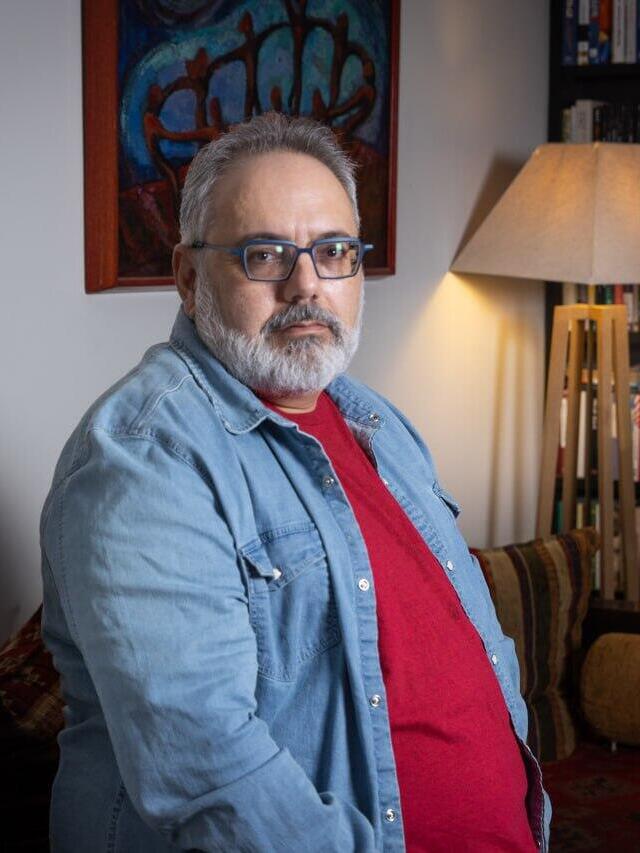 Yuval ElbashanPhoto: Alex Kolomoisky
It should not be surprising. As Max Nordau once wrote, “The great triumph of antisemitism is that it causes Jews to see themselves through antisemitic eyes.” Perhaps this is what led me—and many others—to ignore the words of Hamas leaders long before October 7, and to cling to the fantasy of coexistence with Gaza despite all the evidence to the contrary. It's entirely possible.
The Oslo Syndrome has only grown more relevant with the eruption of what scholar Daniel Pipes has termed the “new antisemitism,” especially since the start of Israel’s ground incursion into Gaza. This form of antisemitism no longer casts Jews as miserable parasites but as cruel oppressors. Many Jews and Israelis in academia, media, culture, and international professions have responded like that abused child. Some have even gone so far as to reject the very legitimacy of a Jewish state, hoping this will distance them from other Jews and Israelis.
Sadly, and in line with the Oslo Syndrome’s thesis—as seen from the perspective of 30 years—such hopes are baseless.