


The incident did not emerge in a single day. It began much earlier, when the IDF tried to return soldiers from the inferno of war to routine service as though one command could erase three years of fighting.
'They can suck it': dozens of soldiers walk out of base in protest against commanders


The confrontation began after the Tzabar Battalion completed an operational deployment in southern Lebanon and started returning to routine. During an equipment inspection, the battalion commander moved between the companies’ storage containers.
According to security officials, veteran soldiers in one company refused to allow him to open a container holding signs and symbols associated with the battalion’s seniority traditions and its relations between veteran and younger troops.
The battalion commander insisted on opening it. He removed signs and symbols that he believed were inconsistent with the values of the IDF and broke some of them.
More than 100 soldiers then decided to leave the Sde Teiman base. They put down their weapons and walked out in protest. The IDF believes veteran soldiers also influenced younger troops to join them.
Almost all the soldiers returned several hours later. One veteran platoon remains absent, though its members are still in the area.
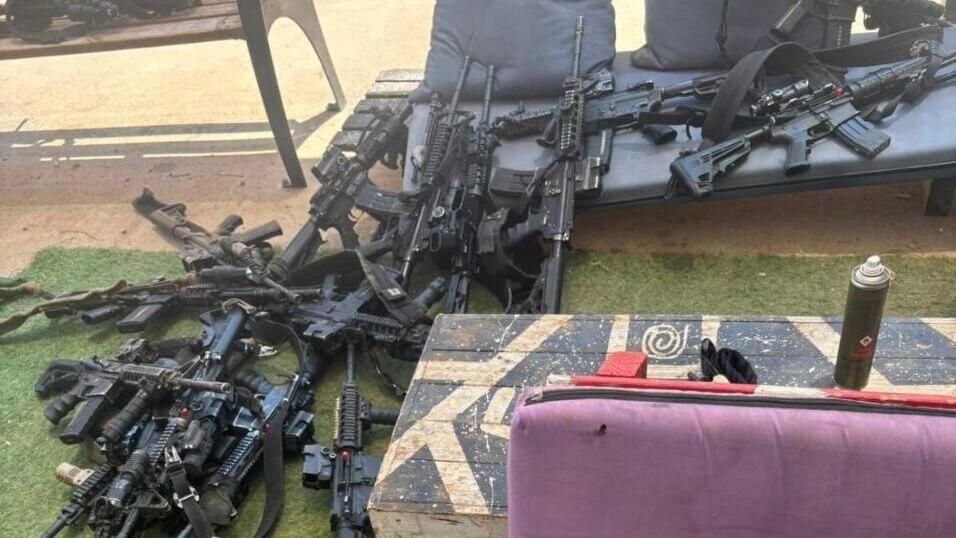
Givati Brigade Commander Col. Netanel Shamaka arrived at the battalion and spoke with some of the soldiers. The brigade intends to hear their complaints and examine each soldier’s role separately. Those identified as leaders of the protest are expected to face disciplinary proceedings before the brigade commander.
The IDF has stressed that it will distinguish between those who led and incited the walkout and those who were swept along.
This is not the first time such an incident has occurred.
To understand what is happening in Givati today, one must go back almost two decades to Golani’s 51st Battalion after the Second Lebanon War. David Zini, now head of the Shin Bet, took command at the time of a battalion that was battered and bleeding.
The battle of Bint Jbeil exacted a heavy price from the battalion. Soldiers and commanders were killed, among them deputy battalion commander Maj. Roi Klein.
The troops returned from combat carrying not only physical scars, but an entirely different psychological reality. A revolt erupted in the battalion shortly afterward, led by veteran soldiers.
One of its leaders, Shiran Amsili, had been among the heroes of the battle of Bint Jbeil and was awarded a military commendation for his conduct there.
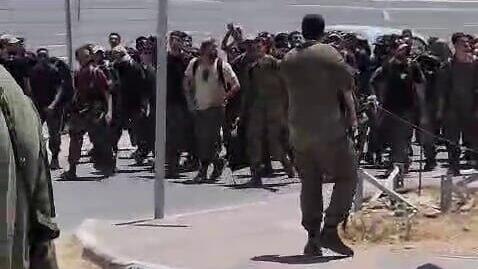
Dozens of Givati soldiers leave the Sde Teiman base
Dozens of troops walked out of the Tze’elim base in protest over how they believed the military was treating them after the war.
They were not soldiers who did not love their country or the army. They were people who had paid a heavy price on the battlefield and struggled with the abrupt transition from hell back to routine.
Even then, justified criticism was directed at Zini, who was known as an extremely tough commander. He was accused of failing to show the necessary sensitivity and of taking a hard line against troops, including Amsili, many of whom were suffering from post-traumatic stress.
From Golani’s 51st Battalion to Givati’s Tzabar Battalion
The revolt in Golani’s 51st Battalion occurred in March 2007 during a training exercise at the Tze’elim base.
The IDF initially said at least 50 soldiers had left the base, though military officials estimated that the actual number was closer to 90. They walked out at around 2 p.m. and initially refused their commanders’ appeals to return.
Only about two and a half hours later, after then-Golani Brigade Commander Col. Tamir Yadai spoke with them and promised that their complaints would be examined, did they return.
The soldiers said their rights had been harmed, including their ability to attend medical examinations and conditions that veteran troops had received before the new battalion commander took office.
They also protested what they described as excessive rigidity, stricter discipline and a lack of sensitivity by the battalion commander.
The IDF called the walkout a serious incident and said the soldiers would face disciplinary action. At the same time, military officials acknowledged that some of their complaints might have been justified.
A senior brigade officer said at the time that it was important to remember that these were good soldiers who had fought in the Second Lebanon War and continued carrying out security missions.
Their conduct had to be examined, he said, but the military should not respond with excessive severity.
Even then, commanders sought to distinguish between the need to restore discipline and the obligation to listen to the troops and correct genuine failures.
A similar incident had occurred one week earlier in another Golani battalion, when 13 soldiers left their base over what they described as unfair treatment and returned only the following day.
The difference was that social media did not exist in its present form. Had the same incident occurred today, it would probably have become a much larger public storm within minutes.
Yet even then, the IDF understood that the challenge was not merely restoring discipline. It was returning soldiers from war to routine.
Three years of war is an extraordinarily long period, and it leaves its mark. It has eroded some of the basic foundations of military readiness. Some soldiers no longer know what a morning inspection is.
The war has also created new norms and patterns of behavior that emerged from operational reality.
No one disputes that the army must return to routine, rebuild its foundations, reinforce proper norms and insist on discipline. The question is how that is done.
The commander of the Tzabar Battalion took office about five months ago. He inherited a battalion that was the last to leave Lebanon, had fought almost continuously since the war began and was regarded as one of the IDF’s most outstanding combat battalions.
He did not create the culture that developed within the battalion, but he assumed responsibility for changing it.
That was apparently his intention: to end practices he considered unacceptable and return the battalion to a clear disciplinary framework.
The objective was correct. But in command, the objective is not the only thing that matters. The method matters even more.
The battalion commander erred when he smashed the symbols. That was not his role.
Precisely because he is considered a principled and professional officer who knew the battalion well from his previous service as its deputy commander, it appears that he tried to implement change too quickly and too directly.
In military terms, he launched a frontal assault on a complex problem and walked into an ambush.
Authority alone is not enough when dealing with veteran troops returning from three years of war. Command requires finesse.
Responsibility, however, does not rest solely with the battalion commander.
The larger question is where the platoon and company commanders were.
They were supposed to serve as the mediating layer, explaining the mood within the battalion to the commander and explaining the commanders’ objectives to the soldiers.
When that layer of command fails to perform its role, a vacuum emerges. That vacuum is filled by informal field leaders.
Throughout three years of war, company sergeants major and veteran soldiers often managed much of the companies’ and battalion’s daily life in practice. They became the soldiers’ anchor and accumulated enormous influence.
When the formal chain of command does not lead the process of change, those figures become the de facto leadership.
The phenomenon is understandable, but it is also dangerous.
It must be said clearly: The method chosen by the Tzabar Battalion soldiers was unacceptable and prohibited. Leaving weapons behind is a red line that must never be crossed.
But anyone who stops at condemning the soldiers alone is missing the command lesson.
On the battlefield, a force can launch an assault. Veteran soldiers returning from three years of war cannot be treated as an objective to be stormed.
That is where the art of command is required. That is where trust, discipline and leadership must be rebuilt.
It was true after the Second Lebanon War. It is even more true after the longest war in Israel’s history.