


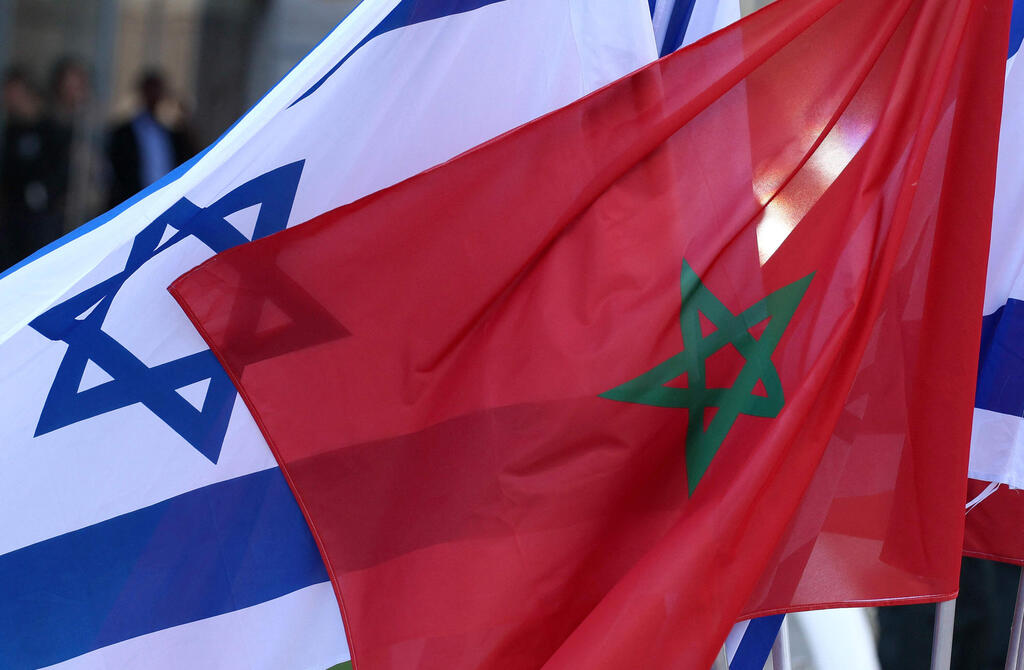
When the agreement was announced on September 16, 2026, following a high-level trilateral meeting in New York involving Israeli Foreign Minister Gideon Sa'ar, Moroccan Foreign Minister Nasser Bourita, and United States officials, the moment marked an unmistakable turning point in Middle Eastern and North African geopolitics. Israel and the Kingdom of Morocco formally agreed to upgrade their respective diplomatic liaison offices to full embassies and appoint official ambassadors. Accompanied by mutually agreed steps to expand direct commercial aviation routes and finalize key bilateral agreements on investment protection and double-taxation prevention by the end of 2026, the decision represented a further step in the evolution of their 2020 normalization framework.
Yet behind the formal diplomatic language lies a vastly broader, far more complex, and highly consequential regional narrative. The upgrade to full embassies is not merely a diplomatic formality or a symbolic gesture. It represents the visible capstone of a profound strategic realignment transforming the Western Mediterranean and North Africa. The diplomatic milestone reflects a shifting regional geometry in which defense industrialization, national energy security, and regional border management are increasingly intertwined across multiple geographic theaters in the Maghreb and Southern Europe, creating new strategic realities for all actors involved.
(Photo: AFP)
To understand why Jerusalem and Rabat chose this precise moment to formalize their diplomatic status, one must examine the tangible evolution of their security partnership over recent years. What originally began as discreet intelligence sharing and selective military hardware purchases has now matured into a sophisticated, multi-faceted defense-industrial partnership. Morocco is no longer simply an importer of advanced Israeli technology; it is actively integrating, manufacturing, and co-producing military hardware on its own territory as part of a national strategy to modernize its armed forces and build domestic industrial capacity.
The clearest manifestation of this defense collaboration is located in Benslimane, where a specialized industrial facility associated with Israel's BlueBird Aero Systems is producing or being established to produce SpyX loitering munitions. This facility represents a major industrial milestone in Rabat's effort to develop an indigenous military manufacturing sector. Simultaneously, reporting based on satellite imagery indicates that Morocco completed the deployment of the advanced Israeli-made Barak MX air-defense system at the Sidi Yahya air-defense base northeast of Rabat, providing its military forces with a multi-layered defensive shield capable of responding to a wide range of aerial threats.
This deepening military cooperation does not instantly overturn the regional military balance. The International Institute for Strategic Studies (IISS) estimates Algeria's 2026 defense spending at roughly 24.5 billion dollars, compared with about 7.87 billion dollars for Morocco. However, Morocco's growing integration of Israeli air defense, unmanned systems, and networked capabilities is steadily narrowing some of the technological advantages that Algiers historically enjoyed. The expanding defense-industrial relationship gives Jerusalem a durable, long-term strategic presence in the Maghreb and makes Israel an increasingly important security partner for Rabat across North Africa.
While the Israeli-Moroccan security partnership has deepened, the broader Mediterranean landscape has been simultaneously shaped by acute vulnerabilities along Europe's southern perimeter. A dramatic illustration of these fragile dynamics occurred on July 29 and 30, 2026, when more than 70,000 migrants surged into the Spanish enclave of Ceuta from Morocco amid a widespread wave of social-media misinformation. The sudden arrival overwhelmed municipal reception infrastructure and created a severe, unprecedented humanitarian crisis that resulted in at least 94 deaths, forcing European authorities to confront the immediate, systemic fragility of their external border controls.
For observers in Jerusalem and Rabat, the events in Ceuta exposed how heavily Madrid's border security depends on effective cooperation with Rabat. Spain, led by Prime Minister Pedro Sánchez, has found itself attempting a complex diplomatic balancing act in North Africa. In July 2026, Sánchez traveled to Algiers to declare a new phase in bilateral relations, highlighting Algeria as a strategic partner and maintaining crucial natural gas flows during a period when Spanish energy security remained heavily reliant on North African supply pipelines for its domestic power needs.
Yet Madrid's ongoing effort to rebuild ties with Algiers while depending on Moroccan cooperation to manage its external borders underscores the intricate strategic dilemmas facing Southern Europe. Regardless of how essential Algerian natural gas imports are for Spain's domestic energy needs, maintaining stability along Europe's southern border depends heavily on effective cooperation with Rabat. Rather than diminishing Morocco's standing, the migration flashpoint highlighted Rabat's considerable leverage over Western European border security and migration management across the broader Mediterranean region and Southern Europe.
If Madrid faces a delicate balancing act, the military leadership in Algiers confronts a growing sense of strategic encirclement. The December 2020 United States recognition of Moroccan sovereignty over Western Sahara, alongside Morocco's normalization with Israel, fundamentally altered the strategic environment that Algiers had long regarded as favorable to its position on the dispute. Rather than dissipating over time, those deep-seated strategic concerns have intensified as Israeli defense technologies and co-production initiatives have become permanently embedded in Morocco's comprehensive long-term military modernization plans for the decade ahead.
This escalating regional tension reached an unprecedented diplomatic breaking point on September 10, 2026, when Algeria abruptly severed diplomatic relations with the United Arab Emirates. Algiers ordered the Emirati ambassador to depart within 48 hours and announced immediate airspace restrictions on UAE-registered civilian and military aircraft entering Algerian territory, though commercial flights remained exempt through the end of the year. The rupture came amid longstanding, deepening disagreements over Israel, Western Sahara, Abu Dhabi's expansive regional influence, and competing strategic approaches to the Sahel region in West Africa.
 Amine Ayoub
The diplomatic breakdown between Algiers and Abu Dhabi demonstrates that regional rivalries in North Africa are no longer confined to traditional border disputes. The UAE has consistently supported Morocco's sovereign claims over Western Sahara and invested heavily in infrastructure projects across the Maghreb. The rupture underscored Algiers' growing confrontation with Gulf states whose policies increasingly align with Rabat on Western Sahara and regional economic influence. However, the rupture risks further complicating Algeria's search for stable international partnerships and investment at a time of intensifying regional competition.
In response to its rapidly changing regional environment, Algiers has continued to deepen its strategic relationship with Russia while maintaining diplomatic engagement with other non-Western powers. President Abdelmadjid Tebboune's administration has emphasized strategic dialogue with Moscow as a counterweight to Western influence in North Africa. Yet this diplomatic orientation carries significant risks for Algiers. As Algeria maintains its strategic relationship with Russia, Morocco has consequently become an increasingly important Western partner on security, migration, and counter-terrorism in the Western Mediterranean basin.
For Israel, the September 16 agreement represents the concrete realization of a durable long-term strategic vision. Skeptics of the Abraham Accords frequently argued that regional conflicts and political turbulence in the Middle East would force Arab governments to suspend or dissolve their ties with Israel. The formal transition from temporary liaison offices to full embassies demonstrates that the strategic partnership between Jerusalem and Rabat is firmly anchored in fundamental national security interests that can withstand broader regional volatility.
The formal establishment of full embassies by the end of 2026 will create permanent, highly effective institutional channels for bilateral strategic cooperation. Beyond military co-production and intelligence coordination, the finalized agreements on double-taxation prevention and investment protection provide a durable foundation for private sector growth and cross-border commercial ventures. Furthermore, restoring direct air routes between Israel and Morocco will facilitate greater corporate investment, technological transfer, and bilateral tourism, strengthening the deep historical and cultural ties that bind Israel's vibrant Moroccan Jewish diaspora to the Kingdom.
The broader strategic landscape of North Africa and the Western Mediterranean is rapidly evolving into a dynamic multi-polar environment. It is not a simple division into opposing geopolitical camps, but a fluid arena where Israel, Morocco, Algeria, Spain, the United Arab Emirates, and global powers must navigate overlapping security, economic, and energy interests. The decisive step taken by Jerusalem and Rabat to solidify their relationship demonstrates that their strategic partnership has moved beyond initial normalization to become an increasingly important pillar of the Western Mediterranean's emerging strategic architecture.
- Amine Ayoub, a fellow at the Middle East Forum, is a policy analyst and writer based in Morocco. Follow him on X: @amineayoubx